Simó-Riudalbas Marc, Metallinou Margarita, de Pous Philip, Els Johannes, Jayasinghe Sithum, Péntek-Zakar Erika, Wilms Thomas, Al-Saadi Saleh, Carranza Salvador
Institute of Evolutionary Biology (CSIC-Universitat Pompeu Fabra), Passeig Marítim de la Barceloneta 37-49, Barcelona, Spain.
Breeding Centre for Endangered Arabian Wildlife, Environment and Protected Areas Authority, Sharjah, UAE.
PLoS One. 2017 Aug 2;12(8):e0180397. doi: 10.1371/journal.pone.0180397. eCollection 2017.
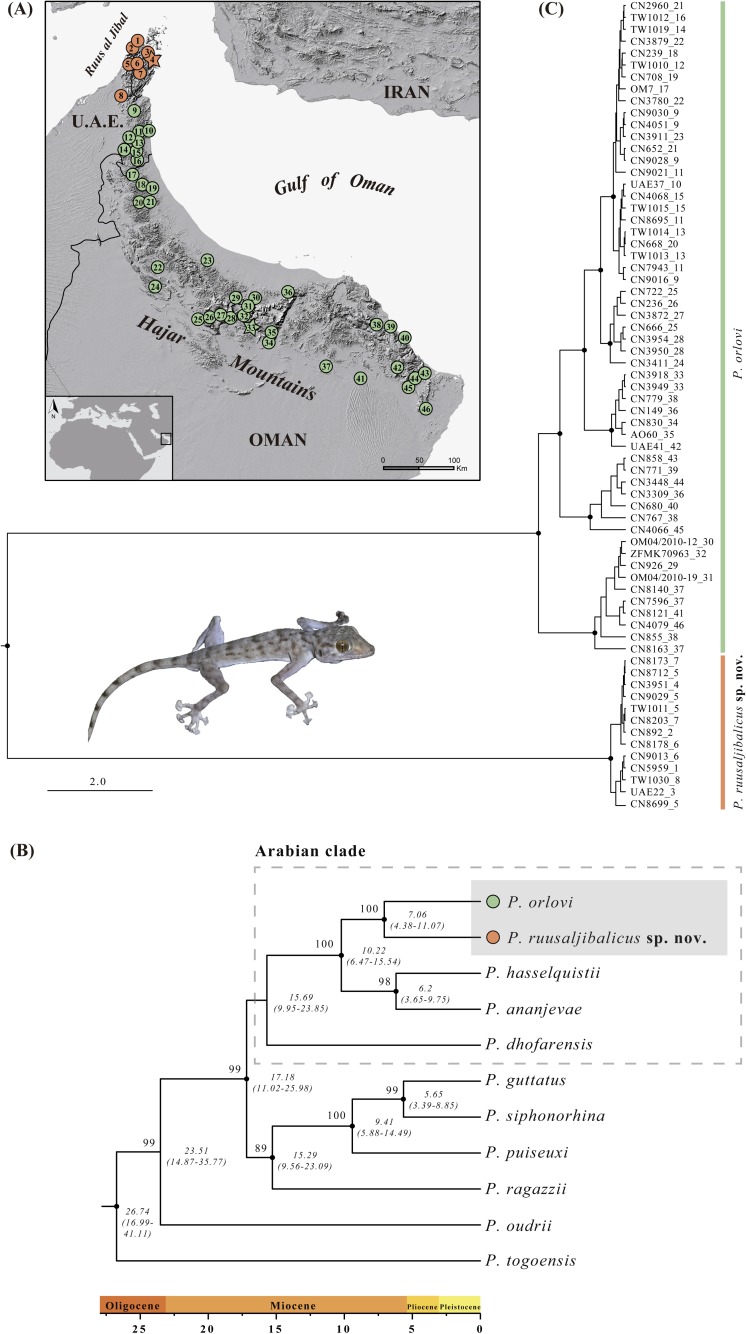
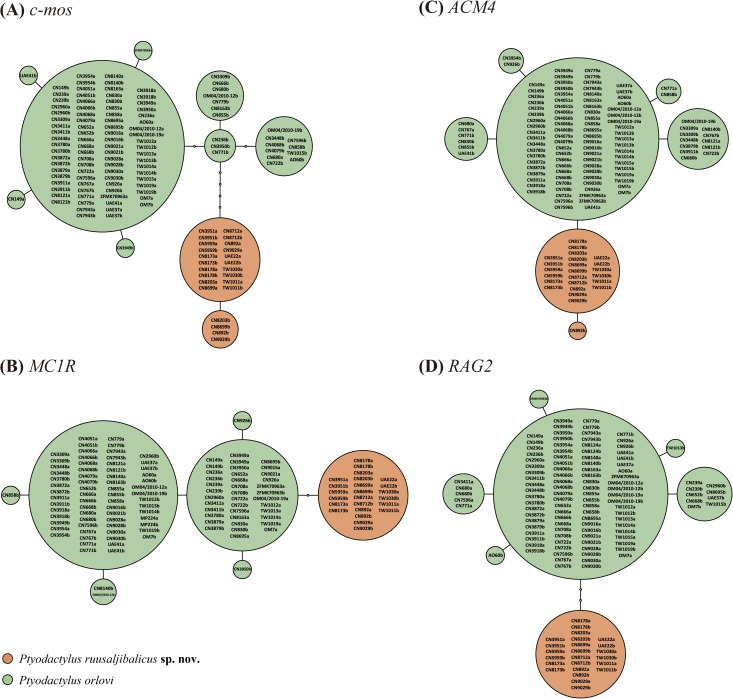
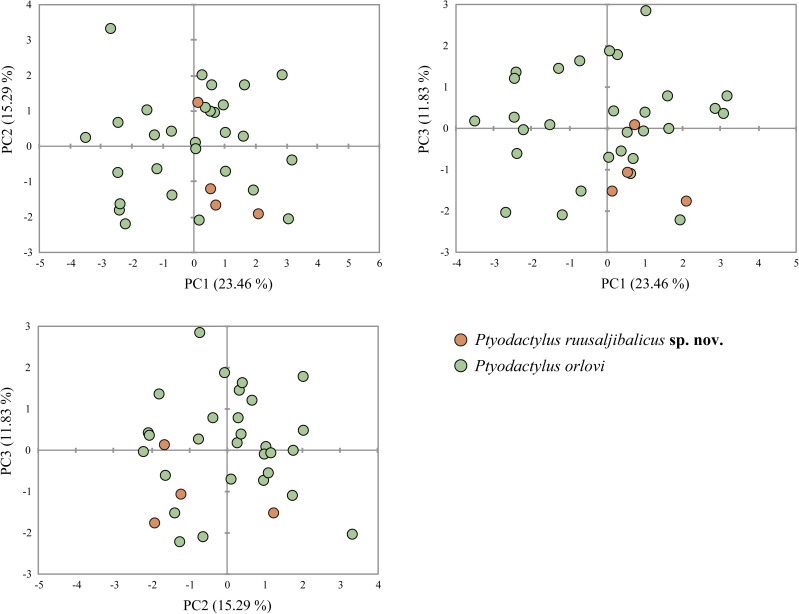
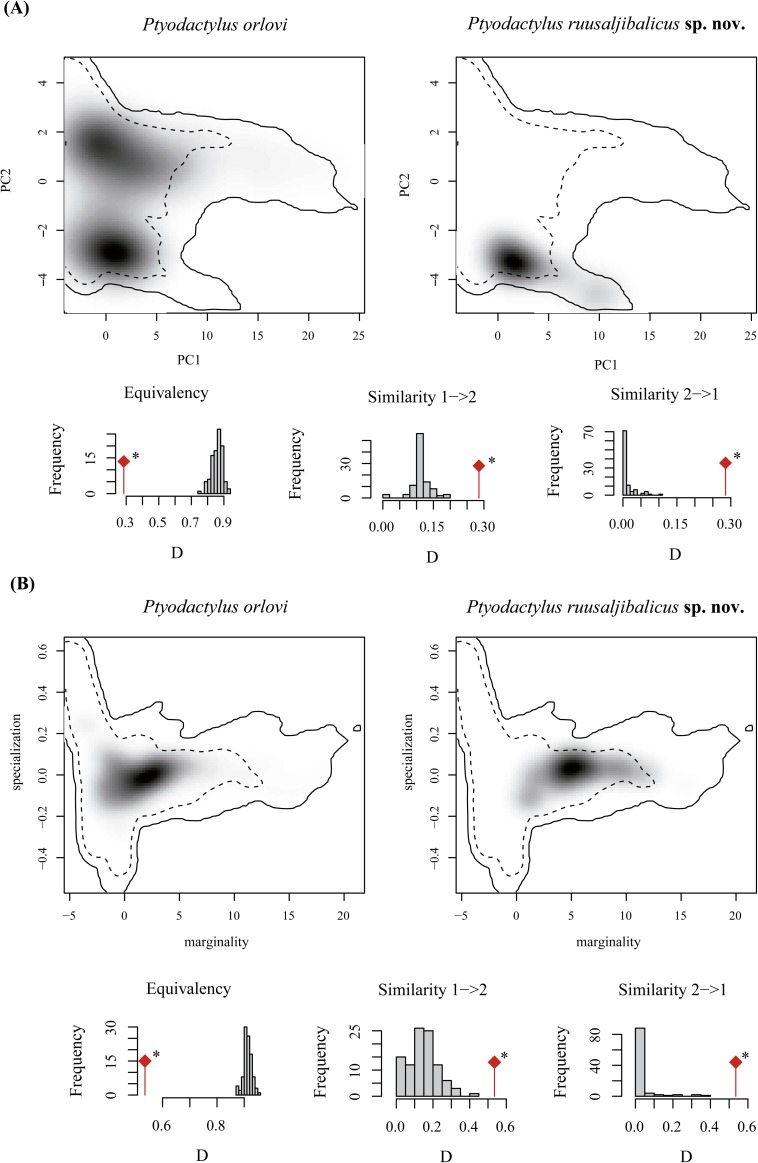
The Hajar Mountains of south-eastern Arabia form an isolated massif surrounded by the sea to the east and by a large desert to the west. As a result of their old geological origin, geographical isolation, complex topography and local climate, these mountains provide an important refuge for endemic and relict species of plants and animals. With 19 species restricted to the Hajar Mountains, reptiles are the vertebrate group with the highest level of endemicity, becoming an excellent model for understanding the patterns and processes that generate and shape diversity in this arid mountain range. The geckos of the Ptyodactylus hasselquistii species complex are the largest geckos in Arabia and are found widely distributed across the Arabian Mountains, constituting a very important component of the reptile mountain fauna. Preliminary analyses suggested that their diversity in the Hajar Mountains may be higher than expected and that their systematics should be revised. In order to tackle these questions, we inferred a nearly complete calibrated phylogeny of the genus Ptyodactylus to identify the origin of the Hajar Mountains lineages using information from two mitochondrial and four nuclear genes. Genetic variability within the Hajar Mountains was further investigated using 68 specimens of Ptyodactylus from 46 localities distributed across the entire mountain range and sequenced for the same genes as above. The molecular phylogenies and morphological analyses as well as niche comparisons indicate the presence of two very old sister cryptic species living in allopatry: one restricted to the extreme northern Hajar Mountains and described as a new species herein; the other distributed across the rest of the Hajar Mountains that can be confidently assigned to the species P. orlovi. Similar to recent findings in the geckos of the genus Asaccus, the results of the present study uncover more hidden diversity in the northern Hajar Mountains and stress once again the importance of this unique mountain range as a hot spot of biodiversity and a priority focal point for reptile conservation in Arabia.
阿拉伯半岛东南部的哈杰尔山脉形成了一个孤立的地块,东临大海,西靠大片沙漠。由于其古老的地质起源、地理隔离、复杂的地形和当地气候,这些山脉为动植物的特有和残遗物种提供了重要的避难所。爬行动物有19个物种仅分布于哈杰尔山脉,是特有性水平最高的脊椎动物类群,成为理解在这片干旱山脉中产生和塑造多样性的模式及过程的绝佳模型。哈氏半叶趾虎物种复合体的壁虎是阿拉伯半岛最大的壁虎,广泛分布于阿拉伯山脉,是山地爬行动物区系的一个非常重要的组成部分。初步分析表明,它们在哈杰尔山脉的多样性可能高于预期,其系统分类需要修订。为了解决这些问题,我们利用两个线粒体基因和四个核基因的信息,推断出了半叶趾虎属近乎完整的校准系统发育树,以确定哈杰尔山脉谱系的起源。我们还使用了来自整个山脉46个地点的68个半叶趾虎标本,对上述相同基因进行测序,进一步研究了哈杰尔山脉内的遗传变异性。分子系统发育、形态学分析以及生态位比较表明,存在两个非常古老的姐妹隐存种,它们在异域分布:一个仅限于哈杰尔山脉最北部,本文将其描述为一个新物种;另一个分布在哈杰尔山脉的其他地区,可以确定为奥氏半叶趾虎。与半叶趾虎属壁虎的近期研究结果相似,本研究结果揭示了哈杰尔山脉北部更多隐藏的多样性,并再次强调了这片独特山脉作为生物多样性热点以及阿拉伯半岛爬行动物保护优先重点区域的重要性。