Ding Peiyang, Zhang Teng, Li Yafei, Teng Man, Sun Yaning, Liu Xiao, Chai Shujun, Zhou Enmin, Jin Qianyue, Zhang Gaiping
College of Veterinary Medicine, Northwest A&F University, Yangling.
Henan Provincial Key Laboratory of Animal Immunology, Henan Academy of Agricultural Sciences.
Int J Nanomedicine. 2017 Jul 24;12:5239-5254. doi: 10.2147/IJN.S140789. eCollection 2017.
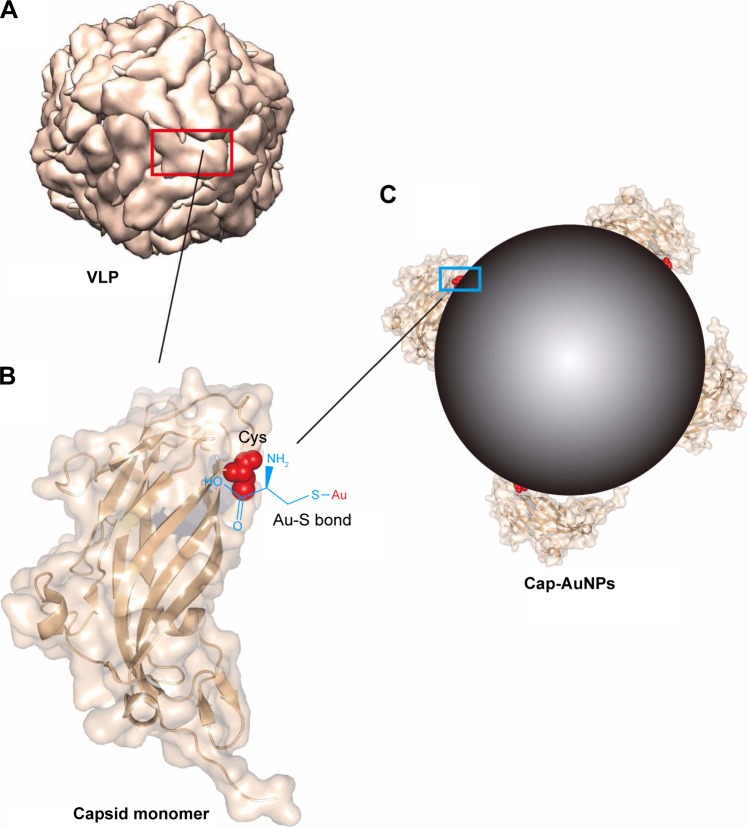
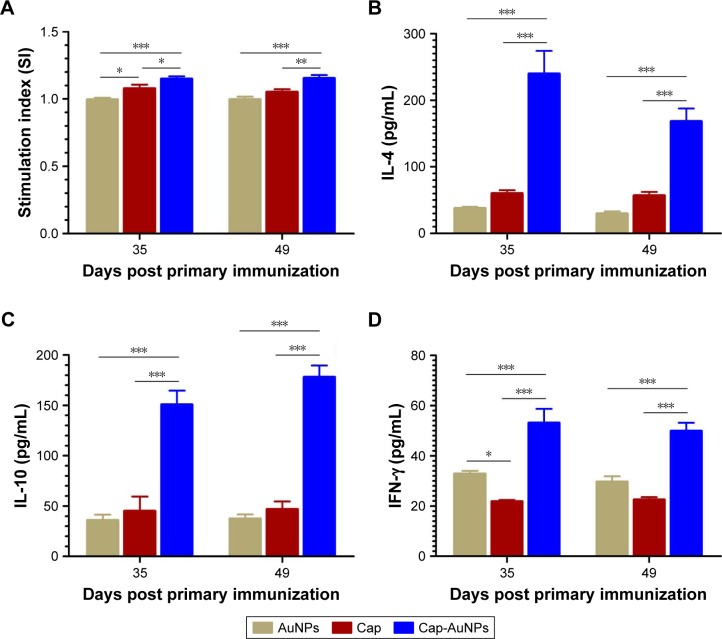
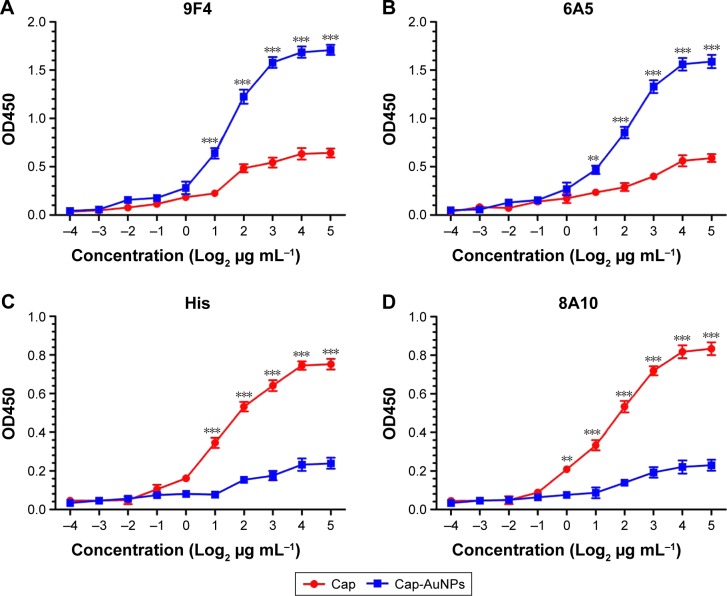
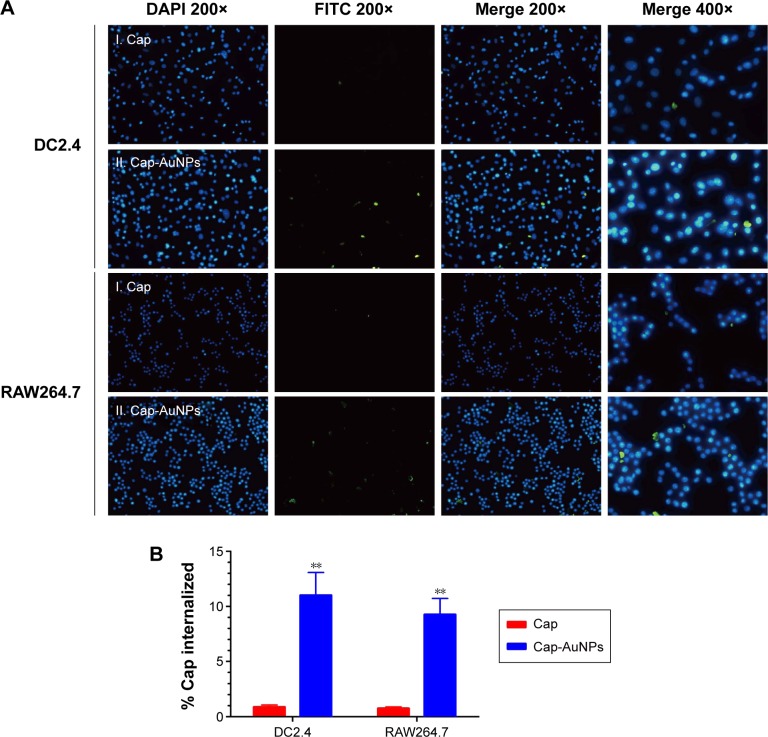
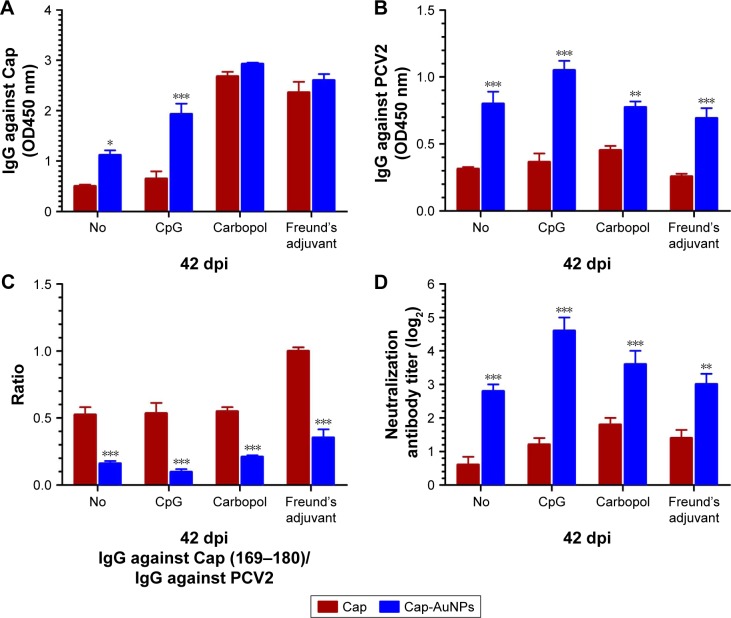
Recent advancements in biotechnology have enabled the rapid identification and subsequent expression of pathogenic microbial major antigens that induce protective immune responses. However, subunit vaccines have not been successfully commercialized mainly due to the lack of sufficient levels of neutralizing antibodies (NAs). High levels of NA rely on the efficient recognition and cross-linking of multiple neutralizing epitopes with B-cell receptors (BCRs). Nanoparticles are able to display coupled antigenic arrays at high density and provide multiple binding molecular scenarios with BCRs. The high-resolution antigenic structure makes it possible to accurately display stable neutralizing epitopes. Therefore, the development of a nanovaccine that orientationally displays neutralizing epitopes is a feasible strategy. To address this hypothesis, the capsid (Cap) protein of porcine circovirus type 2 as model antigen was conjugated to gold nanoparticles (AuNPs) through direct reaction of the mercapto group of the unique cysteines with AuNPs, rendering Cap-AuNPs to have neutralizing epitopes on outer surface and an immunodominant epitope buried within the inner surface. In vitro studies showed that AuNPs promoted the phagocytosis of Cap protein and NA levels were significantly improved, meanwhile antibody levels against the immunodominant epitope was significantly reduced. In mouse studies, Cap-AuNP-immunized mice displayed a high production of interleukin (IL)-4, IL-10, and interferon-γ, suggesting that Cap-AuNPs can effectively activate CD4 and CD8 T cells and balance Th1 and Th2 cellular responses. This study presents a new vaccine design strategy based on antigen structure, where nanoparticles are coupled to antigens in well-ordered arrays and orientationally display neutralizing epitopes to enhance NA levels.
生物技术的最新进展使得能够快速鉴定并随后表达诱导保护性免疫反应的病原微生物主要抗原。然而,亚单位疫苗尚未成功商业化,主要原因是缺乏足够水平的中和抗体(NA)。高水平的NA依赖于多个中和表位与B细胞受体(BCR)的有效识别和交联。纳米颗粒能够高密度展示偶联的抗原阵列,并为BCR提供多种结合分子模式。高分辨率的抗原结构使得准确展示稳定的中和表位成为可能。因此,开发一种定向展示中和表位的纳米疫苗是一种可行的策略。为了验证这一假设,将2型猪圆环病毒的衣壳(Cap)蛋白作为模型抗原,通过其独特半胱氨酸的巯基与金纳米颗粒(AuNP)直接反应,使Cap-AuNP在外表面具有中和表位,在内表面埋有一个免疫显性表位。体外研究表明,AuNP促进了Cap蛋白的吞噬作用,NA水平显著提高,同时针对免疫显性表位的抗体水平显著降低。在小鼠研究中,用Cap-AuNP免疫的小鼠表现出白细胞介素(IL)-4、IL-10和干扰素-γ的高产量,表明Cap-AuNP可以有效激活CD4和CD8 T细胞,并平衡Th1和Th2细胞反应。本研究提出了一种基于抗原结构的新疫苗设计策略,即纳米颗粒以有序阵列与抗原偶联,并定向展示中和表位以提高NA水平。