Korhonen T K, Parkkinen J, Hacker J, Finne J, Pere A, Rhen M, Holthöfer H
Infect Immun. 1986 Nov;54(2):322-7. doi: 10.1128/iai.54.2.322-327.1986.
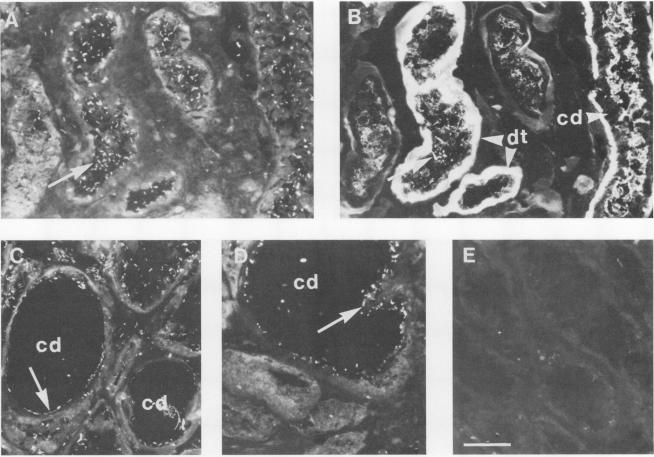
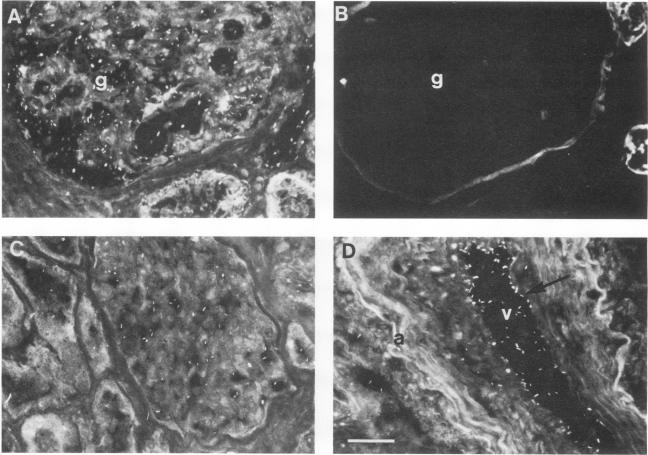
Purified S fimbriae and an Escherichia coli strain carrying the recombinant plasmid pANN801-4 that encodes S fimbriae were tested for adhesion to frozen sections of human kidney. The fimbriae and the bacteria bound to the same tissue domains, and in both cases the binding was specifically inhibited by the receptor analog of S fimbria, sialyl(alpha 2-3)lactose. S fimbriae bound specifically to the epithelial elements in the kidneys; to the epithelial cells of proximal and distal tubules as well as of the collecting ducts and to the visceral and parietal glomerular epithelium. In addition, they bound to the vascular endothelium of glomeruli and of the renal interstitium. No binding to connective tissue elements was observed. The results suggest that the biological function of S fimbriae is to mediate the adhesion of E. coli to human epithelial and vascular endothelial cells.
对纯化的S菌毛以及携带编码S菌毛的重组质粒pANN801 - 4的大肠杆菌菌株进行了与人肾冷冻切片的黏附试验。菌毛和细菌均结合于相同的组织区域,并且在这两种情况下,结合均被S菌毛的受体类似物唾液酸(α2 - 3)乳糖特异性抑制。S菌毛特异性地结合于肾脏中的上皮成分;结合于近端和远端肾小管以及集合管的上皮细胞,还结合于脏层和壁层肾小球上皮。此外,它们还结合于肾小球和肾间质的血管内皮。未观察到与结缔组织成分的结合。结果表明,S菌毛的生物学功能是介导大肠杆菌与人上皮细胞和血管内皮细胞的黏附。