Xiong Liu-Lin, Liu Fei, Deng Shi-Kang, Liu Jia, Dan Qi-Qin, Zhang Piao, Zou Yu, Xia Qing-Jie, Wang Ting-Hua
Institute of Neurological Disease, Department of Anesthesiology, Translational Neuroscience Center, West China Hospital, Sichuan UniversityChengdu, China.
Institute of Neuroscience, Kunming Medical UniversityKunming, China.
Front Cell Neurosci. 2017 Jul 19;11:213. doi: 10.3389/fncel.2017.00213. eCollection 2017.
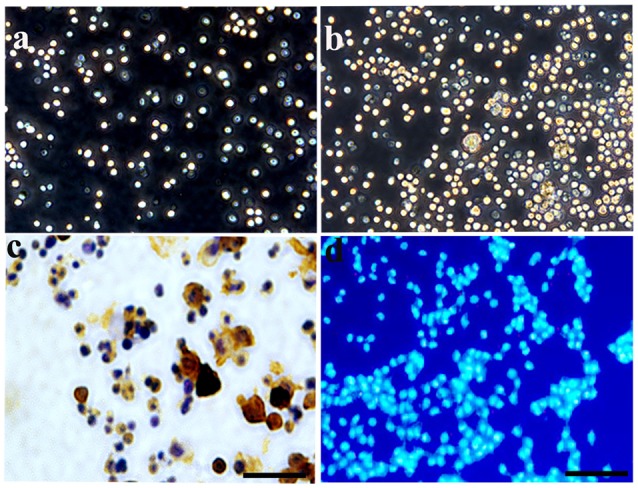
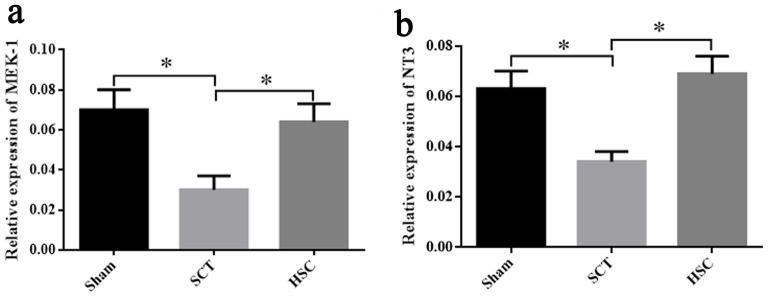
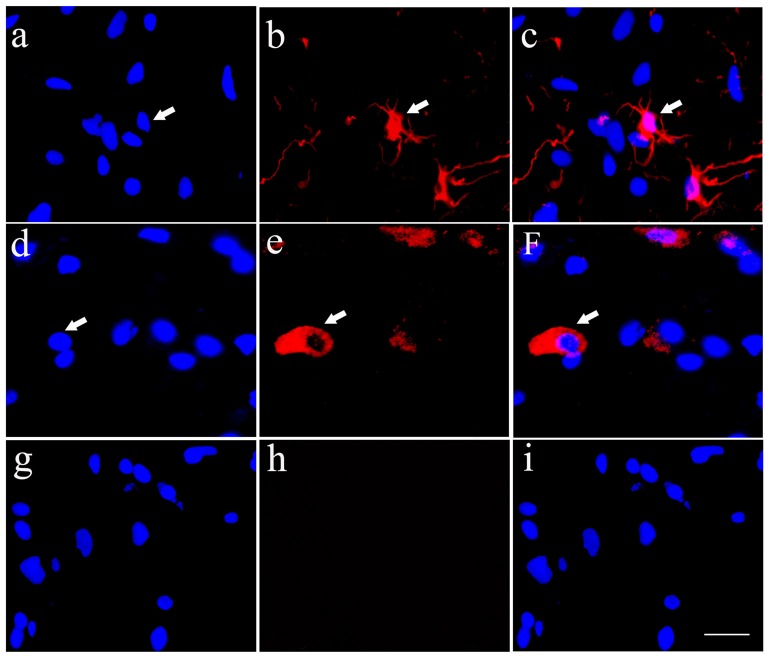
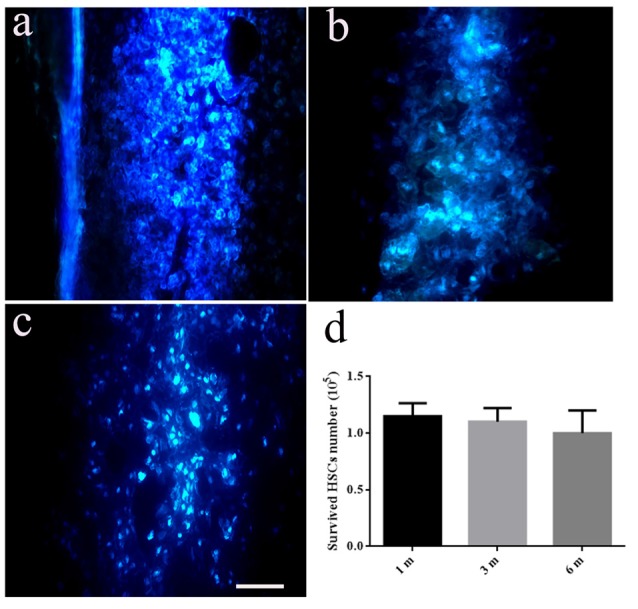
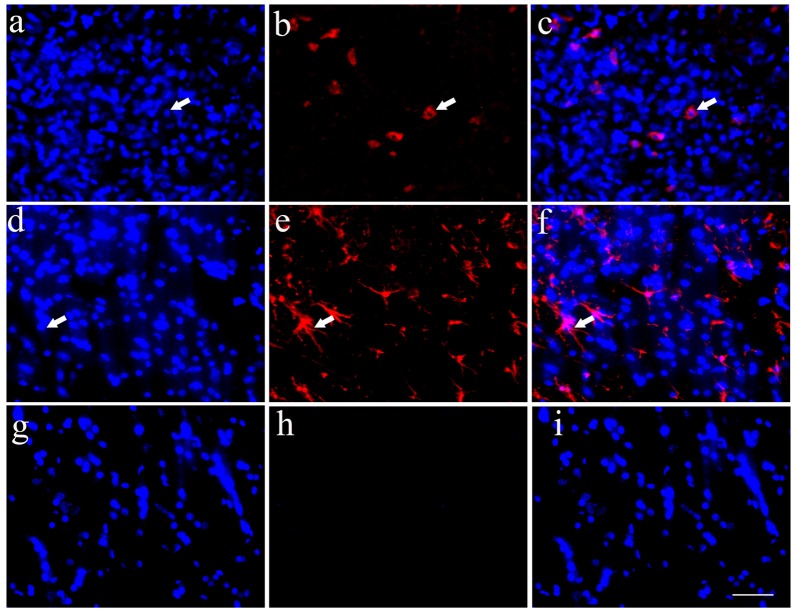
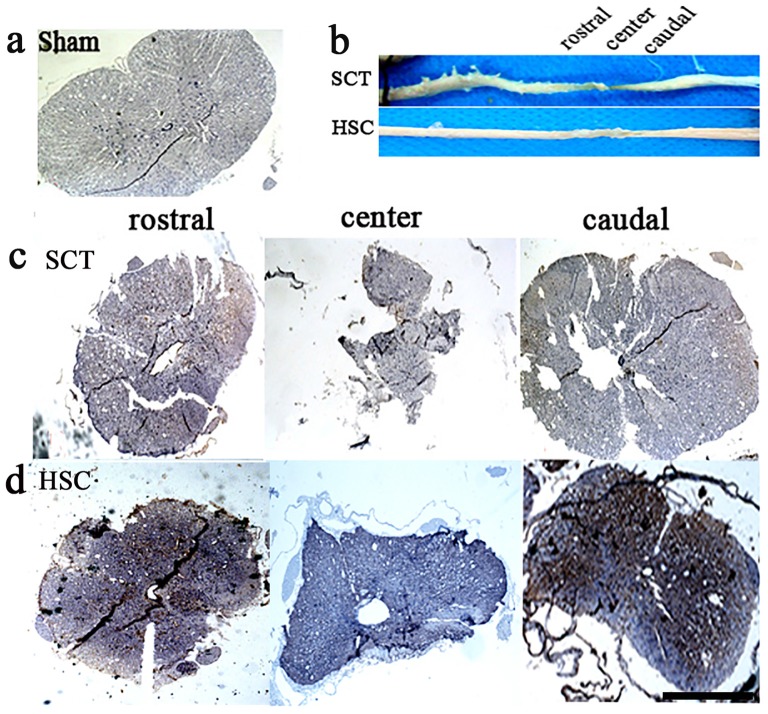
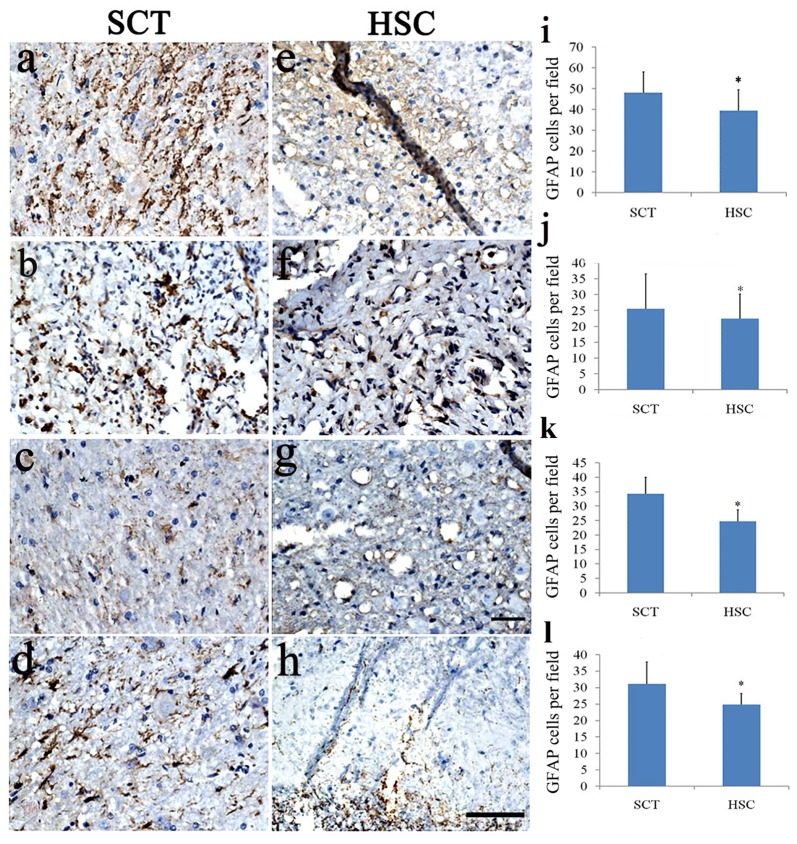
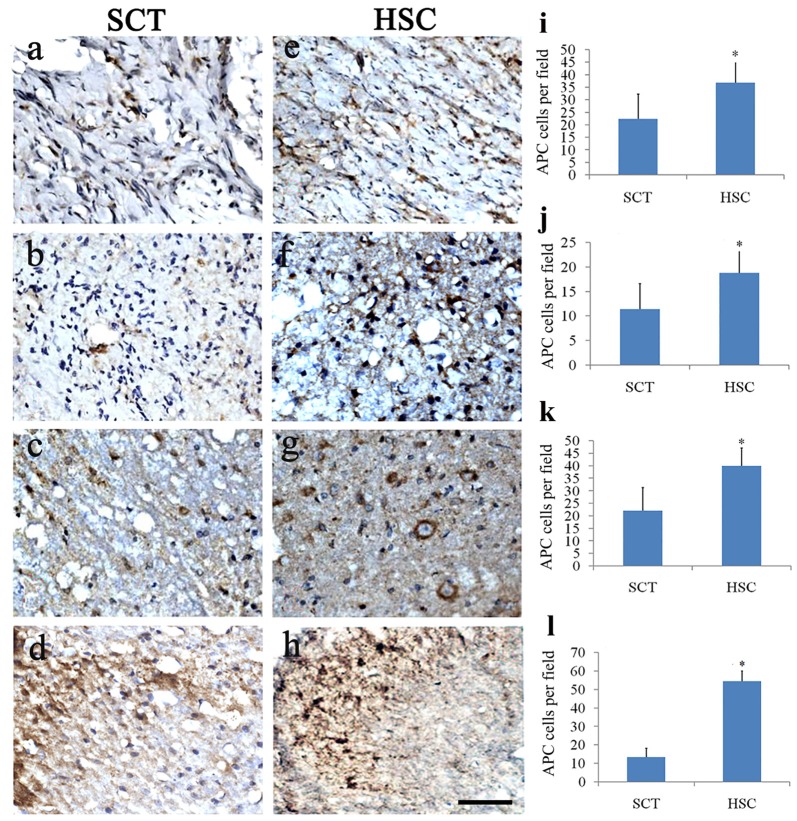
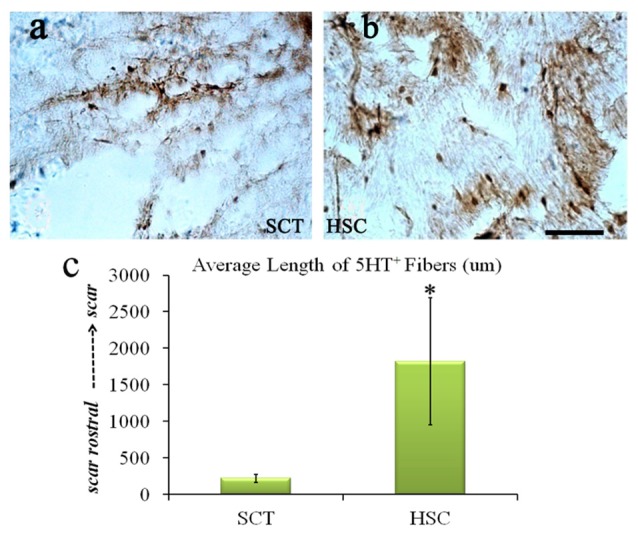
Transected spinal cord injury (SCT) is a devastating clinical disease that strongly affects a patient's daily life and remains a great challenge for clinicians. Stem-cell therapy has been proposed as a potential therapeutic modality for SCT. To investigate the effects of hematopoietic stem cells (HSCs) on the recovery of structure and function in SCT rats and to explore the mechanisms associated with recovery, 57 adult Sprague-Dawley rats were randomly divided into sham ( = 15), SCT ( = 24), and HSC transplantation groups ( = 15). HSCs (passage 3) labeled by Hoechst 33342, were transplanted intraspinally into the rostral, scar and caudal sites of the transected lesion at 14 days post-operation. Both and , HSCs exhibited a capacity for cell proliferation and differentiation. Following HSC transplantation, the animals' Basso, Beattie, and Bresnahan (BBB). locomotion scale scores increased significantly between weeks 4 and 24 post-SCT, which corresponded to an increased number of 5-hydroxytryptamine (5-HT) fibers and oligodendrocytes. The amount of astrogliosis indicated by immunohistochemical staining, was markedly decreased. Moreover, the decreased expression of neurotrophin- 3 (NT-3) and mitogen-activated protein kinase kinase-1 (MEK-1) after SCT was effectively restored by HSC transplantation. The data from the current study indicate that intraspinally administered HSCs in the chronic phase of SCT results in an improvement in neurological function. Further, the results indicate that intraspinally administered HSCs benefit the underlying mechanisms involved in the enhancement of 5-HT-positive fibers and oligogenesis, the suppression of excessive astrogliosis and the upregulation of NT3-regulated MEK-1 activation in the spinal cord. These crucial findings reveal not only the mechanism of cell therapy, but may also contribute to a novel therapeutic target for the treatment of spinal cord injury (SCI).
脊髓横断损伤(SCT)是一种严重的临床疾病,严重影响患者的日常生活,对临床医生来说仍然是一个巨大的挑战。干细胞疗法已被提议作为SCT的一种潜在治疗方式。为了研究造血干细胞(HSCs)对SCT大鼠结构和功能恢复的影响,并探索与恢复相关的机制,将57只成年Sprague-Dawley大鼠随机分为假手术组(n = 15)、SCT组(n = 24)和HSC移植组(n = 15)。用Hoechst 33342标记的第3代HSCs在术后14天经脊髓内移植到横断损伤的头端、瘢痕和尾端部位。在体外和体内,HSCs均表现出细胞增殖和分化能力。HSC移植后,动物的Basso、Beattie和Bresnahan(BBB)运动量表评分在SCT后4至24周显著增加,这与5-羟色胺(5-HT)纤维和少突胶质细胞数量增加相对应。免疫组化染色显示的星形胶质细胞增生数量明显减少。此外,SCT后神经营养因子-3(NT-3)和丝裂原活化蛋白激酶激酶-1(MEK-1)表达的降低通过HSC移植得到有效恢复。本研究数据表明,在SCT慢性期经脊髓内给予HSCs可改善神经功能。此外,结果表明,经脊髓内给予HSCs有利于增强5-HT阳性纤维和少突胶质细胞生成、抑制过度的星形胶质细胞增生以及上调脊髓中NT3调节的MEK-1活化所涉及的潜在机制。这些关键发现不仅揭示了细胞治疗的机制,还可能有助于为脊髓损伤(SCI)治疗提供新的治疗靶点。