Thakkar Umang G, Vanikar Aruna V, Trivedi Hargovind L, Shah Veena R, Dave Shruti D, Dixit Satyajit B, Tiwari Bharat B, Shah Harda H
Department of Stem Cell Therapy and Regenerative Medicine, G. R. Doshi and K. M. Mehta Institute of Kidney Diseases and Research Centre - Dr. H. L. Trivedi Institute of Transplantation Sciences, Ahmedabad, Gujarat, India.
Department of Stem Cell Therapy and Regenerative Medicine, G. R. Doshi and K. M. Mehta Institute of Kidney Diseases and Research Centre - Dr. H. L. Trivedi Institute of Transplantation Sciences, Ahmedabad, Gujarat, India; Department of Pathology, Laboratory Medicine, Transfusion Services and Immunohematology, G. R. Doshi and K. M. Mehta Institute of Kidney Diseases and Research Centre - Dr. H. L. Trivedi Institute of Transplantation Sciences, Ahmedabad, Gujarat, India.
Adv Biomed Res. 2016 Mar 16;5:51. doi: 10.4103/2277-9175.178792. eCollection 2016.
Spinal cord injury (SCI) is not likely to recover by current therapeutic modalities. Stem cell (SC) therapy (SCT) has promising results in regenerative medicine. We present our experience of co-infusion of autologous adipose tissue derived mesenchymal SC differentiated neuronal cells (N-Ad-MSC) and hematopoietic SCs (HSCs) in a set of patients with posttraumatic paraplegia.
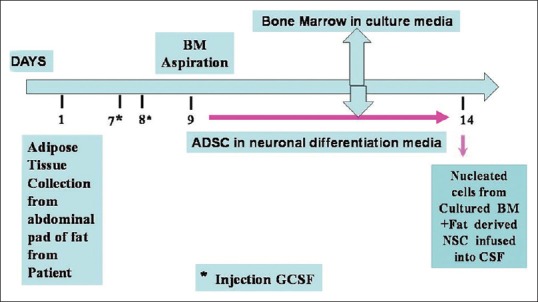
Ten patients with posttraumatic paraplegia of mean age 3.42 years were volunteered for SCT. Their mean age was 28 years, and they had variable associated complications. They were subjected to adipose tissue resection for in vitro generation of N-Ad-MSC and bone marrow aspiration for generation of HSC. Generated SCs were infused into the cerebrospinal fluid (CSF) below injury site in all patients.
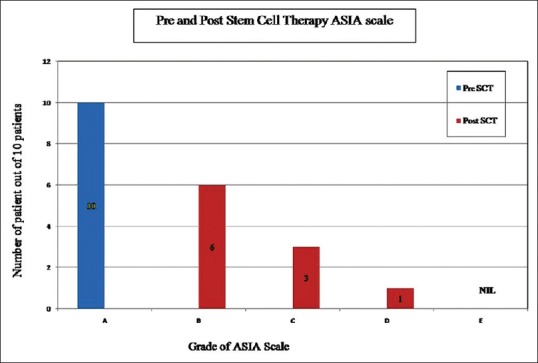
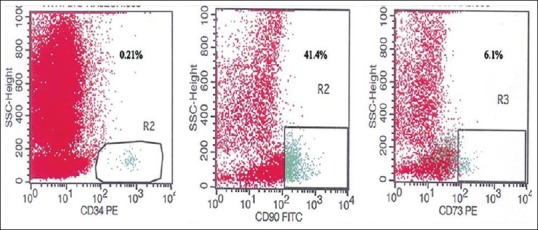
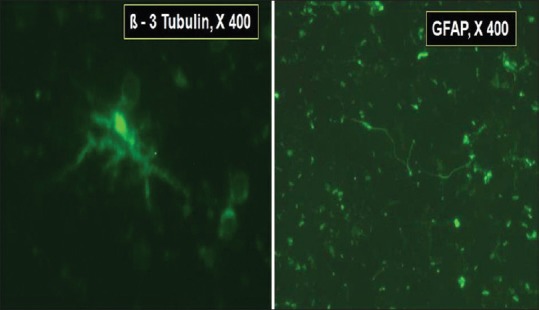
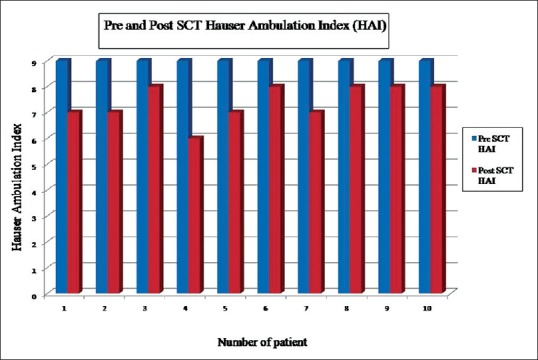
Total mean quantum of SC infused was 4.04 ml with a mean nucleated cell count of 4.5 × 10(4)/μL and mean CD34+ of 0.35%, CD45-/90+ and CD45-/73+ of 41.4%, and 10.04%, respectively. All of them expressed transcription factors beta-3 tubulin and glial fibrillary acid protein. No untoward effect of SCT was noted. Variable and sustained improvement in Hauser's index and American Spinal Injury Association score was noted in all patients over a mean follow-up of 2.95 years. Mean injury duration was 3.42 years against the period of approximately 1-year required for natural recovery, suggesting a positive role of SCs.
Co-infusion of N-Ad-MSC and HSC in CSF is safe and viable therapeutic approach for SCIs.
脊髓损伤(SCI)目前的治疗方式不太可能实现恢复。干细胞(SC)疗法(SCT)在再生医学领域有前景良好的结果。我们展示了在一组创伤后截瘫患者中联合输注自体脂肪组织来源的间充质干细胞分化的神经元细胞(N-Ad-MSC)和造血干细胞(HSC)的经验。
10例平均年龄3.42岁的创伤后截瘫患者自愿接受SCT。他们的平均年龄为28岁,伴有多种相关并发症。对他们进行脂肪组织切除以体外生成N-Ad-MSC,并进行骨髓穿刺以生成HSC。将生成的干细胞输注到所有患者损伤部位以下的脑脊液(CSF)中。
输注的干细胞总量平均为4.04 ml,平均有核细胞计数为4.5×10⁴/μL,平均CD34⁺为0.35%,CD45⁻/90⁺和CD45⁻/73⁺分别为41.4%和10.04%。所有细胞均表达转录因子β-3微管蛋白和胶质纤维酸性蛋白。未观察到SCT的不良影响。在平均2.95年的随访中,所有患者的豪泽指数和美国脊髓损伤协会评分均有不同程度的持续改善。平均损伤持续时间为3.42年,而自然恢复大约需要1年时间,这表明干细胞起到了积极作用。
在脑脊液中联合输注N-Ad-MSC和HSC是治疗脊髓损伤安全可行的治疗方法。