Foerster John, Boswell Kirsty, West Jonathan, Cameron Heather, Fleming Colin, Ibbotson Sally, Dawe Robert
University of Dundee, Medical School, Dundee, Scotland.
Department of Dermatology and Photobiology, NHS Tayside, Dundee, Scotland.
PLoS One. 2017 Aug 3;12(8):e0181813. doi: 10.1371/journal.pone.0181813. eCollection 2017.
Narrowband NB-UVB phototherapy (NB-UVB) is an effective treatment for psoriasis, as demonstrated by clinical trials. However, due to required infrastructure and need for treatment attendance opinions on the value of offering this treatment in routine practice vary. AIMS: To provide high quality large-scale and long-term data on the efficacy of NB-UVB for psoriasis under real-world conditions in order to assist in management decisions.
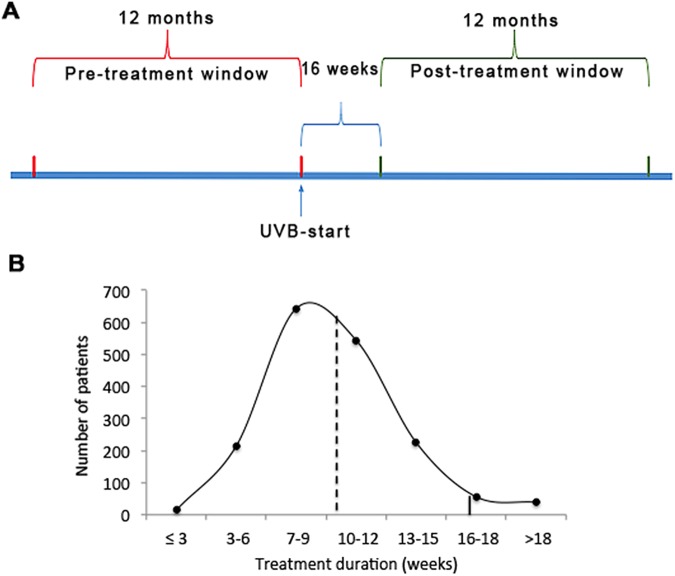
The following resources were employed: (1) complete and prospectively recorded prescription drug records for a population of 420,000 marked by low demographic mobility, (2) prospectively recorded clinical treatment outcomes for all NB-UVB treatment episodes occurring in the local population; (3) complete dermatology electronic treatment records of all psoriasis patients, allowing cross-validation of diagnoses and treatment records. Using these data sets, we analysed all first-ever initial NB-UVB treatment episodes occurring over 79 months (n = 1749) for both clinical outcomes and the effect of NB-UVB on the use of topical treatments for psoriasis.
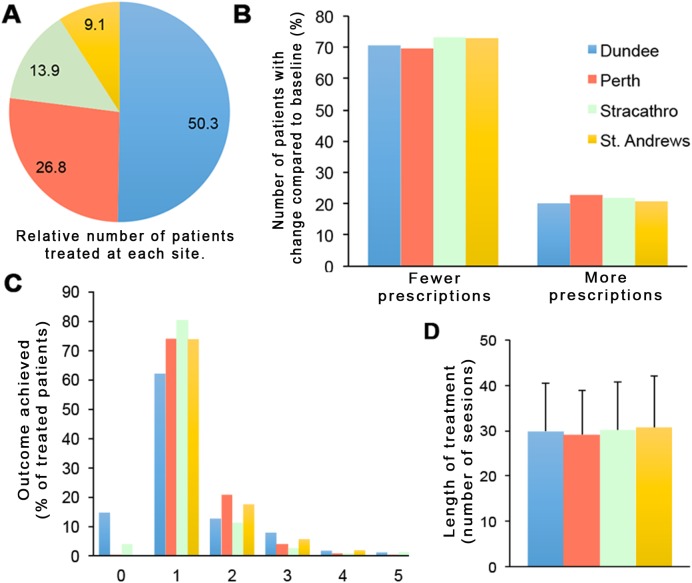
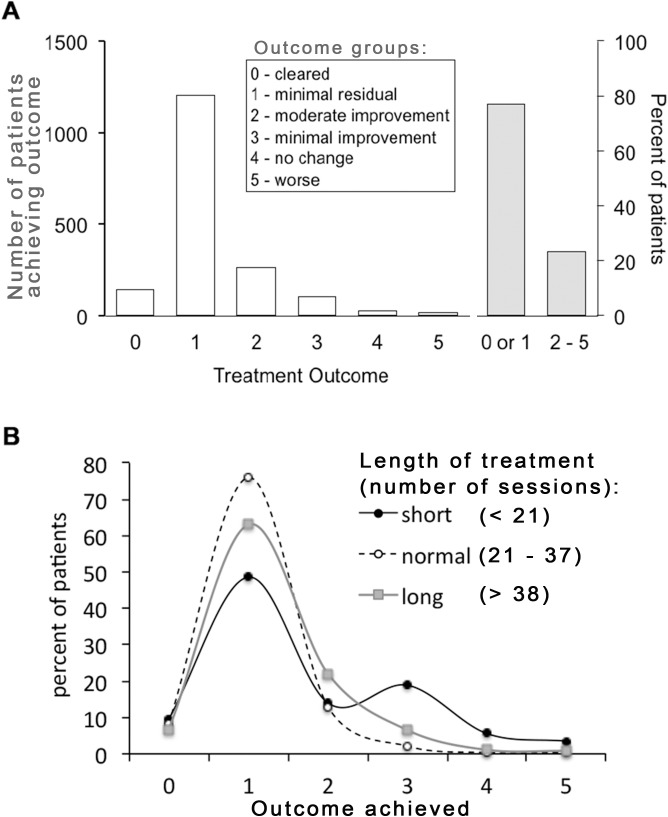
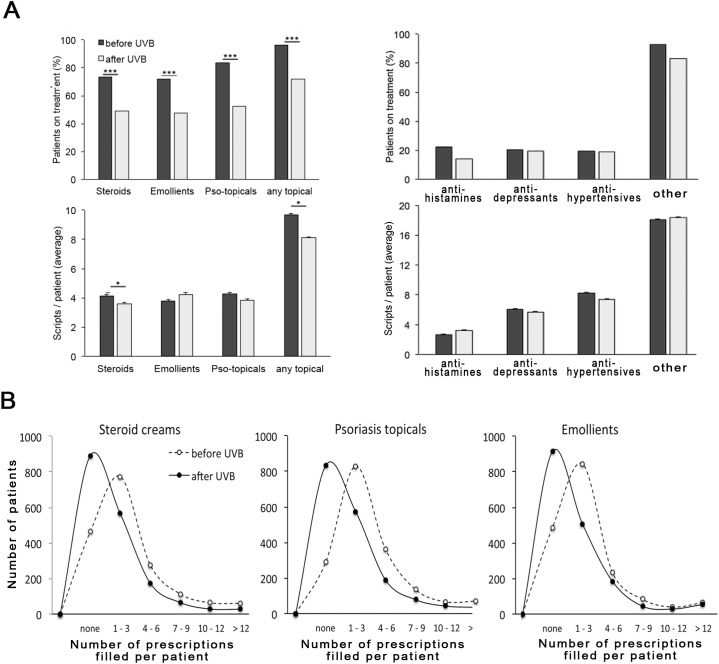
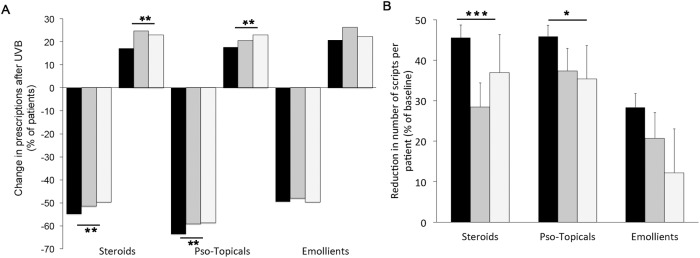
Around 75% of patients both achieved a status of "clear/minimal disease" and used fewer topical treatments. NB-UVB treatment led to a strong reduction for both steroid creams (25%) and psoriasis-specific topicals, e.g. vitamin-D products (30%) during the 12-month period following NB-UVB treatment. The effects measured were specific as no effect of NB-UVB was noted on drug prescriptions unrelated to psoriasis. Results were independent of individuals administering and/or scoring treatment, as they were highly similar between four geographically separate locations.
NB-UVB treatment is highly effective and leads to a remarkable reduction in the need for topical cream treatments for a period of at least 12 months.
如临床试验所示,窄谱中波紫外线光疗(NB-UVB)是治疗银屑病的一种有效方法。然而,由于所需的基础设施以及需要患者就诊,对于在常规临床实践中提供这种治疗的价值存在不同看法。目的:提供关于NB-UVB在实际临床条件下治疗银屑病疗效的高质量大规模长期数据,以辅助管理决策。
采用了以下资源:(1)针对42万人口的完整且前瞻性记录的处方药记录,这些人口的人口流动性较低;(2)前瞻性记录当地人群中所有NB-UVB治疗疗程的临床治疗结果;(3)所有银屑病患者完整的皮肤科电子治疗记录,可对诊断和治疗记录进行交叉验证。利用这些数据集,我们分析了79个月内发生的所有首次NB-UVB初始治疗疗程(n = 1749)的临床结果以及NB-UVB对银屑病局部治疗使用情况的影响。
约75%的患者达到“皮损清除/基本消退”状态,且局部治疗药物使用量减少。NB-UVB治疗使糖皮质激素乳膏(25%)和银屑病专用局部用药(如维生素D类产品,30%)在NB-UVB治疗后的12个月内使用量大幅减少。所测得的效果具有特异性,因为未观察到NB-UVB对与银屑病无关的药物处方有影响。结果与实施治疗和/或评估治疗的个体无关,因为在四个地理位置不同的地点之间结果高度相似。
NB-UVB治疗非常有效,且至少在12个月内显著减少了局部乳膏治疗的需求。