Hassan Ali Saleh, Houston Kelly, Lahnstein Jelle, Shirley Neil, Schwerdt Julian G, Gidley Michael J, Waugh Robbie, Little Alan, Burton Rachel A
ARC Centre of Excellence in Plant Cell Walls, School of Agriculture, Food and Wine, University of Adelaide, Waite Campus, Glen Osmond, South Australia, Australia.
The James Hutton Institute, Invergowrie, Dundee, Scotland.
PLoS One. 2017 Aug 3;12(8):e0182537. doi: 10.1371/journal.pone.0182537. eCollection 2017.
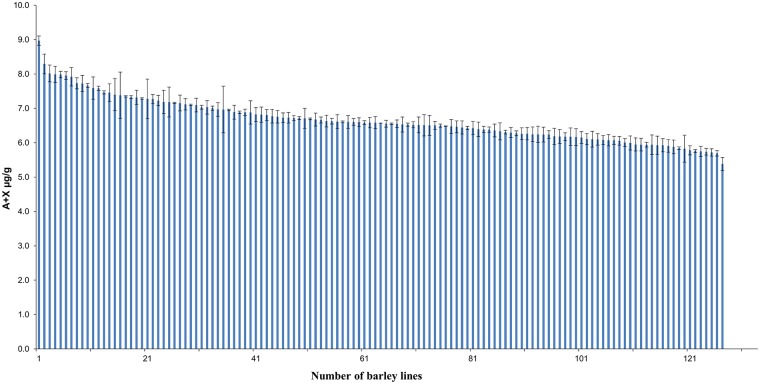
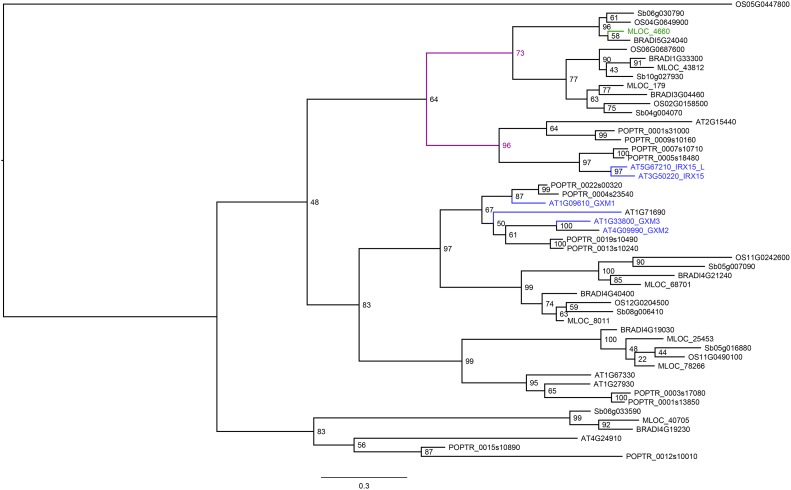
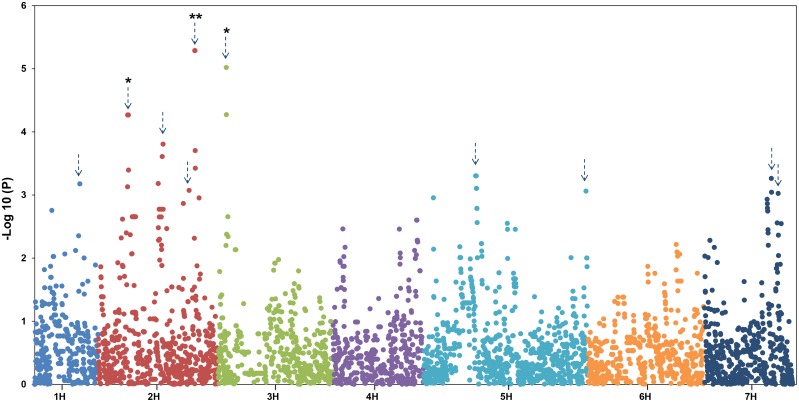
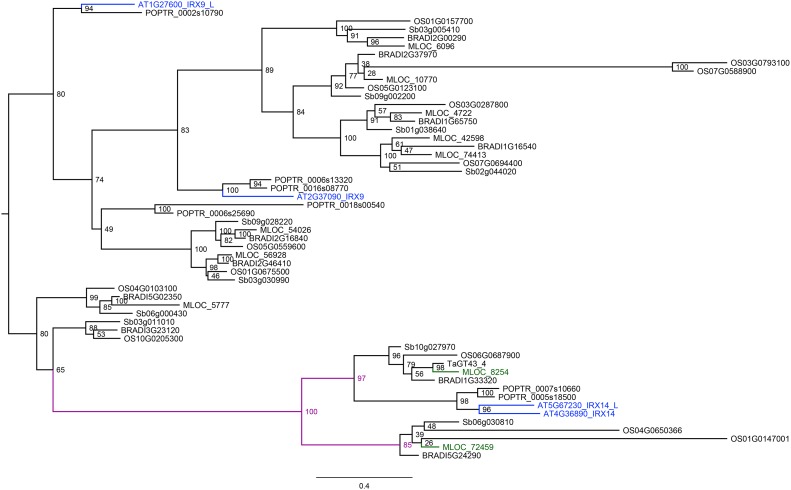
In barley endosperm arabinoxylan (AX) is the second most abundant cell wall polysaccharide and in wheat it is the most abundant polysaccharide in the starchy endosperm walls of the grain. AX is one of the main contributors to grain dietary fibre content providing several health benefits including cholesterol and glucose lowering effects, and antioxidant activities. Due to its complex structural features, AX might also affect the downstream applications of barley grain in malting and brewing. Using a high pressure liquid chromatography (HPLC) method we quantified AX amounts in mature grain in 128 spring 2-row barley accessions. Amounts ranged from ~ 5.2 μg/g to ~ 9 μg/g. We used this data for a Genome Wide Association Study (GWAS) that revealed three significant quantitative trait loci (QTL) associated with grain AX levels which passed a false discovery threshold (FDR) and are located on two of the seven barley chromosomes. Regions underlying the QTLs were scanned for genes likely to be involved in AX biosynthesis or turnover, and strong candidates, including glycosyltransferases from the GT43 and GT61 families and glycoside hydrolases from the GH10 family, were identified. Phylogenetic trees of selected gene families were built based on protein translations and were used to examine the relationship of the barley candidate genes to those in other species. Our data reaffirms the roles of existing genes thought to contribute to AX content, and identifies novel QTL (and candidate genes associated with them) potentially influencing the AX content of barley grain. One potential outcome of this work is the deployment of highly associated single nucleotide polymorphisms markers in breeding programs to guide the modification of AX abundance in barley grain.
在大麦胚乳中,阿拉伯木聚糖(AX)是第二丰富的细胞壁多糖,而在小麦中,它是谷物淀粉胚乳细胞壁中最丰富的多糖。AX是谷物膳食纤维含量的主要贡献者之一,具有多种健康益处,包括降低胆固醇和血糖的作用以及抗氧化活性。由于其复杂的结构特征,AX可能还会影响大麦籽粒在麦芽制造和酿造中的下游应用。我们使用高压液相色谱(HPLC)方法对128份二棱春大麦品种成熟籽粒中的AX含量进行了定量分析。含量范围在约5.2μg/g至约9μg/g之间。我们将这些数据用于全基因组关联研究(GWAS),该研究揭示了三个与籽粒AX水平相关的显著数量性状位点(QTL),这些位点通过了错误发现阈值(FDR),并位于七条大麦染色体中的两条上。对QTL所在区域进行扫描,寻找可能参与AX生物合成或周转的基因,并鉴定出了强有力的候选基因,包括GT43和GT61家族的糖基转移酶以及GH10家族的糖苷水解酶。基于蛋白质翻译构建了选定基因家族的系统发育树,并用于研究大麦候选基因与其他物种中基因的关系。我们的数据再次证实了现有基因对AX含量的贡献作用,并鉴定出了可能影响大麦籽粒AX含量的新QTL(以及与之相关的候选基因)。这项工作的一个潜在成果是在育种计划中部署高度相关的单核苷酸多态性标记,以指导大麦籽粒中AX丰度的改良。