Li Chao, Li Qingde, Ni Xiaohui, Liu Guoxiang, Cheng Wanli, Han Guangping
Key Laboratory of Bio-based Material Science and Technology (Ministry of Education), Northeast Forestry University, Harbin 150040, China.
Materials (Basel). 2017 May 24;10(6):572. doi: 10.3390/ma10060572.
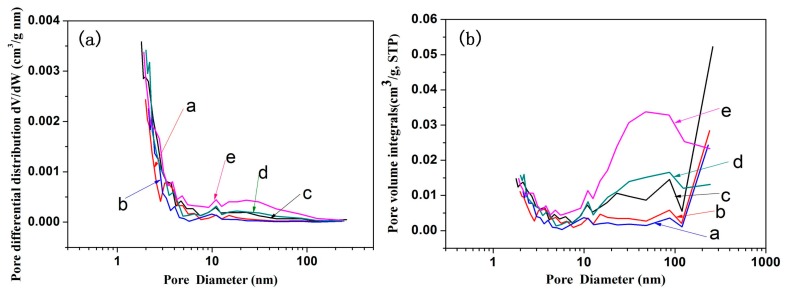
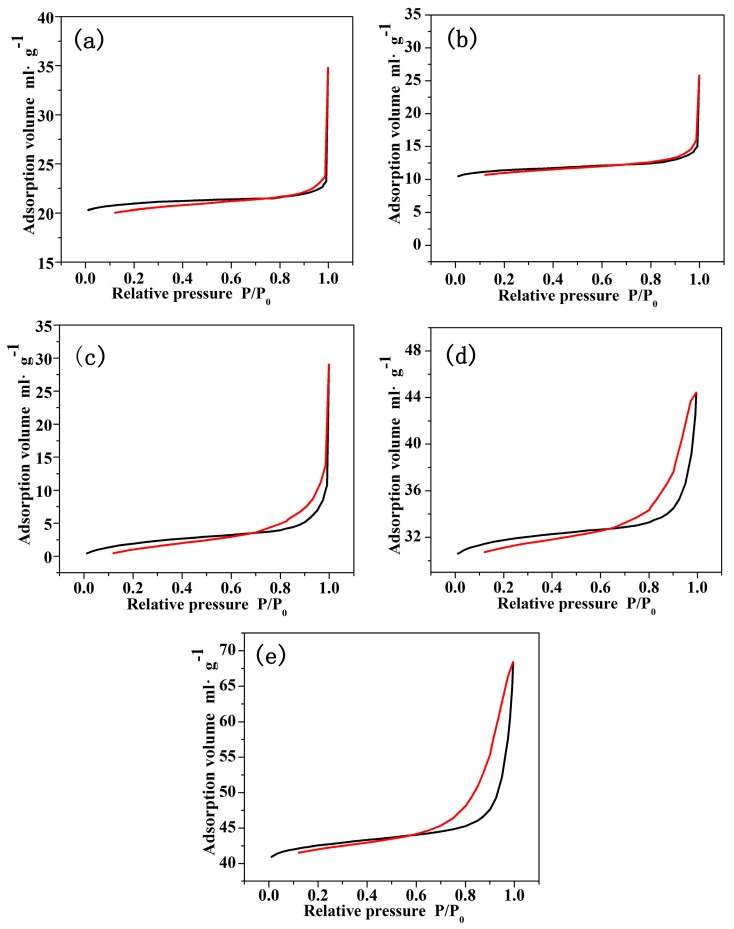
A modified coaxial electrospinning process was used to prepare composite nanofibrous mats from a poly(methyl methacrylate) (PMMA) solution with the addition of different cellulose nanocrystals (CNCs) as the sheath fluid and polyacrylonitrile (PAN) solution as the core fluid. This study investigated the conductivity of the as-spun solutions that increased significantly with increasing CNCs addition, which favors forming uniform fibers. This study discussed the effect of different CNCs addition on the morphology, thermal behavior, and the multilevel structure of the coaxial electrospun PMMA + CNCs/PAN composite nanofibers. A morphology analysis of the nanofibrous mats clearly demonstrated that the CNCs facilitated the production of the composite nanofibers with a core-shell structure. The diameter of the composite nanofibers decreased and the uniformity increased with increasing CNCs concentrations in the shell fluid. The composite nanofibrous mats had the maximum thermal decomposition temperature that was substantially higher than electrospun pure PMMA, PAN, as well as the core-shell PMMA/PAN nanocomposite. The BET (Brunauer, Emmett and Teller) formula results showed that the specific surface area of the CNCs reinforced core-shell composite significantly increased with increasing CNCs content. The specific surface area of the composite with 20% CNCs loading rose to 9.62 m²/g from 3.76 m²/g for the control. A dense porous structure was formed on the surface of the electrospun core-shell fibers.
采用改进的同轴静电纺丝工艺,以添加不同纤维素纳米晶体(CNCs)的聚甲基丙烯酸甲酯(PMMA)溶液为鞘液、聚丙烯腈(PAN)溶液为芯液来制备复合纳米纤维毡。本研究考察了初纺溶液的电导率,其随CNCs添加量的增加而显著提高,这有利于形成均匀的纤维。本研究讨论了不同CNCs添加量对同轴静电纺PMMA+CNCs/PAN复合纳米纤维的形态、热行为和多级结构的影响。对纳米纤维毡的形态分析清楚地表明,CNCs促进了具有核壳结构的复合纳米纤维的制备。随着鞘液中CNCs浓度的增加,复合纳米纤维的直径减小且均匀性提高。复合纳米纤维毡的最大热分解温度显著高于静电纺纯PMMA、PAN以及核壳结构的PMMA/PAN纳米复合材料。BET(布鲁诺尔、埃米特和泰勒)公式结果表明,随着CNCs含量的增加,CNCs增强的核壳复合材料的比表面积显著增大。负载20%CNCs的复合材料的比表面积从对照样的3.76 m²/g升至9.62 m²/g。在静电纺核壳纤维的表面形成了致密的多孔结构。