Zhu Jingxin, Huang Wenwen, Zhang Qiang, Ling Shengjie, Chen Ying, Kaplan David L
College of Materials Science and Engineering, Taiyuan University of Technology, 79 West Yingze Street, Taiyuan 030024, China.
Department of Biomedical Engineering, Tufts University, 4 Colby Street, Medford, MA 02155, USA.
Materials (Basel). 2016 Mar 23;9(4):221. doi: 10.3390/ma9040221.
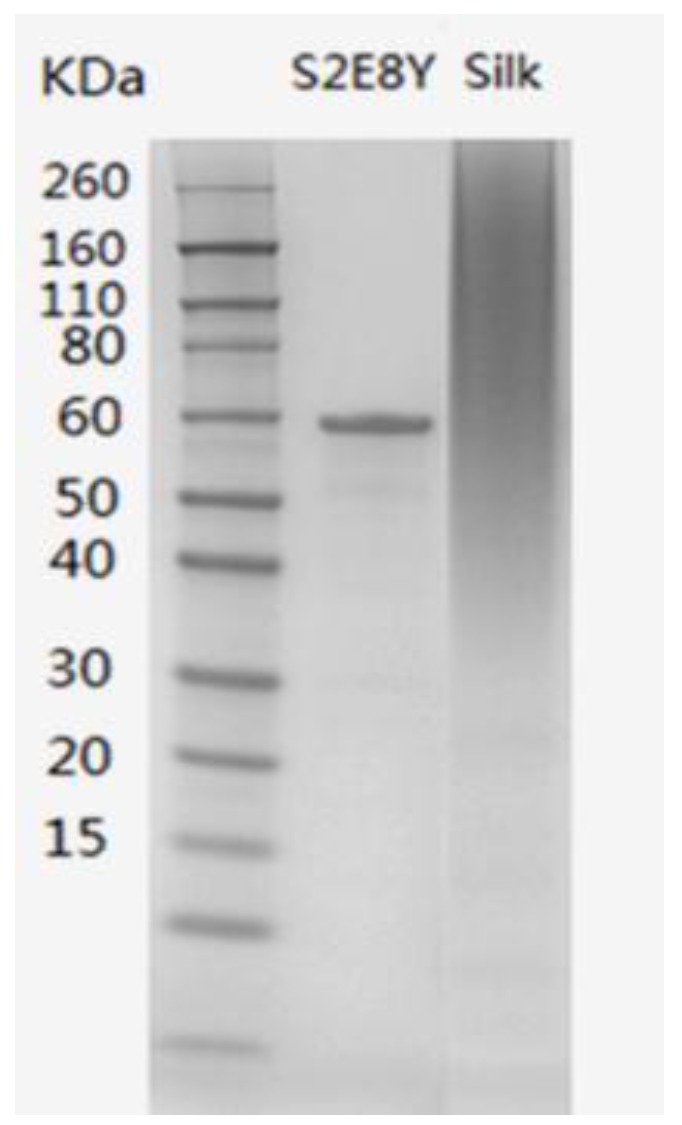
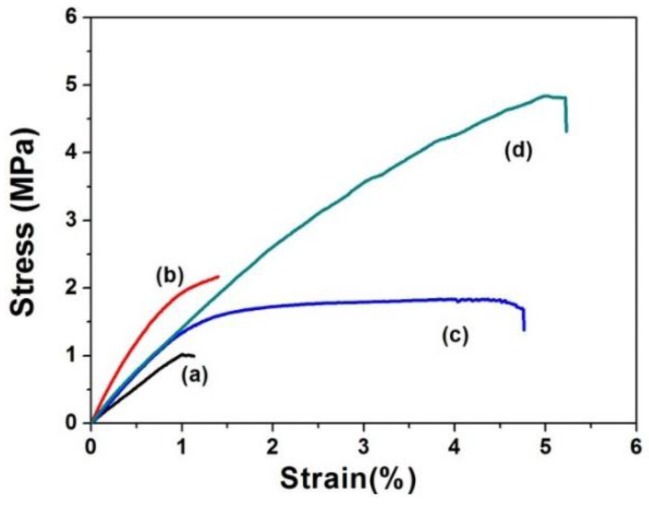
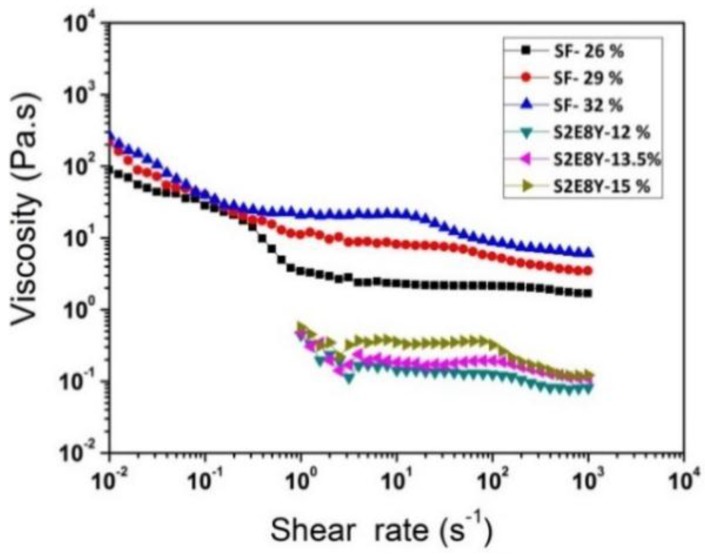
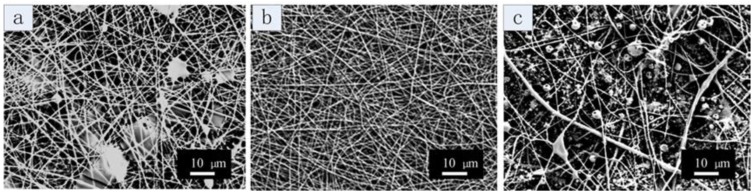
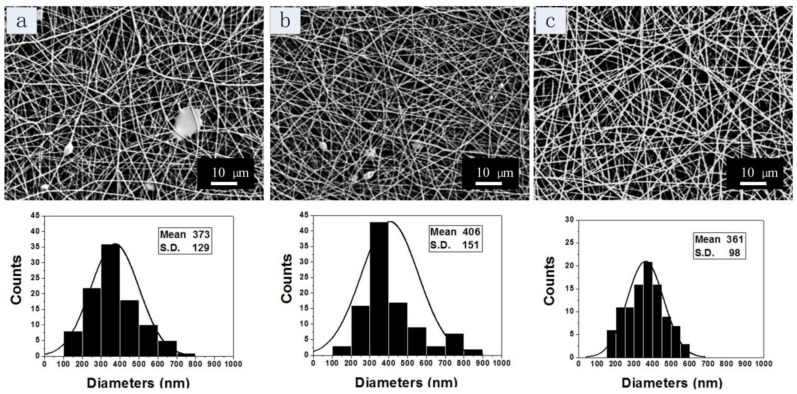
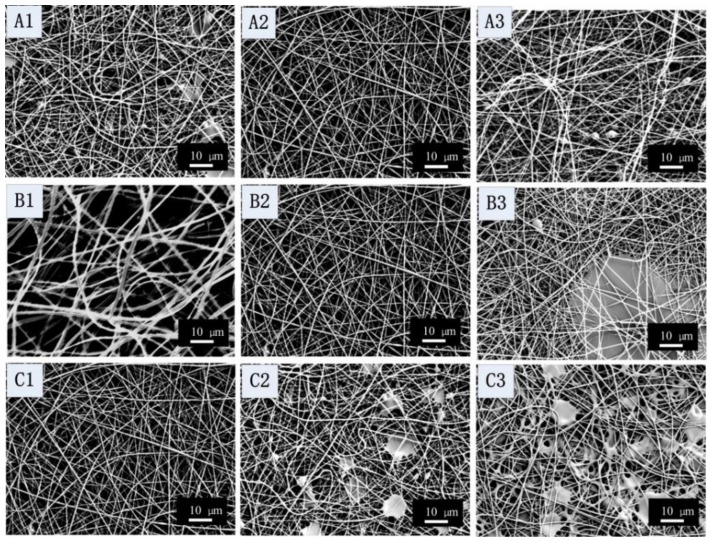
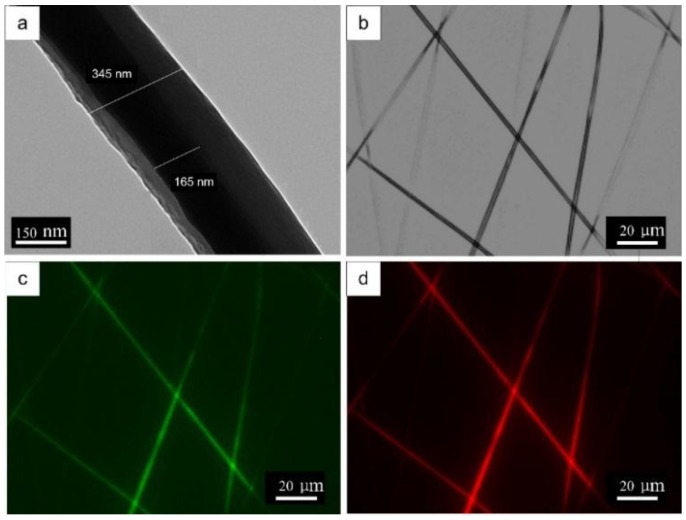
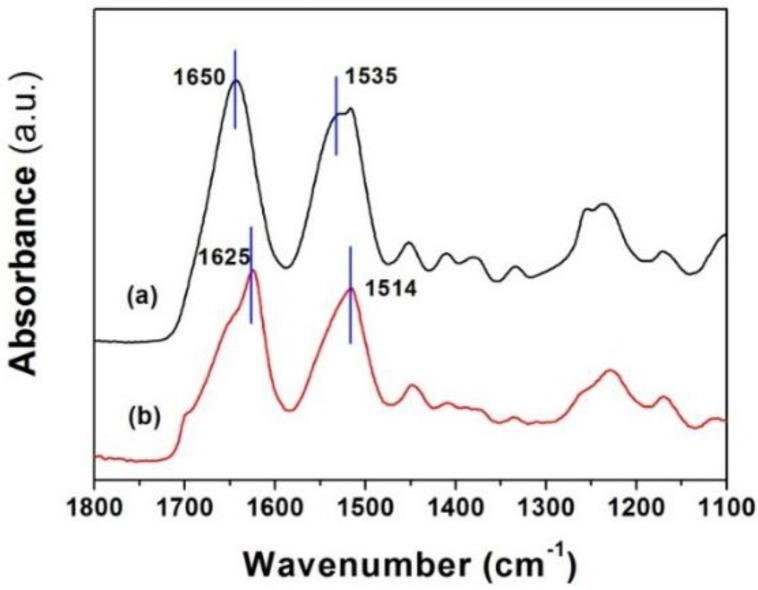
A nanofabrication method for the production of flexible core-shell structured silk elastin nanofibers is presented, based on an all-aqueous coaxial electrospinning process. In this process, silk fibroin (SF) and silk-elastin-like protein polymer (SELP), both in aqueous solution, with high and low viscosity, respectively, were used as the inner (core) and outer (shell) layers of the nanofibers. The electrospinnable SF core solution served as a spinning aid for the nonelectrospinnable SELP shell solution. Uniform nanofibers with average diameter from 301 ± 108 nm to 408 ± 150 nm were obtained through adjusting the processing parameters. The core-shell structures of the nanofibers were confirmed by fluorescence and electron microscopy. In order to modulate the mechanical properties and provide stability in water, the as-spun SF-SELP nanofiber mats were treated with methanol vapor to induce β-sheet physical crosslinks. FTIR confirmed the conversion of the secondary structure from a random coil to β-sheets after the methanol treatment. Tensile tests of SF-SELP core-shell structured nanofibers showed good flexibility with elongation at break of 5.20% ± 0.57%, compared with SF nanofibers with an elongation at break of 1.38% ± 0.22%. The SF-SELP core-shell structured nanofibers should provide useful options to explore in the field of biomaterials due to the improved flexibility of the fibrous mats and the presence of a dynamic SELP layer on the outer surface.
本文提出了一种基于全水相同轴静电纺丝工艺制备柔性核壳结构丝素弹性蛋白纳米纤维的纳米制造方法。在该工艺中,分别处于高粘度和低粘度水溶液中的丝素蛋白(SF)和类丝素弹性蛋白聚合物(SELP)被用作纳米纤维的内层(芯层)和外层(壳层)。可静电纺丝的SF芯层溶液作为不可静电纺丝的SELP壳层溶液的纺丝助剂。通过调整工艺参数,获得了平均直径为301±108nm至408±150nm的均匀纳米纤维。通过荧光和电子显微镜证实了纳米纤维的核壳结构。为了调节机械性能并提高在水中的稳定性,将初纺的SF-SELP纳米纤维毡用甲醇蒸汽处理以诱导β-折叠物理交联。傅里叶变换红外光谱(FTIR)证实了甲醇处理后二级结构从无规卷曲转变为β-折叠。SF-SELP核壳结构纳米纤维的拉伸试验显示出良好的柔韧性,断裂伸长率为5.20%±0.57%,而SF纳米纤维的断裂伸长率为1.38%±0.22%。由于纤维毡柔韧性的提高以及外表面存在动态SELP层,SF-SELP核壳结构纳米纤维在生物材料领域应提供有用的探索选项。