Fantino Erika, Chiappone Annalisa, Calignano Flaviana, Fontana Marco, Pirri Fabrizio, Roppolo Ignazio
Department of Applied Science and Technology, Politecnico di Torino, Corso Duca degli Abruzzi, 24, Torino 10129, Italy.
Center for Sustainable Futures@PoliTo, Istituto Italiano di Tecnologia, Corso Trento, 21, Torino 10129, Italy.
Materials (Basel). 2016 Jul 19;9(7):589. doi: 10.3390/ma9070589.
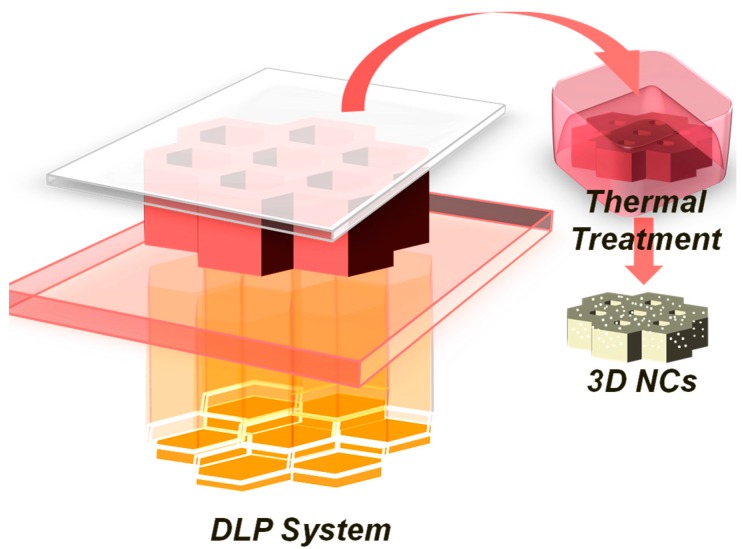
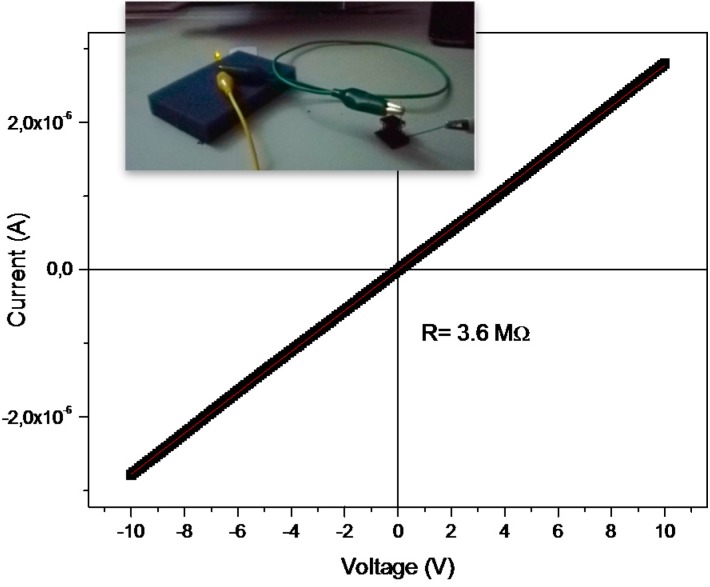
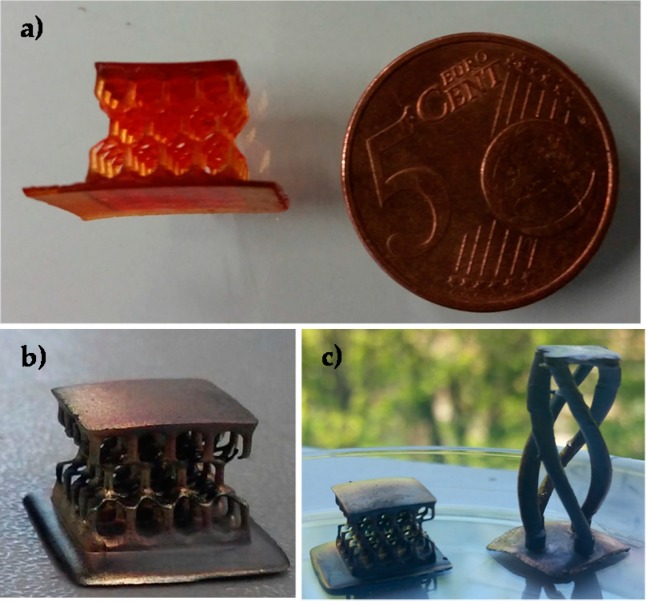
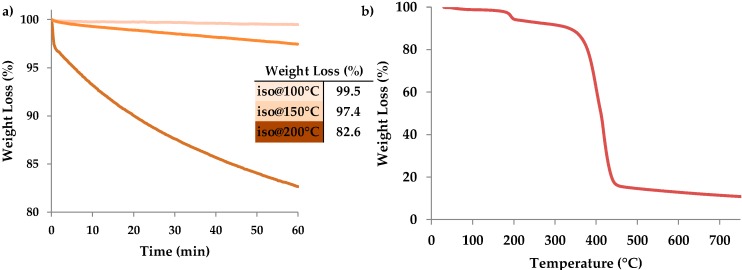
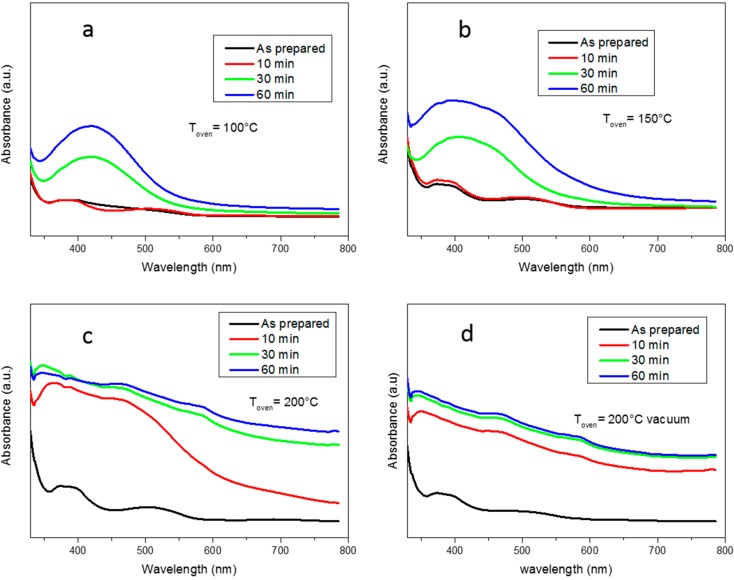
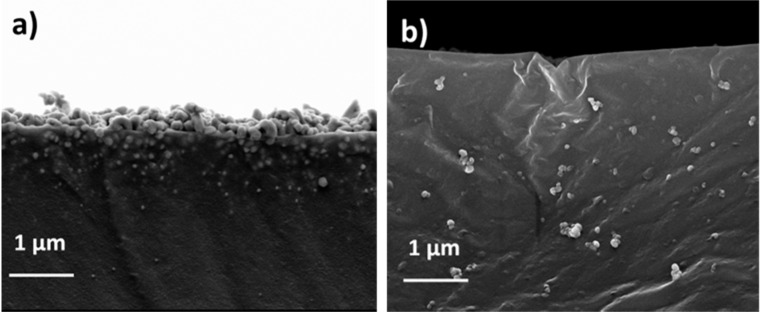
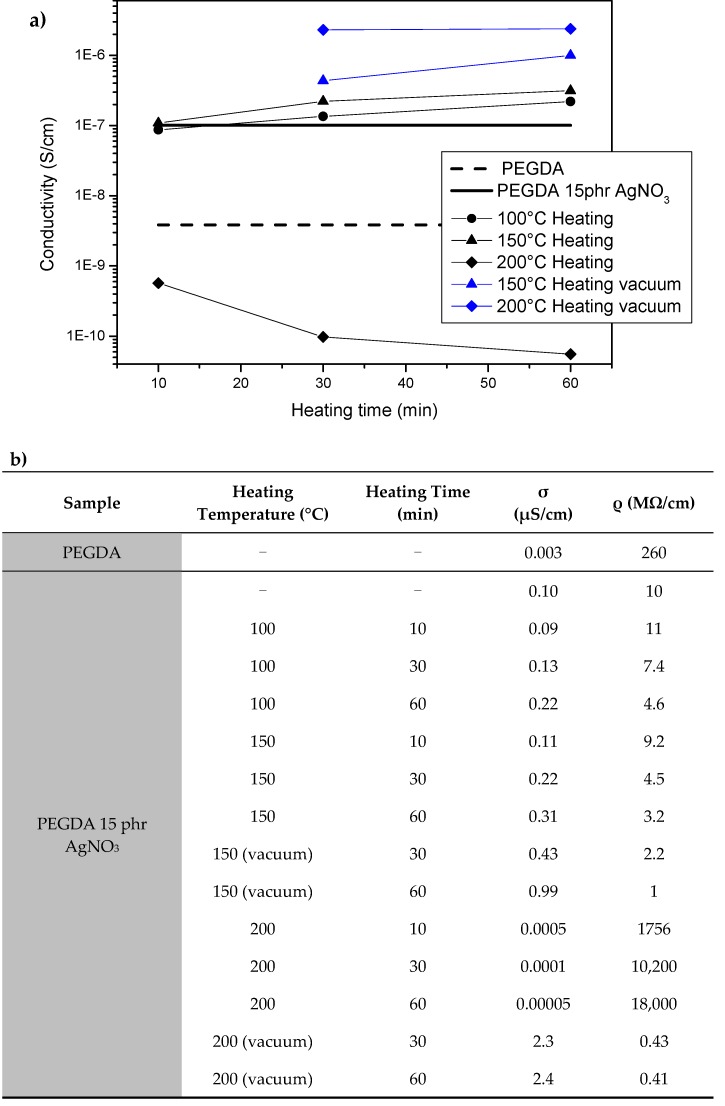
Polymer nanocomposites have always attracted the interest of researchers and industry because of their potential combination of properties from both the nanofillers and the hosting matrix. Gathering nanomaterials and 3D printing could offer clear advantages and numerous new opportunities in several application fields. Embedding nanofillers in a polymeric matrix could improve the final material properties but usually the printing process gets more difficult. Considering this drawback, in this paper we propose a method to obtain polymer nanocomposites by in situ generation of nanoparticles after the printing process. 3D structures were fabricated through a Digital Light Processing (DLP) system by disolving metal salts in the starting liquid formulation. The 3D fabrication is followed by a thermal treatment in order to induce in situ generation of metal nanoparticles (NPs) in the polymer matrix. Comprehensive studies were systematically performed on the thermo-mechanical characteristics, morphology and electrical properties of the 3D printed nanocomposites.
聚合物纳米复合材料一直吸引着研究人员和工业界的兴趣,因为它们有可能结合纳米填料和主体基质的特性。收集纳米材料和3D打印在多个应用领域可能会带来明显优势和众多新机遇。将纳米填料嵌入聚合物基质中可以改善最终材料的性能,但通常打印过程会变得更加困难。考虑到这一缺点,在本文中,我们提出了一种在打印过程后通过原位生成纳米颗粒来获得聚合物纳米复合材料的方法。通过数字光处理(DLP)系统,将金属盐溶解在起始液体配方中,制造出3D结构。3D制造之后进行热处理,以在聚合物基质中原位生成金属纳米颗粒(NPs)。对3D打印纳米复合材料的热机械特性、形态和电学性能进行了系统的综合研究。