Khan Faiz M, Marquardt Stephan, Gupta Shailendra K, Knoll Susanne, Schmitz Ulf, Spitschak Alf, Engelmann David, Vera Julio, Wolkenhauer Olaf, Pützer Brigitte M
Department of Systems Biology and Bioinformatics, University of Rostock, 18051, Rostock, Germany.
Institute of Experimental Gene Therapy and Cancer Research, Rostock University Medical Center, 18057, Rostock, Germany.
Nat Commun. 2017 Aug 4;8(1):198. doi: 10.1038/s41467-017-00268-2.
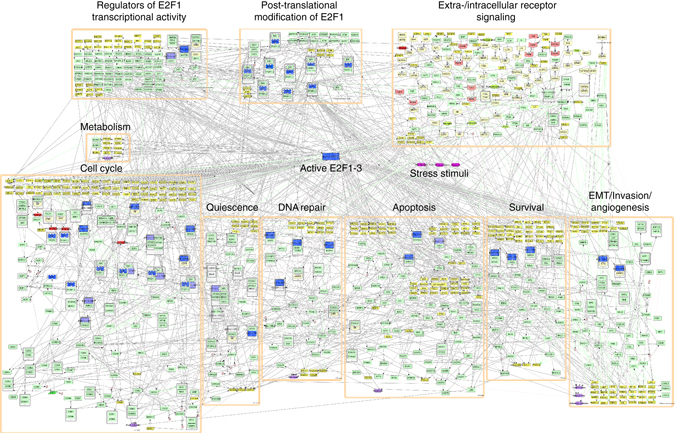
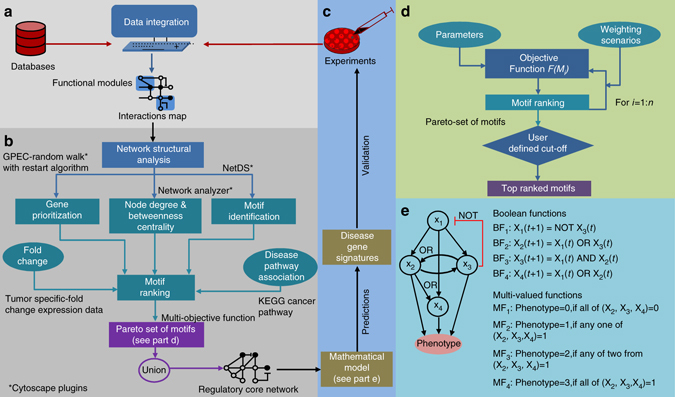
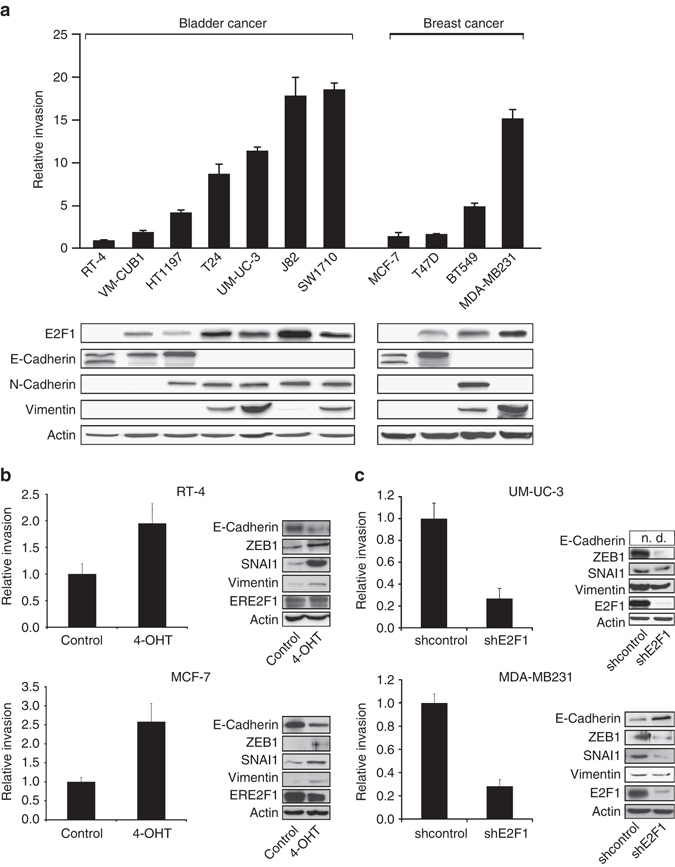
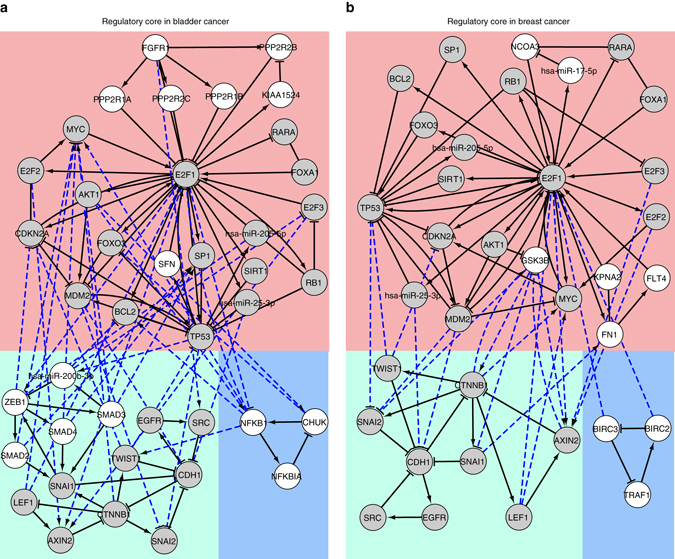
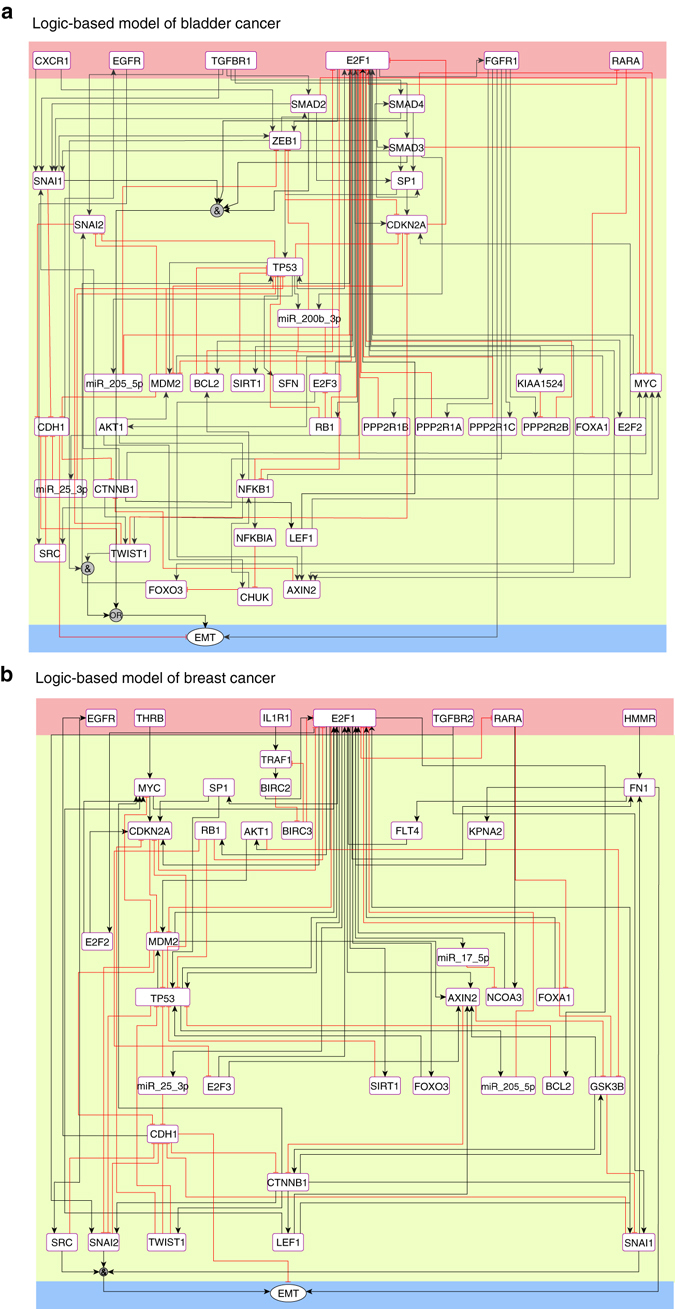
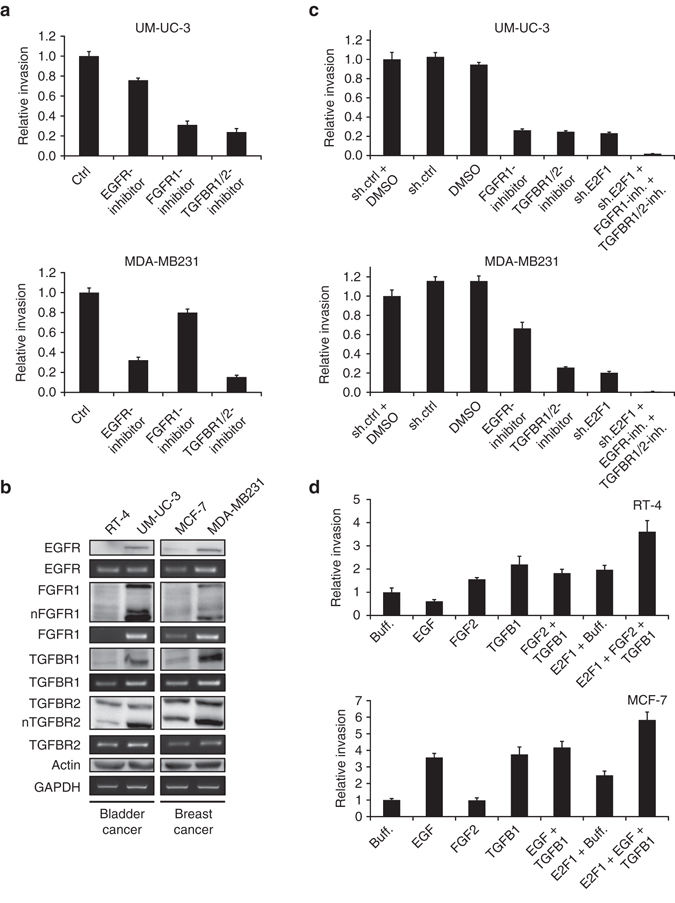
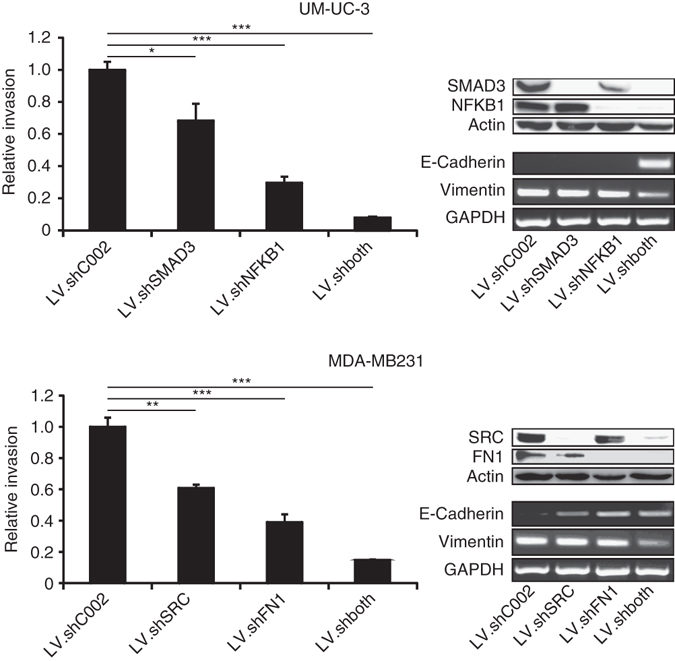
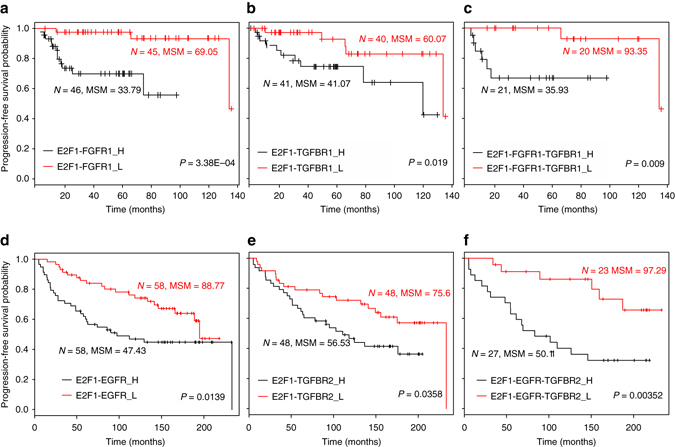
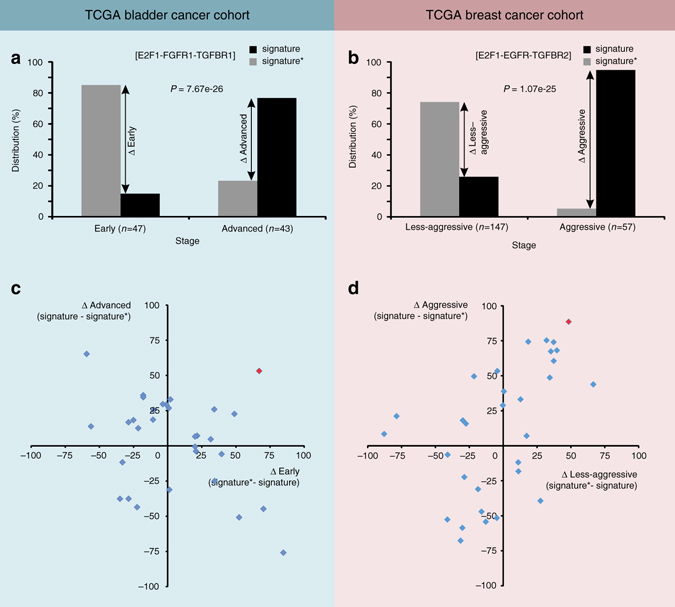
Cancer is a disease of subverted regulatory pathways. In this paper, we reconstruct the regulatory network around E2F, a family of transcription factors whose deregulation has been associated to cancer progression, chemoresistance, invasiveness, and metastasis. We integrate gene expression profiles of cancer cell lines from two E2F1-driven highly aggressive bladder and breast tumors, and use network analysis methods to identify the tumor type-specific core of the network. By combining logic-based network modeling, in vitro experimentation, and gene expression profiles from patient cohorts displaying tumor aggressiveness, we identify and experimentally validate distinctive, tumor type-specific signatures of receptor proteins associated to epithelial-mesenchymal transition in bladder and breast cancer. Our integrative network-based methodology, exemplified in the case of E2F1-induced aggressive tumors, has the potential to support the design of cohort- as well as tumor type-specific treatments and ultimately, to fight metastasis and therapy resistance.Deregulation of E2F family transcription factors is associated with cancer progression and metastasis. Here, the authors construct a map of the regulatory network around the E2F family, and using gene expression profiles, identify tumour type-specific regulatory cores and receptor expression signatures associated with epithelial-mesenchymal transition in bladder and breast cancer.
癌症是一种调节通路被颠覆的疾病。在本文中,我们重建了围绕E2F的调控网络,E2F是一类转录因子家族,其失调与癌症进展、化疗耐药性、侵袭性和转移相关。我们整合了来自两种由E2F1驱动的高度侵袭性膀胱癌和乳腺癌癌细胞系的基因表达谱,并使用网络分析方法来识别该网络中肿瘤类型特异性的核心部分。通过结合基于逻辑的网络建模、体外实验以及来自显示肿瘤侵袭性的患者队列的基因表达谱,我们识别并通过实验验证了与膀胱癌和乳腺癌上皮-间质转化相关的受体蛋白的独特的、肿瘤类型特异性特征。我们基于网络的综合方法,以E2F1诱导的侵袭性肿瘤为例,有潜力支持设计针对队列以及肿瘤类型的特异性治疗方法,并最终对抗转移和治疗耐药性。E2F家族转录因子的失调与癌症进展和转移相关。在此,作者构建了围绕E2F家族的调控网络图谱,并利用基因表达谱识别了与膀胱癌和乳腺癌上皮-间质转化相关的肿瘤类型特异性调控核心和受体表达特征。