Kidney Disease@Farr Collaboration, University of Aberdeen, Aberdeen, UK; and Kidney Disease@Farr Collaboration, University of Southampton, Southampton, UK.
Kidney Disease@Farr Collaboration, University of Aberdeen, Aberdeen, UK; and Kidney Disease@Farr Collaboration, University of Southampton, Southampton, UK.
Adv Chronic Kidney Dis. 2017 Jul;24(4):194-204. doi: 10.1053/j.ackd.2017.05.001.
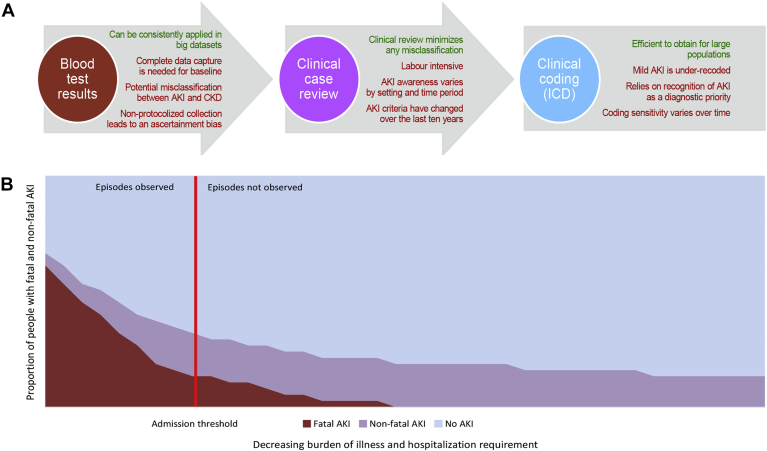
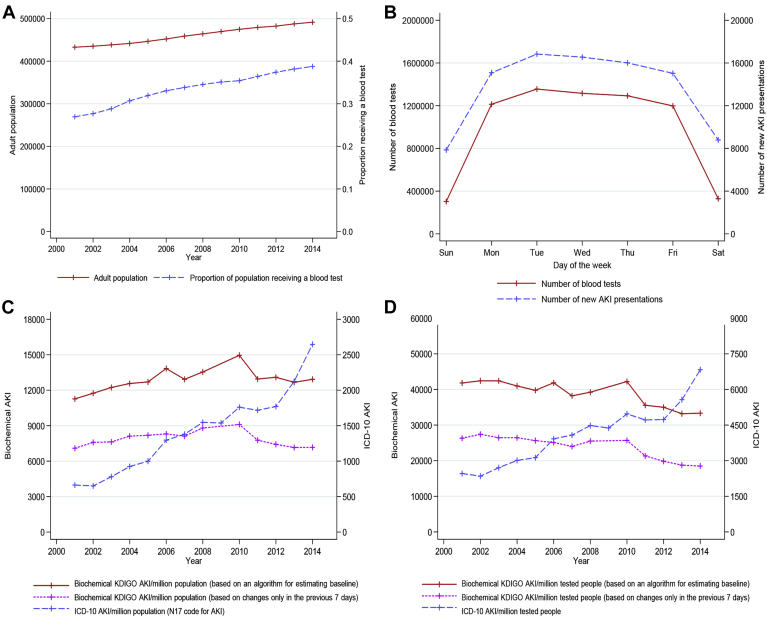
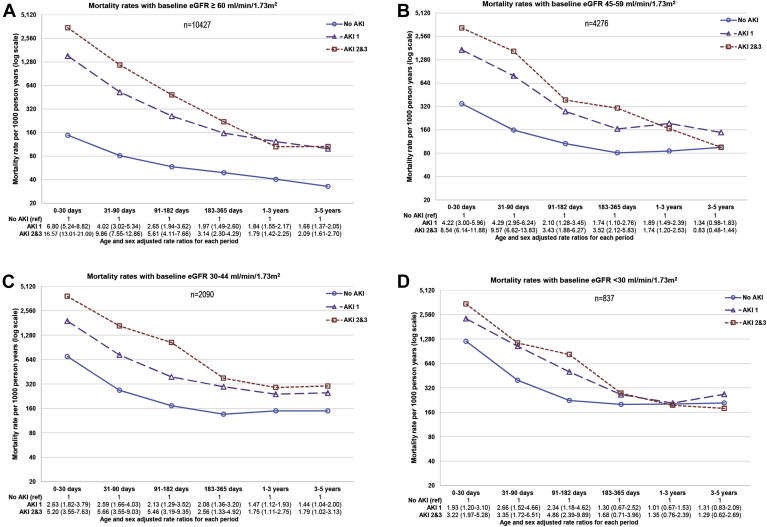
Large observational databases linking kidney function and other routine patient health data are increasingly being used to study acute kidney injury (AKI). Routine health care data show an apparent rise in the incidence of population AKI and an increase in acute dialysis. Studies also report an excess in mortality and adverse renal outcomes after AKI, although with variation depending on AKI severity, baseline, definition of renal recovery, and the time point during follow-up. However, differences in data capture, AKI awareness, monitoring, recognition, and clinical practice make comparisons between health care settings and periods difficult. In this review, we describe the growing role of large databases in determining the incidence and prognosis of AKI and evaluating initiatives to improve the quality of care in AKI. Using examples, we illustrate this use of routinely collected health data and discuss the strengths, limitations, and implications for researchers and clinicians.
大型观察性数据库将肾脏功能和其他常规患者健康数据联系起来,越来越多地被用于研究急性肾损伤 (AKI)。常规健康数据显示人群 AKI 的发病率明显上升,急性透析的数量也在增加。研究还报告称,AKI 后死亡率和不良肾脏结局过高,尽管具体取决于 AKI 的严重程度、基线、肾脏恢复的定义以及随访期间的时间点。然而,数据采集、AKI 意识、监测、识别和临床实践方面的差异使得在医疗保健环境和时期之间进行比较变得困难。在这篇综述中,我们描述了大型数据库在确定 AKI 的发病率和预后以及评估改善 AKI 护理质量的举措方面所发挥的作用日益增强。我们将通过示例说明如何使用常规收集的健康数据,并讨论其对研究人员和临床医生的优势、局限性和影响。