Laboratory of Developmental Cell Biology and Disease, School of Ophthalmology and Optometry and Eye Hospital, Wenzhou Medical University, Wenzhou, China.
State Key Laboratory and Key Laboratory of Vision Science of Ministry of Health and Zhejiang Provincial Key Laboratory of Ophthalmology, Wenzhou, 325003, China.
Sci Rep. 2017 Aug 4;7(1):7272. doi: 10.1038/s41598-017-07683-x.
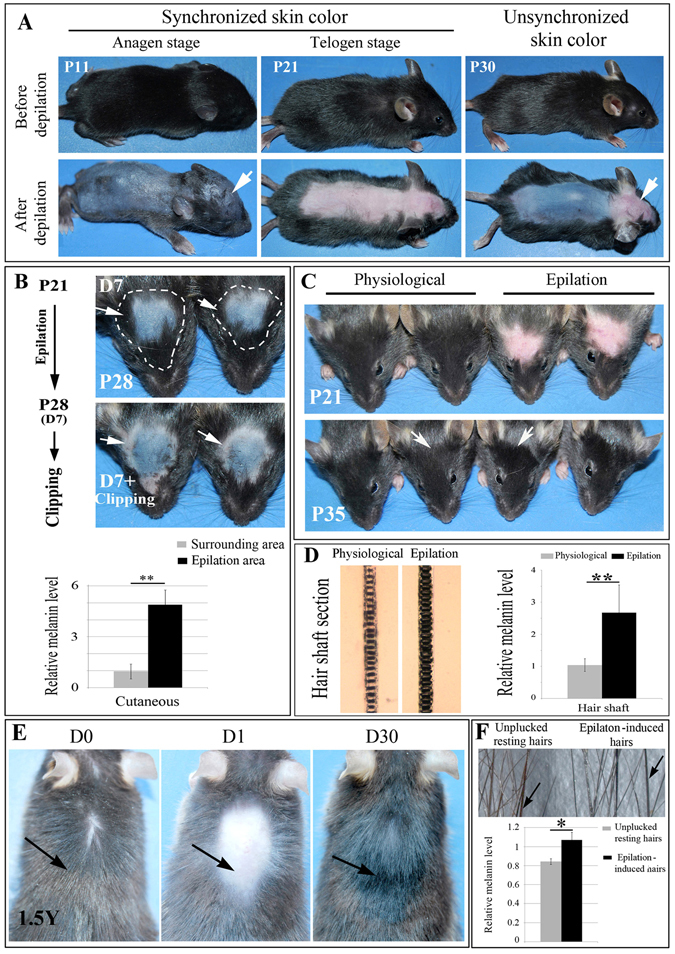
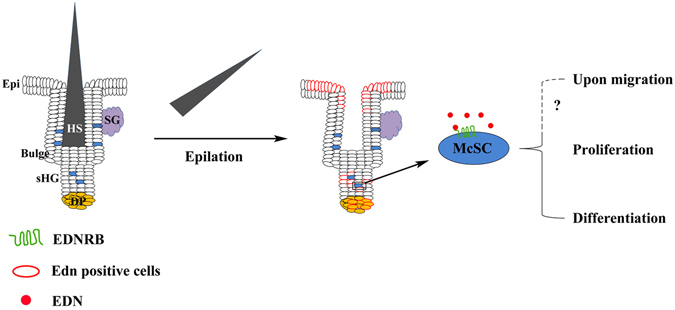
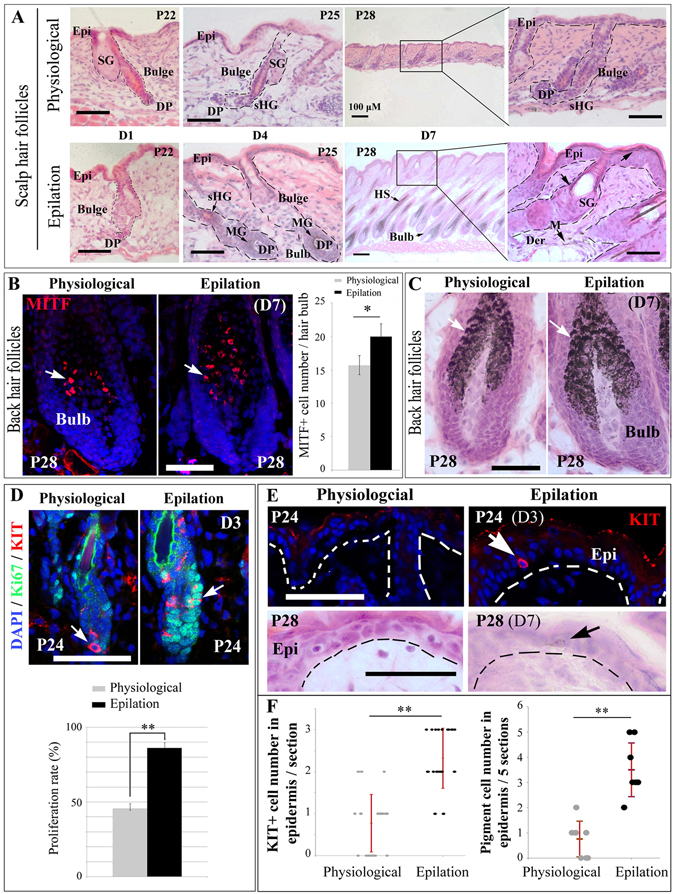
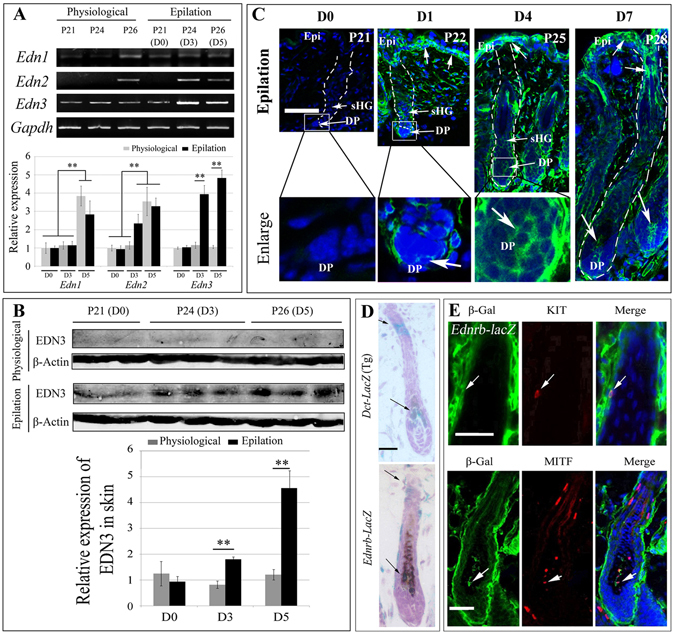
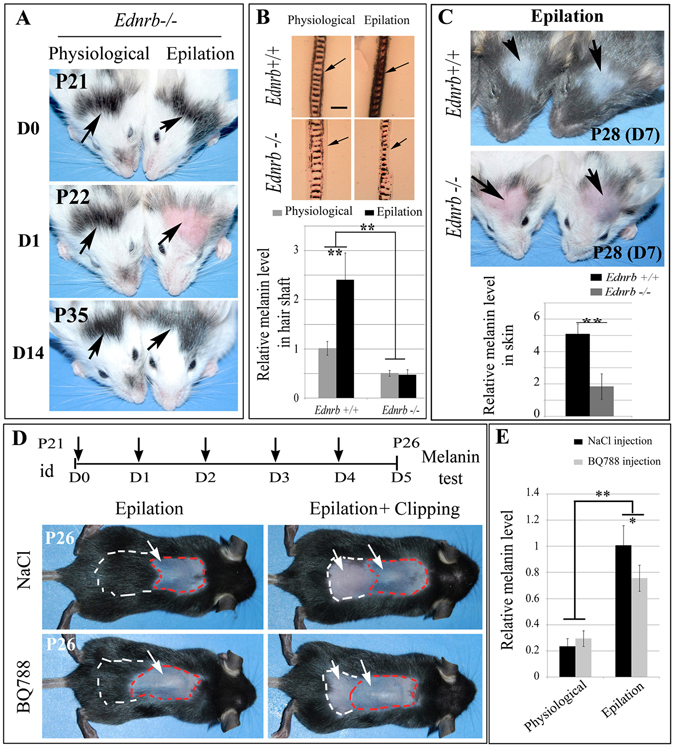
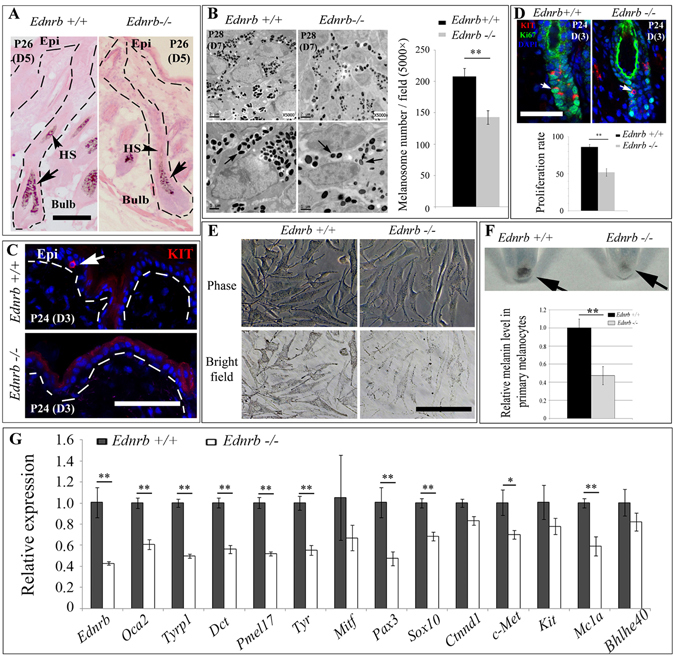
In response to various types of injury, melanocyte stem cells (McSCs) located in the bulge of hair follicles can regenerate mature melanocytes for hair and skin pigmentation. How McSCs respond to injury, however, remains largely unknown. Here we show that after epilation of mice, McSCs regenerate follicular and epidermal melanocytes, resulting in skin and hair hyperpigmentation. We further show that epilation leads to endogenous EDN3 upregulation in the dermal papilla, the secondary hair germ cells, and the epidermis. Genetic and pharmacological disruption of the EDN3 receptor EDNRB in vivo significantly blocks the effect of epilation on follicular and epidermal melanocyte regeneration as well as skin and hair hyperpigmentation. Taken together, these results indicate that epilation induces McSCs activation through EDN3/EDNRB signaling and in turn leads to skin and hair hyperpigmentation. The findings suggest that EDN/EDNRB signaling may serve as a potential therapeutic target to promote repigmentation in hypopigmentation disorders.
针对各种类型的损伤,位于毛囊隆起处的黑素细胞干细胞 (McSCs) 可以再生成熟的黑素细胞,为毛发和皮肤着色。然而,McSCs 如何对损伤做出反应在很大程度上仍是未知的。在这里,我们展示了在对小鼠进行除毛后,McSCs 会再生毛囊和表皮黑素细胞,导致皮肤和毛发过度着色。我们进一步表明,除毛会导致真皮乳头、次级毛原细胞和表皮中的内源性 EDN3 上调。体内遗传和药理学破坏 EDN3 受体 EDNRB 会显著阻断除毛对毛囊和表皮黑素细胞再生以及皮肤和毛发过度着色的影响。总之,这些结果表明,除毛通过 EDN3/EDNRB 信号诱导 McSCs 激活,进而导致皮肤和毛发过度着色。这些发现表明,EDN/EDNRB 信号可能作为一种潜在的治疗靶点,用于促进色素减退性疾病的复色。