Jefferson Weinberg ALS Center, Vickie and Jack Farber Institute for Neuroscience, Department of Neuroscience, Thomas Jefferson University Hospitals, 900 Walnut Street, Philadelphia, Pennsylvania, 19107, USA.
AAPS J. 2017 Nov;19(6):1600-1614. doi: 10.1208/s12248-017-0120-6. Epub 2017 Aug 4.
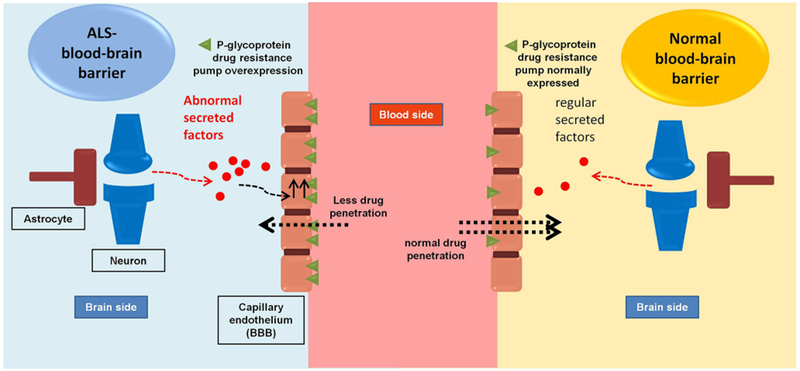
The blood-brain barrier (BBB) is essential for proper neuronal function, homeostasis, and protection of the central nervous system (CNS) microenvironment from blood-borne pathogens and neurotoxins. The BBB is also an impediment for CNS penetration of drugs. In some neurologic conditions, such as epilepsy and brain tumors, overexpression of P-glycoprotein, an efflux transporter whose physiological function is to expel catabolites and xenobiotics from the CNS into the blood stream, has been reported. Recent studies reported that overexpression of P-glycoprotein and increase in its activity at the BBB drives a progressive resistance to CNS penetration and persistence of riluzole, the only drug approved thus far for treatment of amyotrophic lateral sclerosis (ALS), rapidly progressive and mostly fatal neurologic disease. This review will discuss the impact of transporter-mediated pharmacoresistance for ALS drug therapy and the potential therapeutic strategies to improve the outcome of ALS clinical trials and efficacy of current and future drug treatments.
血脑屏障(BBB)对于神经元的正常功能、内环境稳定以及保护中枢神经系统(CNS)免受血液传播的病原体和神经毒素的侵害至关重要。BBB 也是药物进入中枢神经系统的障碍。在某些神经疾病中,如癫痫和脑肿瘤,已经报道了 P-糖蛋白(P-gp)的过度表达,P-糖蛋白是一种外排转运体,其生理功能是将 CNS 中的代谢物和外源性物质排出到血液中。最近的研究报告称,BBB 上 P-糖蛋白的过度表达及其活性的增加导致对 CNS 穿透的进行性耐药和利鲁唑(目前唯一批准用于治疗肌萎缩侧索硬化症(ALS)的药物)的持续存在,ALS 是一种快速进展且大多数致命的神经疾病。这篇综述将讨论转运体介导的药物耐药性对 ALS 药物治疗的影响,以及改善 ALS 临床试验结果和当前及未来药物治疗效果的潜在治疗策略。