Hsu Li-Han, Chu Nei-Min, Kao Shu-Huei
Ph.D. Program in Medical Biotechnology, College of Medical Science and Technology, Taipei Medical University, Taipei 110, Taiwan.
Division of Pulmonary and Critical Care Medicine, Sun Yat-Sen Cancer Center, Taipei 112, Taiwan.
Int J Mol Sci. 2017 Aug 5;18(8):1713. doi: 10.3390/ijms18081713.
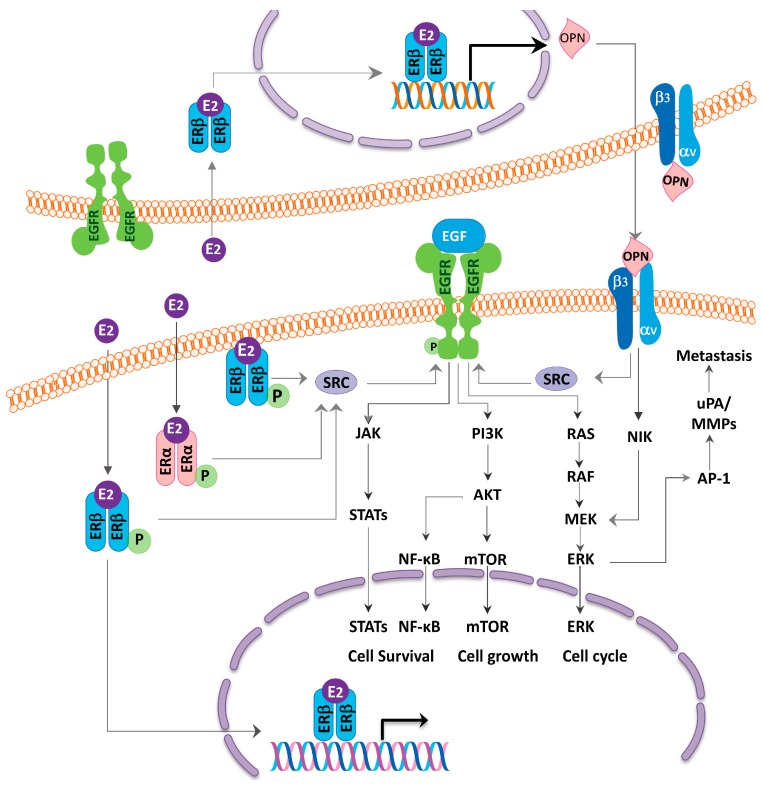
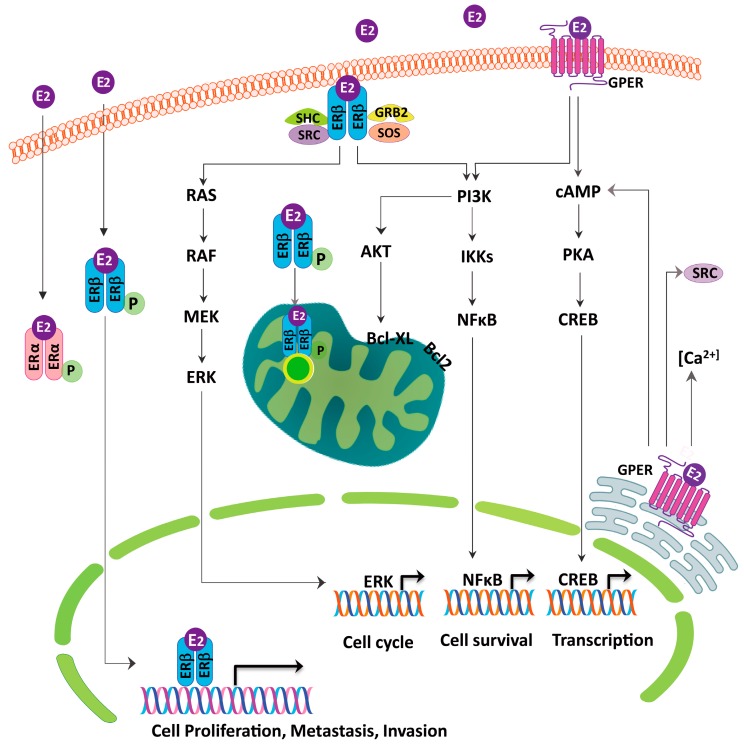
Estrogen has been postulated as a contributor for lung cancer development and progression. We reviewed the current knowledge about the expression and prognostic implications of the estrogen receptors (ER) in lung cancer, the effect and signaling pathway of estrogen on lung cancer, the hormone replacement therapy and lung cancer risk and survival, the mechanistic relationship between the ER and the epidermal growth factor receptor (EGFR), and the relevant clinical trials combining the ER antagonist and the EGFR antagonist, to investigate the role of estrogen in lung cancer. Estrogen and its receptor have the potential to become a prognosticator and a therapeutic target in lung cancer. On the other hand, tobacco smoking aggravates the effect of estrogen and endocrine disruptive chemicals from the environment targeting ER may well contribute to the lung carcinogenesis. They have gradually become important issues in the course of preventive medicine.
雌激素被认为是肺癌发生发展的一个促成因素。我们综述了关于雌激素受体(ER)在肺癌中的表达及预后意义、雌激素对肺癌的作用及信号通路、激素替代疗法与肺癌风险及生存、ER与表皮生长因子受体(EGFR)之间的机制关系,以及联合使用ER拮抗剂和EGFR拮抗剂的相关临床试验等方面的现有知识,以研究雌激素在肺癌中的作用。雌激素及其受体有潜力成为肺癌的预后指标和治疗靶点。另一方面,吸烟会加剧雌激素的作用,环境中的内分泌干扰化学物质靶向ER很可能促成肺癌的发生。它们在预防医学过程中已逐渐成为重要问题。