Delacher Michael, Imbusch Charles D, Weichenhan Dieter, Breiling Achim, Hotz-Wagenblatt Agnes, Träger Ulrike, Hofer Ann-Cathrin, Kägebein Danny, Wang Qi, Frauhammer Felix, Mallm Jan-Philipp, Bauer Katharina, Herrmann Carl, Lang Philipp A, Brors Benedikt, Plass Christoph, Feuerer Markus
Immune Tolerance Research Group, German Cancer Research Center (DKFZ), Heidelberg, Germany.
Division of Applied Bioinformatics, German Cancer Research Center (DKFZ), Heidelberg, Germany.
Nat Immunol. 2017 Oct;18(10):1160-1172. doi: 10.1038/ni.3799. Epub 2017 Aug 7.
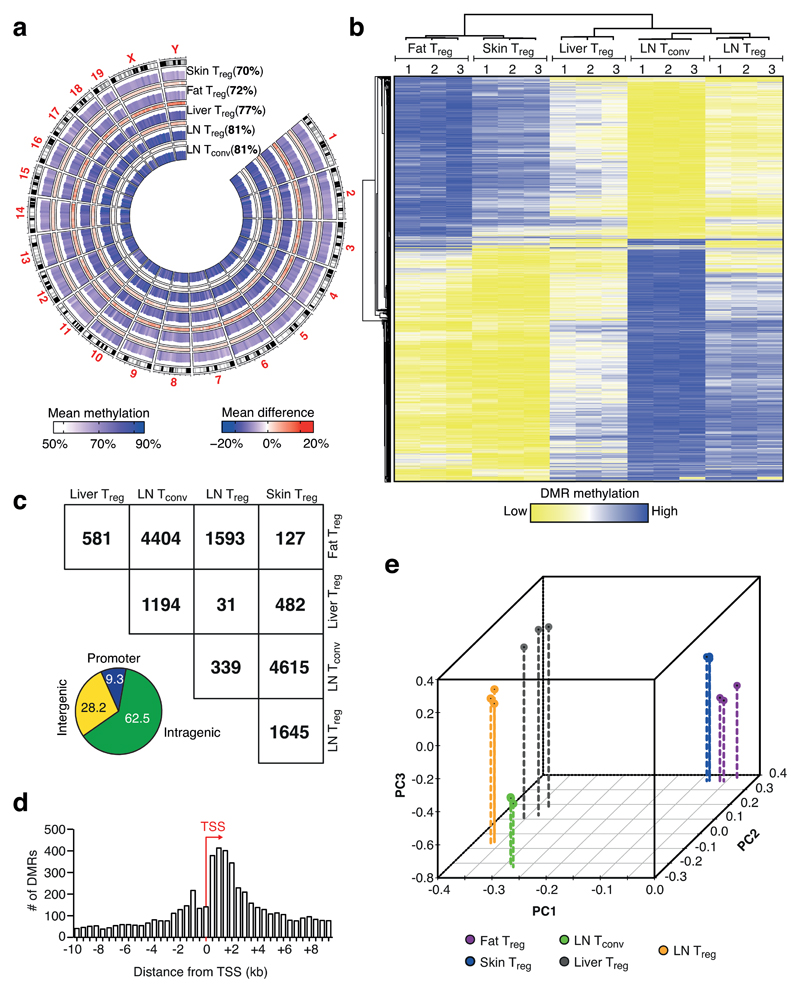
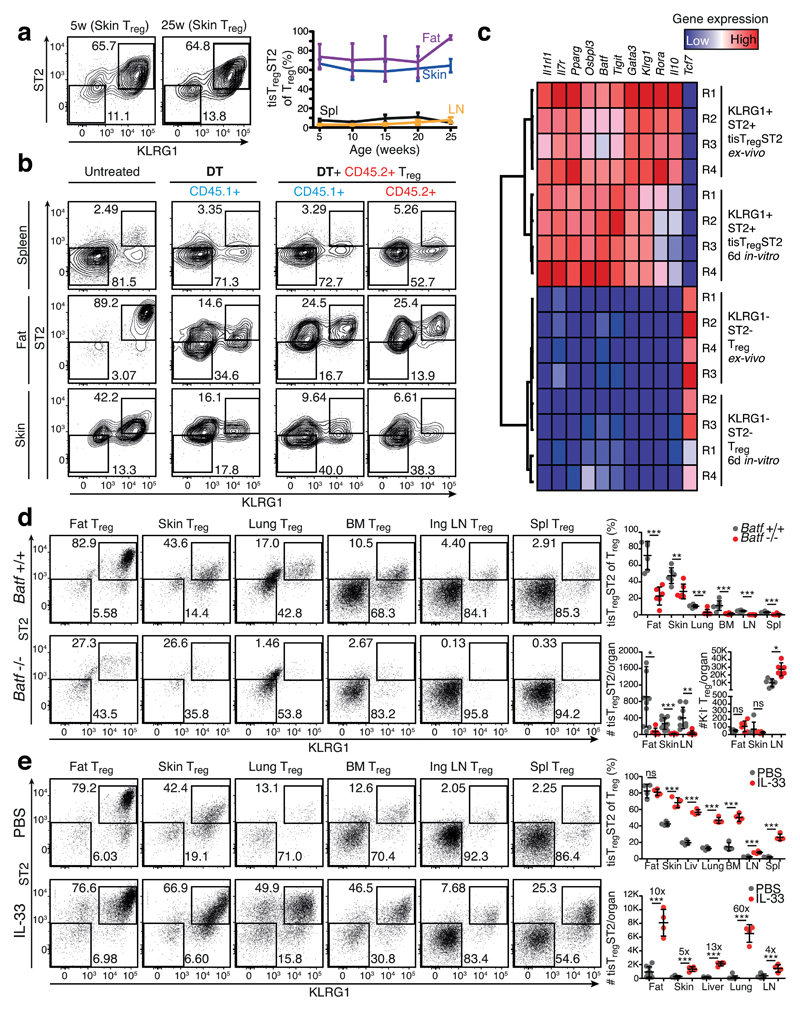
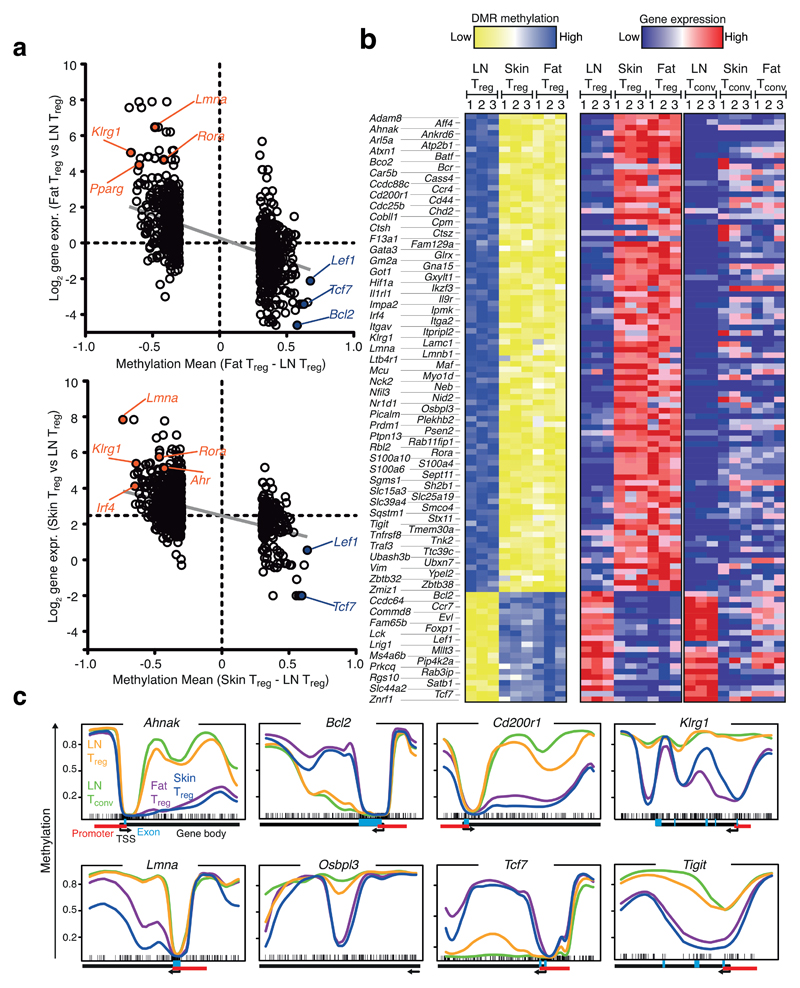
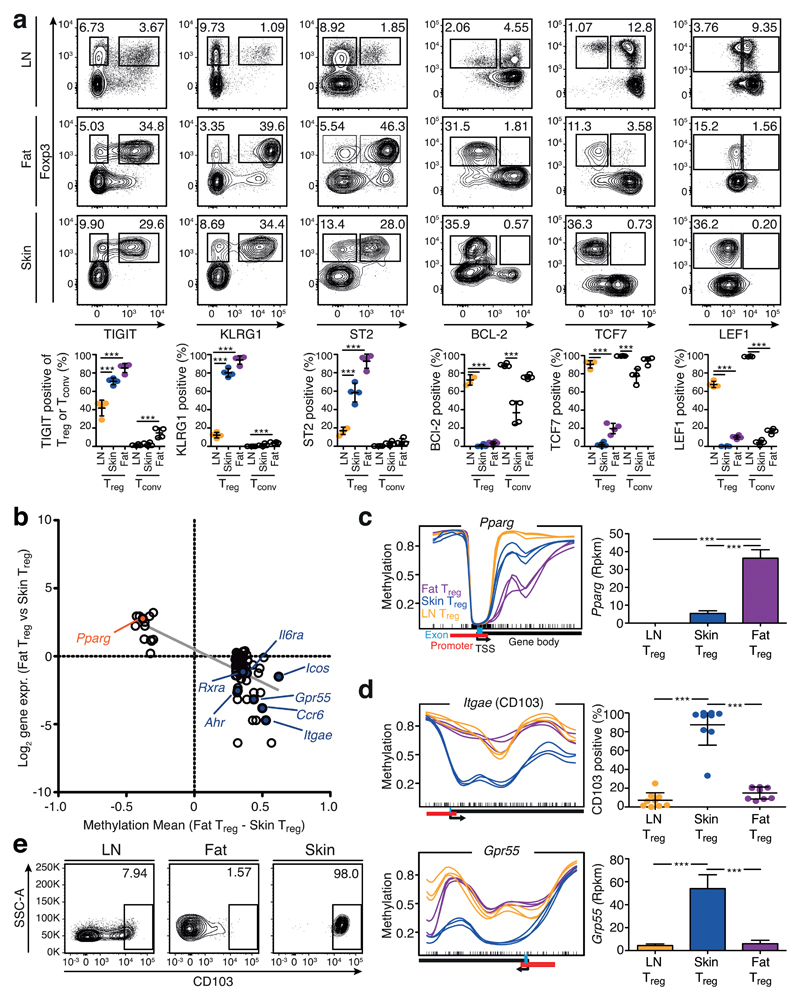
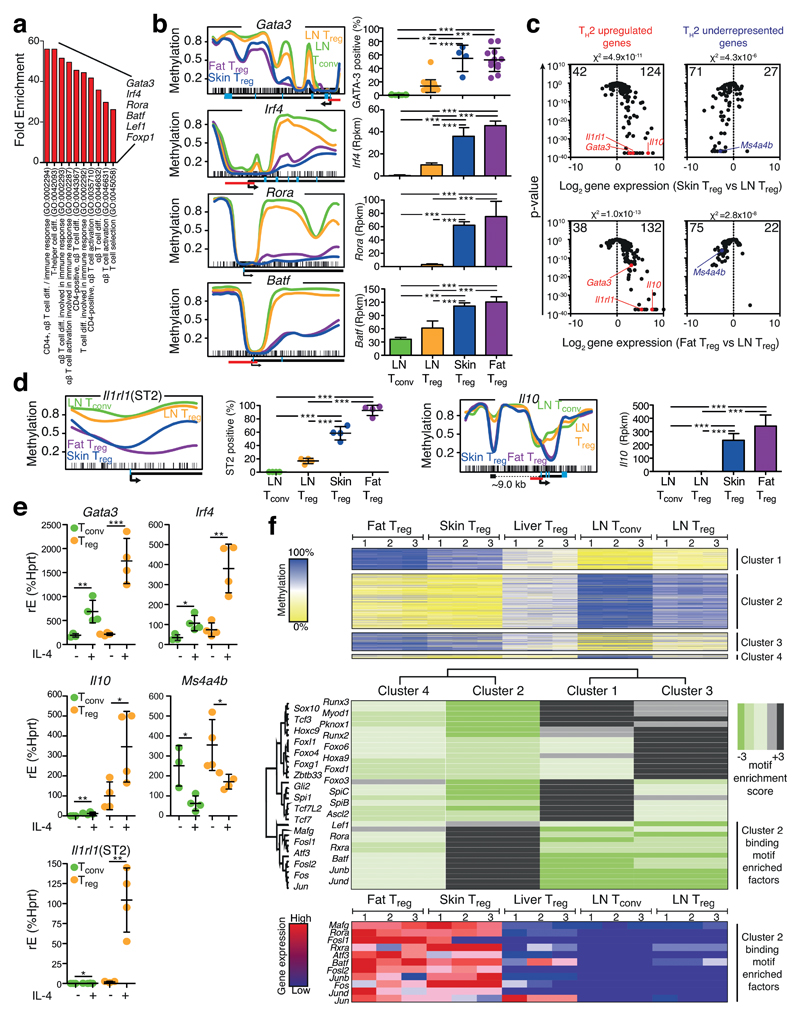
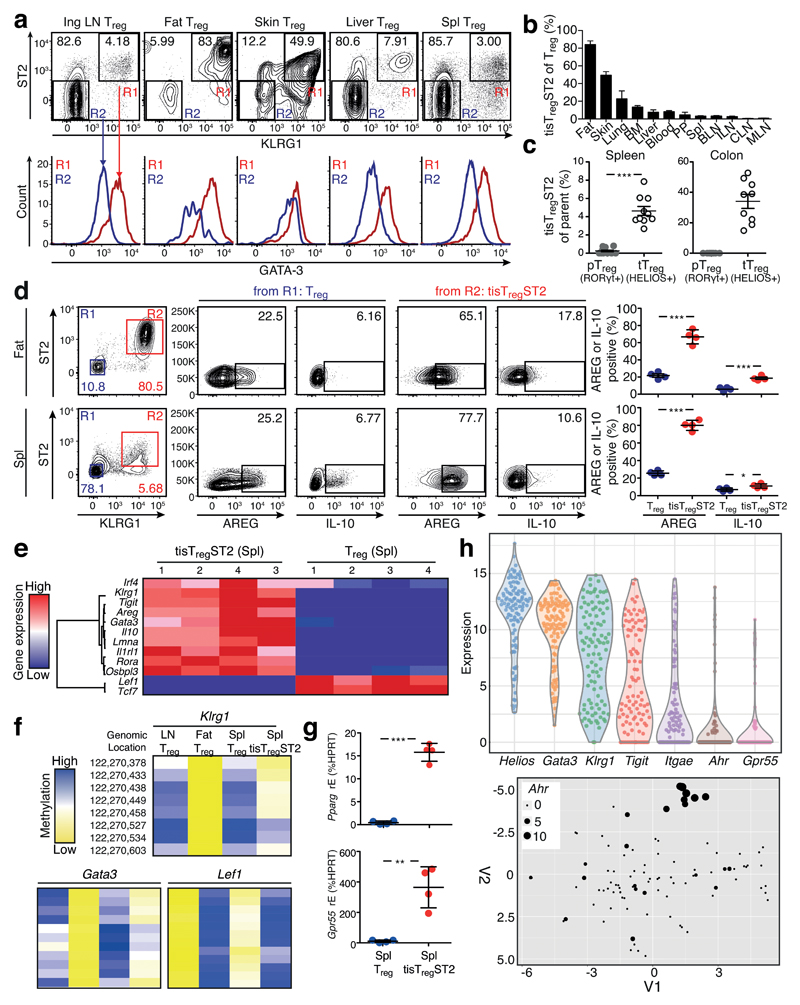
Regulatory T cells (T cells) perform two distinct functions: they maintain self-tolerance, and they support organ homeostasis by differentiating into specialized tissue T cells. We found that epigenetic modifications defined the molecular characteristics of tissue T cells. Tagmentation-based whole-genome bisulfite sequencing revealed more than 11,000 regions that were methylated differentially in pairwise comparisons of tissue T cell populations and lymphoid T cells. Similarities in the epigenetic landscape led to the identification of a common tissue T cell population that was present in many organs and was characterized by gain and loss of DNA methylation that included many gene sites associated with the T2 subset of helper T cells, such as the gene encoding cytokine IL-33 receptor ST2, as well as the production of tissue-regenerative factors. Furthermore, the ST2-expressing population was dependent on the transcriptional regulator BATF and could be expanded by IL-33. Thus, tissue T cells integrate multiple waves of epigenetic reprogramming that define their tissue-restricted specialization.
调节性T细胞(Tregs)执行两种不同的功能:它们维持自身耐受性,并通过分化为特化的组织T细胞来支持器官内环境稳定。我们发现表观遗传修饰定义了组织T细胞的分子特征。基于转座酶的全基因组亚硫酸氢盐测序揭示了在组织T细胞群体与淋巴T细胞的成对比较中超过11000个差异甲基化区域。表观遗传景观的相似性导致鉴定出一种常见的组织T细胞群体,该群体存在于许多器官中,其特征是DNA甲基化的增减,其中包括许多与辅助性T细胞的T2亚群相关的基因位点,如编码细胞因子IL-33受体ST2的基因,以及组织再生因子的产生。此外,表达ST2的群体依赖于转录调节因子BATF,并且可以被IL-33扩增。因此,组织T细胞整合了多波表观遗传重编程,这些重编程定义了它们的组织限制性特化。