Chakraborty D, Benham V, Bullard B, Kearney T, Hsia H C, Gibbon D, Demireva E Y, Lunt S Y, Bernard J J
Department of Pharmacology and Toxicology, Michigan State University, East Lansing, MI, USA.
Division of Surgical Oncology, Rutgers Robert Wood Johnson Medical School, New Brunswick, NJ, USA.
Oncogene. 2017 Nov 30;36(48):6668-6679. doi: 10.1038/onc.2017.278. Epub 2017 Aug 7.
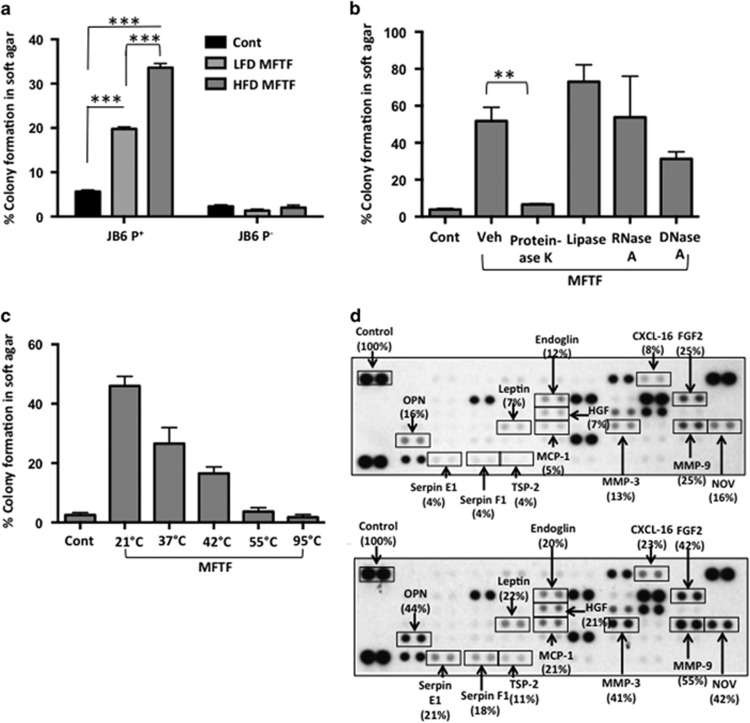
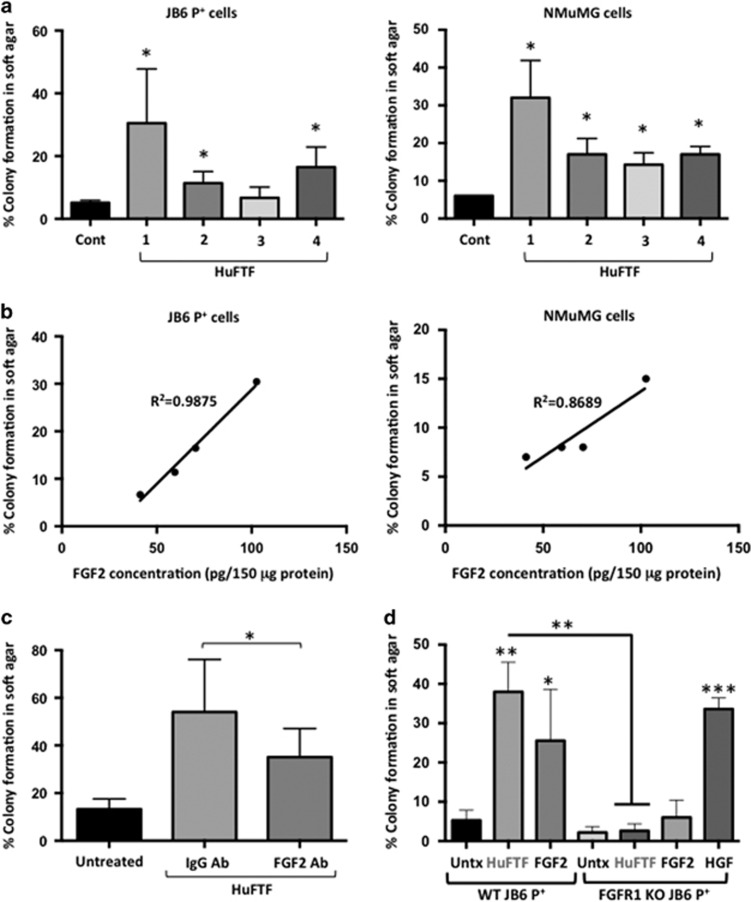
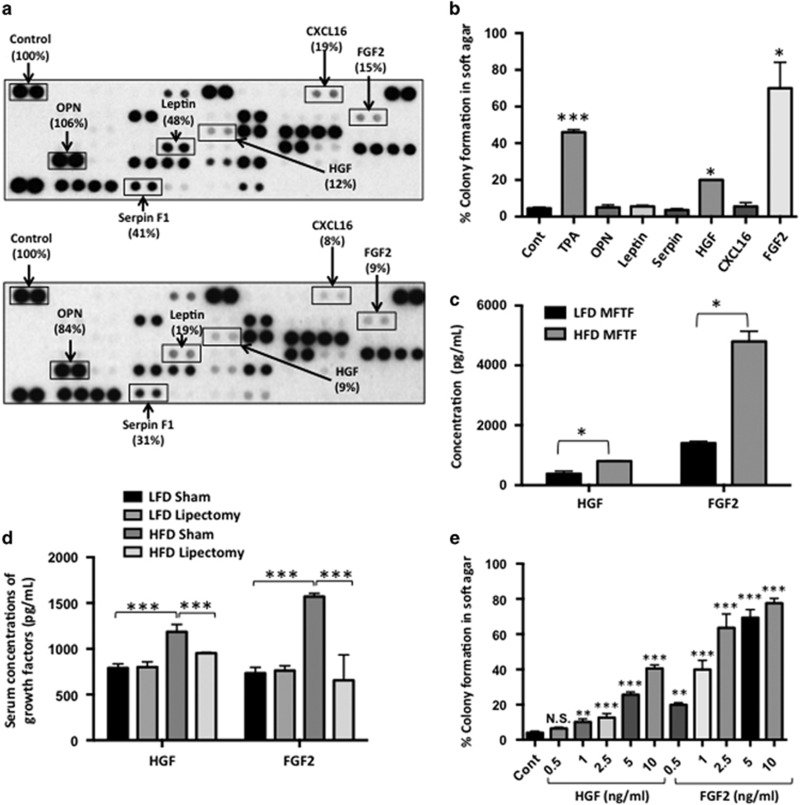
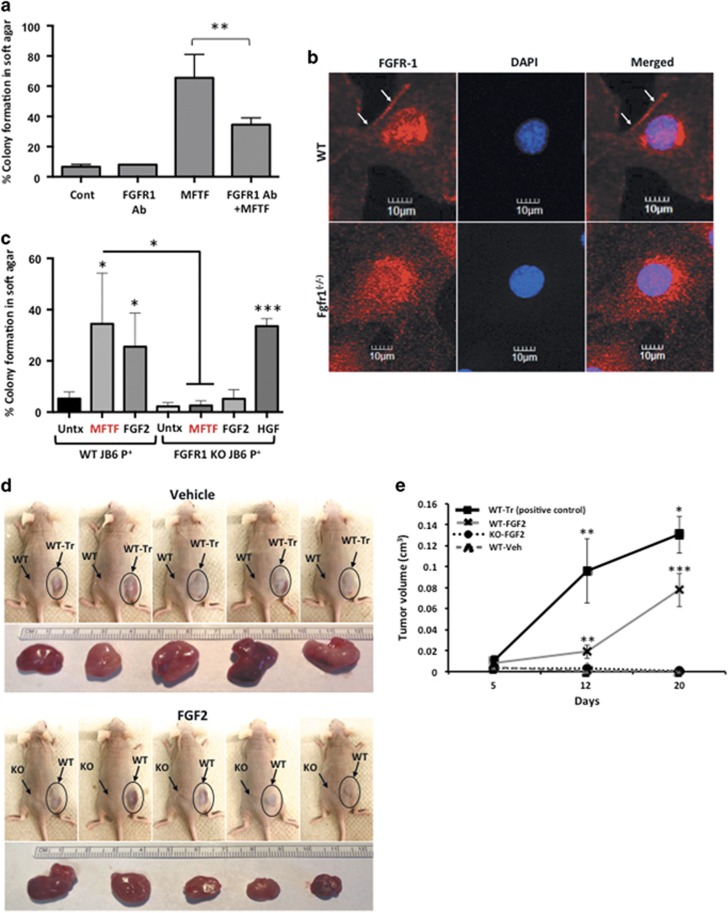
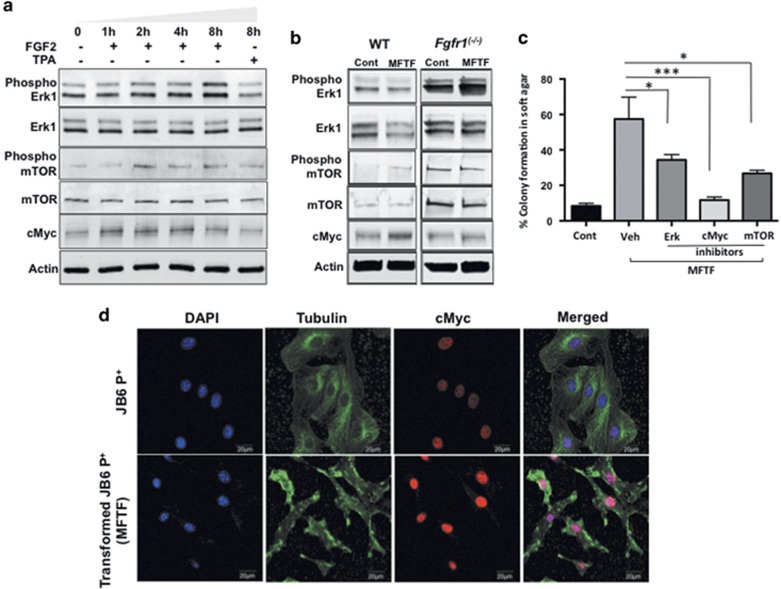
Epidemiological evidence implicates excess adipose tissue in increasing cancer risk. Despite a steeply rising global prevalence of obesity, how adiposity contributes to transformation (stage a non-tumorigenic cell undergoes to become malignant) is unknown. To determine the factors in adipose tissue that stimulate transformation, we used a novel ex vivo system of visceral adipose tissue (VAT)-condition medium-stimulated epithelial cell growth in soft agar. To extend this system in vivo, we used a murine lipectomy model of ultraviolet light B-induced, VAT-promoted skin tumor formation. We found that VAT from mice and obese human donors stimulated growth in soft agar of non-tumorigenic epithelial cells. The difference in VAT activity was associated with fibroblast growth factor-2 (FGF2) levels. Moreover, human and mouse VAT failed to stimulate growth in soft of agar in cells deficient in FGFR-1 (FGF2 receptor). We also demonstrated that circulating levels of FGF2 were associated with non-melanoma tumor formation in vivo. These data implicate FGF2 as a major factor VAT releases to transform epithelial cells-a novel, potential pathway of VAT-enhanced tumorigenesis. Strategies designed to deplete VAT stores of FGF2 or inhibit FGFR-1 in abdominally obese individuals may be important cancer prevention strategies as well as adjuvant therapies for improving outcomes.
流行病学证据表明,过多的脂肪组织会增加患癌风险。尽管全球肥胖患病率急剧上升,但肥胖如何促使细胞发生转化(即一个非致瘤性细胞转变为恶性细胞的过程)尚不清楚。为了确定脂肪组织中刺激细胞转化的因素,我们使用了一种新型的体外系统,即内脏脂肪组织(VAT)条件培养基刺激上皮细胞在软琼脂中生长。为了在体内扩展这个系统,我们使用了一种小鼠脂肪切除模型,该模型用于研究紫外线B诱导、VAT促进的皮肤肿瘤形成。我们发现,来自小鼠和肥胖人类供体的VAT能刺激非致瘤性上皮细胞在软琼脂中的生长。VAT活性的差异与成纤维细胞生长因子-2(FGF2)水平有关。此外,在缺乏FGFR-1(FGF2受体)的细胞中,人和小鼠的VAT均无法刺激其在软琼脂中的生长。我们还证明,FGF2的循环水平与体内非黑色素瘤肿瘤的形成有关。这些数据表明,FGF2是VAT释放的促使上皮细胞发生转化的主要因素——这是VAT增强肿瘤发生的一条新的潜在途径。旨在减少腹部肥胖个体VAT中FGF2储备或抑制FGFR-1的策略,可能是重要的癌症预防策略以及改善治疗效果的辅助疗法。