Department of Brain and Behavioral Sciences, University of Pavia, Piazza A. Botta 6, 27100, Pavia, Italy.
Donders Institute for Brain, Cognition and Behaviour, Radboud University, Montessorilaan 3, 6525 HR, Nijmegen, The Netherlands.
Cerebellum. 2018 Apr;17(2):228-236. doi: 10.1007/s12311-017-0877-2.
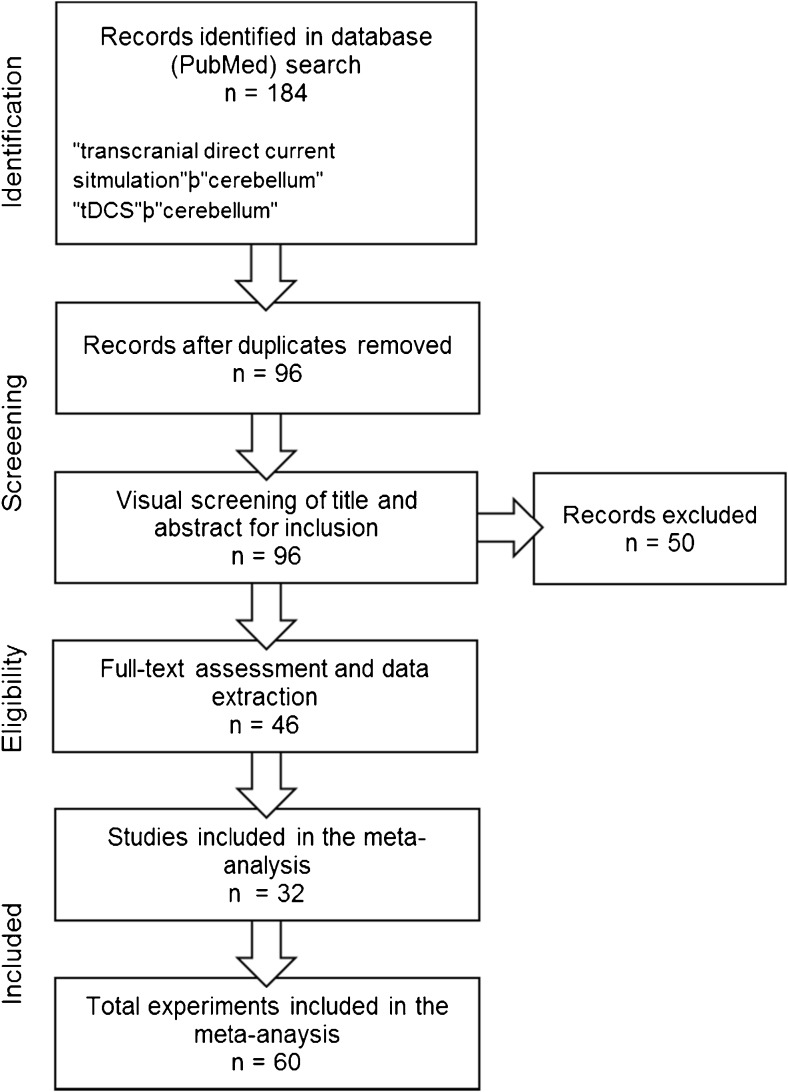
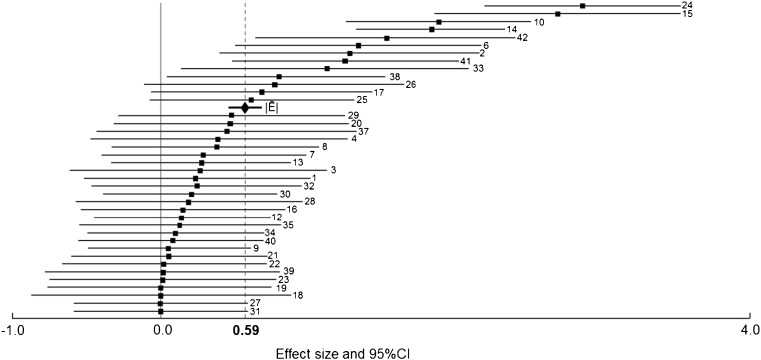
Transcranial direct current stimulation (tDCS) is increasingly used to study motor- and non-motor-related functions of the cerebellum. The aim of the present study was to quantitatively review available studies to estimate the efficacy of cerebellar tDCS in altering motor- and cognitive-related behavioral performance in healthy volunteers. The present meta-analysis included 32 sham-controlled studies. Results from random effects modeling of the cumulative effect size demonstrated that anodal and cathodal tDCS to the cerebellum were effective in changing performance. No evidence for polarity-dependent effects of cerebellar tDCS was found. Current findings establish the feasibility to target motor and non-motor-related cerebellar functions with tDCS, but arguably due to anatomical differences between the cerebellum and cerebral cortex, the polarity of tDCS is not predictive of the direction of the behavioral changes in healthy volunteers.
经颅直流电刺激(tDCS)越来越多地被用于研究小脑的运动和非运动相关功能。本研究的目的是定量综述现有研究,以评估小脑 tDCS 改变健康志愿者运动和认知相关行为表现的疗效。本荟萃分析包括 32 项假刺激对照研究。累积效应量的随机效应模型结果表明,小脑的阳极和阴极 tDCS 可有效改变运动和认知表现。没有发现小脑 tDCS 极性依赖性效应的证据。目前的研究结果确立了使用 tDCS 靶向小脑运动和非运动相关功能的可行性,但由于小脑和大脑皮层之间的解剖差异,tDCS 的极性并不能预测健康志愿者行为变化的方向。