Kang Melissa, Robards Fiona, Sanci Lena, Steinbeck Katharine, Jan Stephen, Hawke Catherine, Kong Marlene, Usherwood Tim
Australian Centre for Public and Population Health Research, Faculty of Health, University of Technology Sydney, Ultimo, New South Wales, Australia.
Department of General Practice, Sydney Medical School Westmead, The University of Sydney, Sydney, New South Wales, Australia.
BMJ Open. 2017 Aug 7;7(8):e017047. doi: 10.1136/bmjopen-2017-017047.
The integration of digital technology into everyday lives of young people has become widespread. It is not known whether and how technology influences barriers and facilitators to healthcare, and whether and how young people navigate between face-to-face and virtual healthcare. To provide new knowledge essential to policy and practice, we designed a study that would explore health system access and navigation in the digital age. The study objectives are to: (1) describe experiences of young people accessing and navigating the health system in New South Wales (NSW), Australia; (2) identify barriers and facilitators to healthcare for young people and how these vary between groups; (3) describe health system inefficiencies, particularly for young people who are marginalised; (4) provide policy-relevant knowledge translation of the research data.
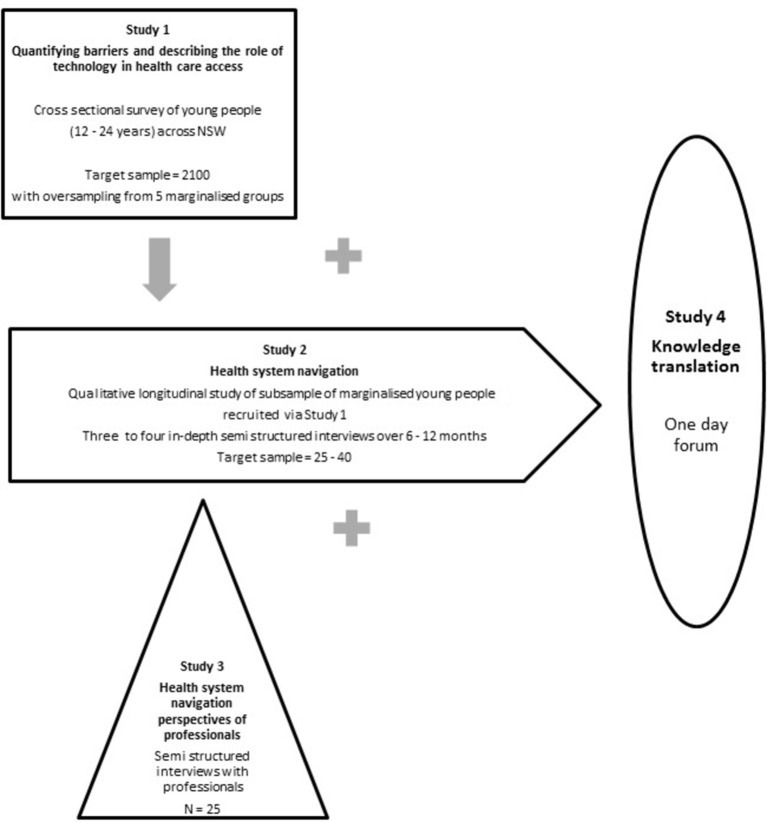
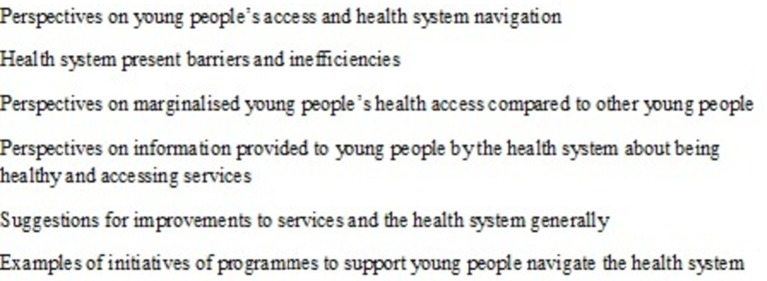
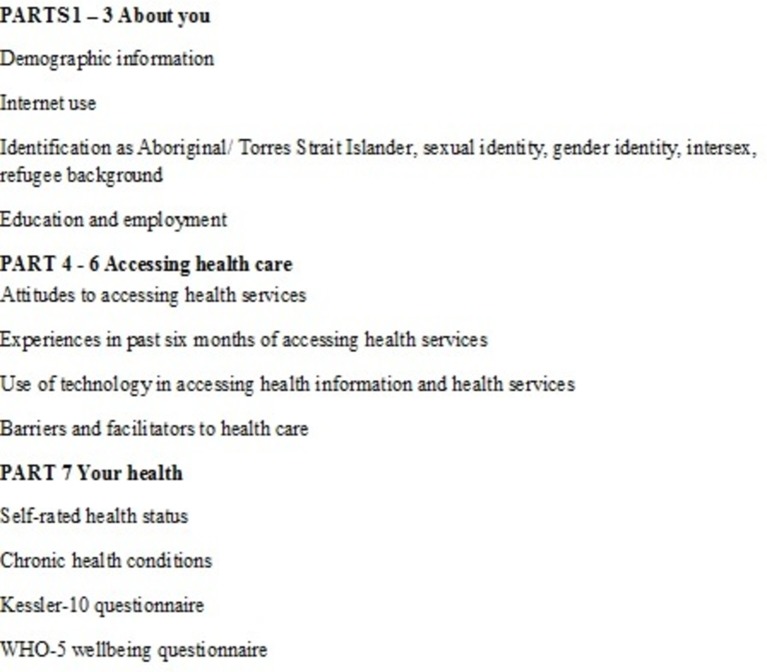
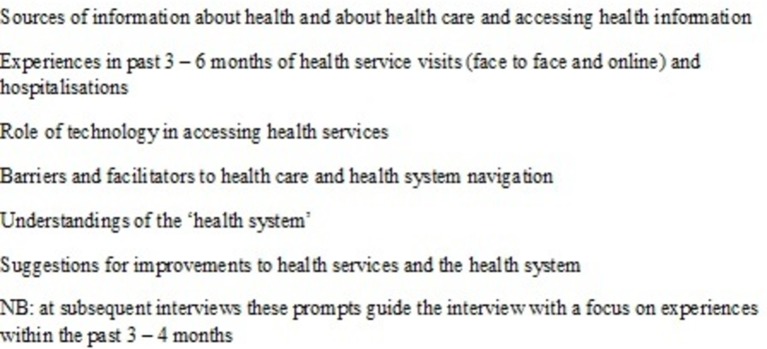
This mixed methods study has four parts, including: (1) a cross-sectional survey of young people (12-24 years) residing in NSW, Australia; (2) a longitudinal, qualitative study of a subsample of marginalised young people (defined as young people who: identify as Aboriginal and/or Torres Strait Islander; are experiencing homelessness; identify as sexuality and/or gender diverse; are of refugee or vulnerable migrant background; and/or live in rural or remote NSW); (3) interviews with professionals; (4) a knowledge translation forum.
Ethics approvals were sought and granted. Data collection commenced in March 2016 and will continue until June 2017. This study will gather practice and policy-relevant intelligence about contemporary experiences of young people and health services, with a unique focus on five different groups of marginalised young people, documenting their experiences over time. will explore navigation around all levels of the health system, determine whether digital technology is integrated into this, and if so how, and will translate findings into policy-relevant recommendations.
数字技术融入年轻人的日常生活已十分普遍。目前尚不清楚技术是否以及如何影响医疗保健的障碍和促进因素,也不清楚年轻人如何在面对面医疗和虚拟医疗之间进行选择。为了提供对政策和实践至关重要的新知识,我们设计了一项研究,以探索数字时代的卫生系统接入和选择情况。研究目标如下:(1)描述澳大利亚新南威尔士州(NSW)年轻人接入和选择卫生系统的经历;(2)确定年轻人获得医疗保健的障碍和促进因素,以及这些因素在不同群体之间的差异;(3)描述卫生系统的低效情况,特别是针对被边缘化的年轻人;(4)对研究数据进行与政策相关的知识转化。
这项混合方法研究包括四个部分,具体如下:(1)对居住在澳大利亚新南威尔士州的年轻人(12 - 24岁)进行横断面调查;(2)对被边缘化年轻人的子样本进行纵向定性研究(被边缘化年轻人定义为:认同为原住民和/或托雷斯海峡岛民;正在经历无家可归;认同为性取向和/或性别多样化;具有难民或弱势移民背景;和/或居住在新南威尔士州的农村或偏远地区);(3)对专业人员进行访谈;(4)举办一次知识转化论坛。
已寻求并获得伦理批准。数据收集于2016年3月开始,并将持续到2017年6月。本研究将收集与实践和政策相关的情报,了解年轻人和卫生服务的当代经历,特别关注五类不同的被边缘化年轻人群体,记录他们随时间的经历。将探索围绕卫生系统各级别的选择情况,确定数字技术是否融入其中,如果是,如何融入,并将研究结果转化为与政策相关的建议。