Porcheron Aurélie, Mauger Emmanuelle, Soppelsa Frédérique, Liu Yuli, Ge Liezhong, Pascalis Olivier, Russell Richard, Morizot Frédérique
Chanel PBPantin, France.
Laboratoire de Psychologie et NeuroCognition, Université Grenoble-AlpesGrenoble, France.
Front Psychol. 2017 Jul 25;8:1208. doi: 10.3389/fpsyg.2017.01208. eCollection 2017.
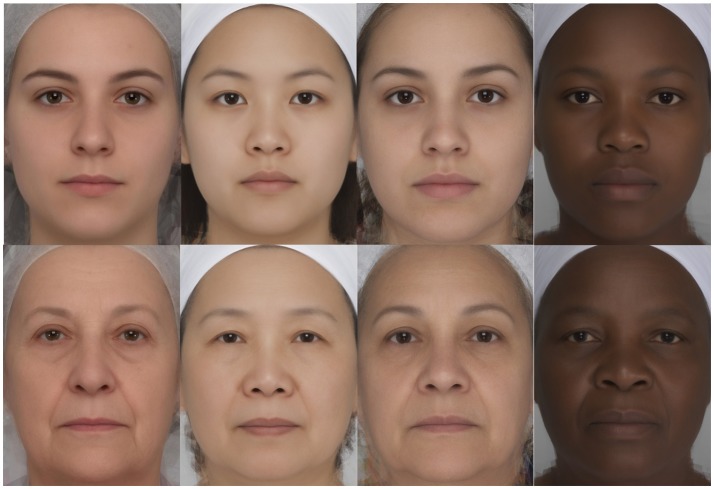
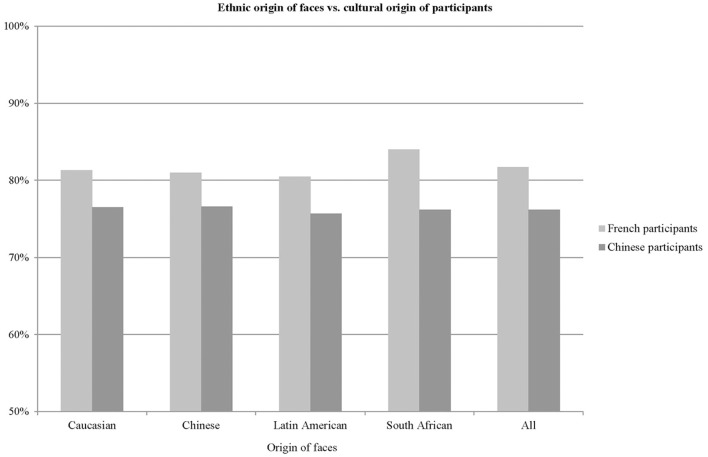
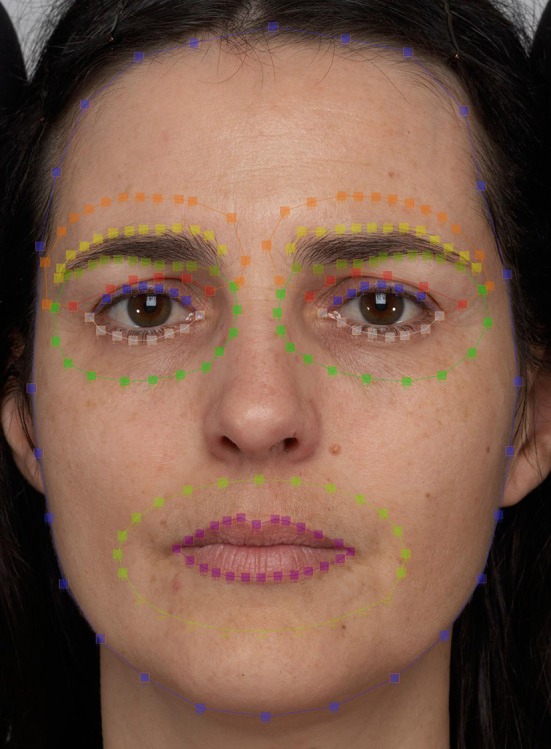
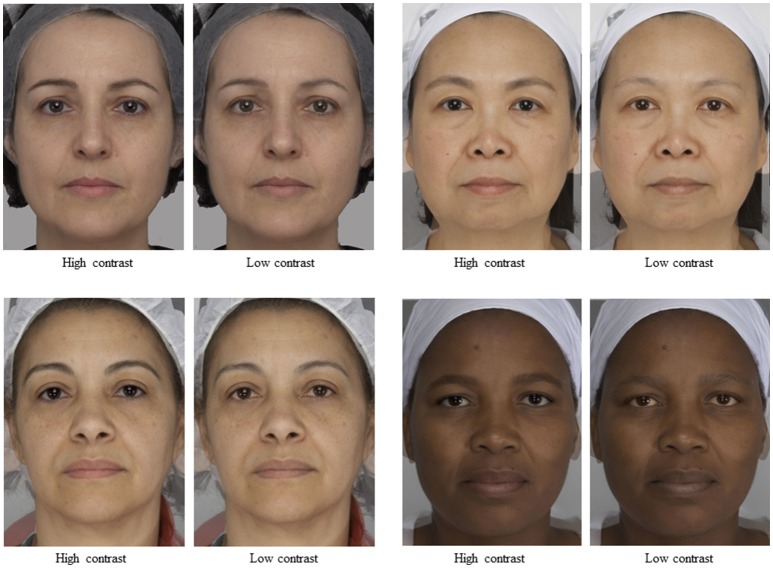
Age is a fundamental social dimension and a youthful appearance is of importance for many individuals, perhaps because it is a relevant predictor of aspects of health, facial attractiveness and general well-being. We recently showed that facial contrast-the color and luminance difference between facial features and the surrounding skin-is age-related and a cue to age perception of Caucasian women. Specifically, aspects of facial contrast decrease with age in Caucasian women, and Caucasian female faces with higher contrast look younger (Porcheron et al., 2013). Here we investigated faces of other ethnic groups and raters of other cultures to see whether facial contrast is a cross-cultural youth-related attribute. Using large sets of full face color photographs of Chinese, Latin American and black South African women aged 20-80, we measured the luminance and color contrast between the facial features (the eyes, the lips, and the brows) and the surrounding skin. Most aspects of facial contrast that were previously found to decrease with age in Caucasian women were also found to decrease with age in the other ethnic groups. Though the overall pattern of changes with age was common to all women, there were also some differences between the groups. In a separate study, individual faces of the 4 ethnic groups were perceived younger by French and Chinese participants when the aspects of facial contrast that vary with age in the majority of faces were artificially increased, but older when they were artificially decreased. Altogether these findings indicate that facial contrast is a cross-cultural cue to youthfulness. Because cosmetics were shown to enhance facial contrast, this work provides some support for the notion that a universal function of cosmetics is to make female faces look younger.
年龄是一个基本的社会维度,年轻的外表对许多人来说都很重要,这可能是因为它是健康、面部吸引力和总体幸福感等方面的一个相关预测指标。我们最近发现,面部对比度——面部特征与周围皮肤之间的颜色和亮度差异——与年龄有关,并且是白种女性年龄感知的一个线索。具体而言,白种女性的面部对比度会随着年龄增长而降低,对比度较高的白种女性面部看起来更年轻(Porcheron等人,2013年)。在此,我们研究了其他种族群体的面部以及其他文化背景的评判者,以探究面部对比度是否是一个与跨文化的年轻相关的属性。我们使用了大量20至80岁的中国、拉丁美洲和南非黑人女性的全脸彩色照片,测量了面部特征(眼睛、嘴唇和眉毛)与周围皮肤之间的亮度和颜色对比度。之前发现白种女性中随年龄降低的大多数面部对比度方面,在其他种族群体中也随年龄降低。尽管所有女性随年龄变化的总体模式是相同的,但不同群体之间也存在一些差异。在另一项研究中,当多数面部中随年龄变化的面部对比度方面被人为提高时,法国和中国参与者会觉得4个种族群体的个体面部看起来更年轻,但当这些方面被人为降低时,则会觉得更老。总的来说,这些发现表明面部对比度是年轻的一个跨文化线索。由于化妆品被证明可以增强面部对比度,这项研究为化妆品的一个普遍功能是让女性面部看起来更年轻这一观点提供了一些支持。