Godbout Julie, Tremblay Laurence, Levasseur Caroline, Lavigne Patricia, Rainville André, Mackay John, Bousquet Jean, Isabel Nathalie
Natural Resources Canada, Canadian Forest Service, Laurentian Forestry CentreQuébec, QC, Canada.
Direction Générale de la Production de Semences et des Plants Forestiers, Ministère des Forêts, de la Faune et des Parcs du QuébecQuébec, QC, Canada.
Front Plant Sci. 2017 Jul 25;8:1264. doi: 10.3389/fpls.2017.01264. eCollection 2017.
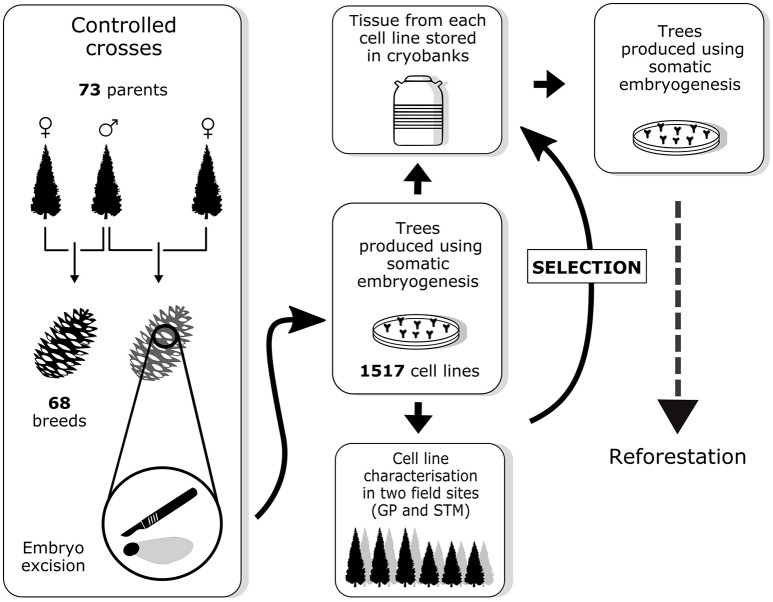
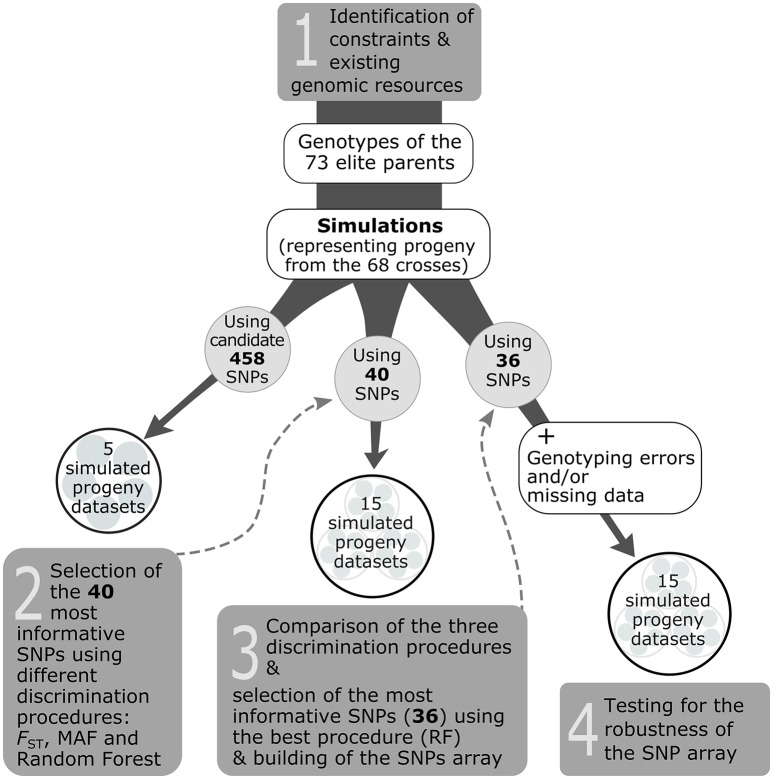
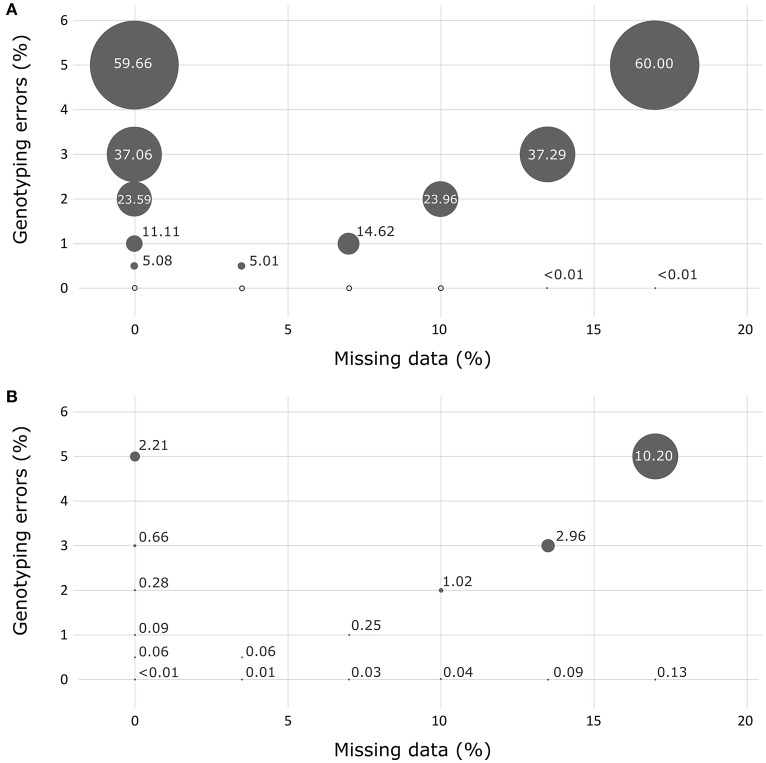
Biological material is at the forefront of research programs, as well as application fields such as breeding, aquaculture, and reforestation. While sophisticated techniques are used to produce this material, all too often, there is no strict monitoring during the "production" process to ensure that the specific varieties are the expected ones. Confidence rather than evidence is often applied when the time comes to start a new experiment or to deploy selected varieties in the field. During the last decade, genomics research has led to the development of important resources, which have created opportunities for easily developing tools to assess the conformity of the material along the production chains. In this study, we present a simple methodology that enables the development of a traceability system which, is in fact a by-product of previous genomic projects. The plant production system in white spruce () is used to illustrate our purpose. In Quebec, one of the favored strategies to produce elite varieties is to use somatic embryogenesis (SE). In order to detect human errors both upstream and downstream of the white spruce production process, this project had two main objectives: (i) to develop methods that make it possible to trace the origin of plants produced, and (ii) to generate a unique genetic fingerprint that could be used to differentiate each embryogenic cell line and ensure its genetic monitoring. Such a system had to rely on a minimum number of low-cost DNA markers and be easy to use by non-specialists. An efficient marker selection process was operationalized by testing different classification methods on simulated datasets. These datasets were generated using in-house bioinformatics tools that simulated crosses involved in the breeding program for which genotypes from hundreds of SNP markers were already available. The rate of misidentification was estimated and various sources of mishandling or contamination were identified. The method can easily be applied to other production systems for which genomic resources are already available.
生物材料处于研究项目以及育种、水产养殖和重新造林等应用领域的前沿。虽然使用复杂的技术来生产这种材料,但在“生产”过程中往往没有严格的监测,以确保特定品种是预期的品种。在开始新实验或在田间部署选定品种时,往往依靠的是信心而非证据。在过去十年中,基因组学研究带来了重要资源的开发,这为轻松开发评估生产链中材料一致性的工具创造了机会。在本研究中,我们提出了一种简单的方法,能够开发一个可追溯系统,而这个系统实际上是先前基因组项目的副产品。白云杉()的植物生产系统用于说明我们的目的。在魁北克,生产优良品种的一种常用策略是使用体细胞胚胎发生(SE)。为了检测白云杉生产过程上下游的人为错误,该项目有两个主要目标:(i)开发能够追踪所生产植物来源的方法,以及(ii)生成一个独特的遗传指纹,可用于区分每个胚性细胞系并确保其遗传监测。这样一个系统必须依赖最少数量的低成本DNA标记,并且便于非专业人员使用。通过在模拟数据集上测试不同的分类方法,实施了一个有效的标记选择过程。这些数据集是使用内部生物信息学工具生成的,这些工具模拟了育种计划中涉及的杂交,其中已经有数百个SNP标记的基因型可用。估计了错误识别率,并识别了各种处理不当或污染的来源。该方法可以很容易地应用于其他已经有基因组资源的生产系统。