Del Prete Sonia, Perfetto Rosa, Rossi Mosè, Alasmary Fatmah A S, Osman Sameh M, AlOthman Zeid, Supuran Claudiu T, Capasso Clemente
a Dipartimento di Scienze Bio-Agroalimentari, CNR-Istituto di Bioscienze e Biorisorse , CNR , Napoli , Italy.
b Dipartimento Neurofarba, Sezione di Scienze Farmaceutiche, and Laboratorio di Chimica Bioinorganica, Polo Scientifico , Università degli Studi di Firenze , Florence , Italy.
J Enzyme Inhib Med Chem. 2017 Dec;32(1):1120-1128. doi: 10.1080/14756366.2017.1355794.
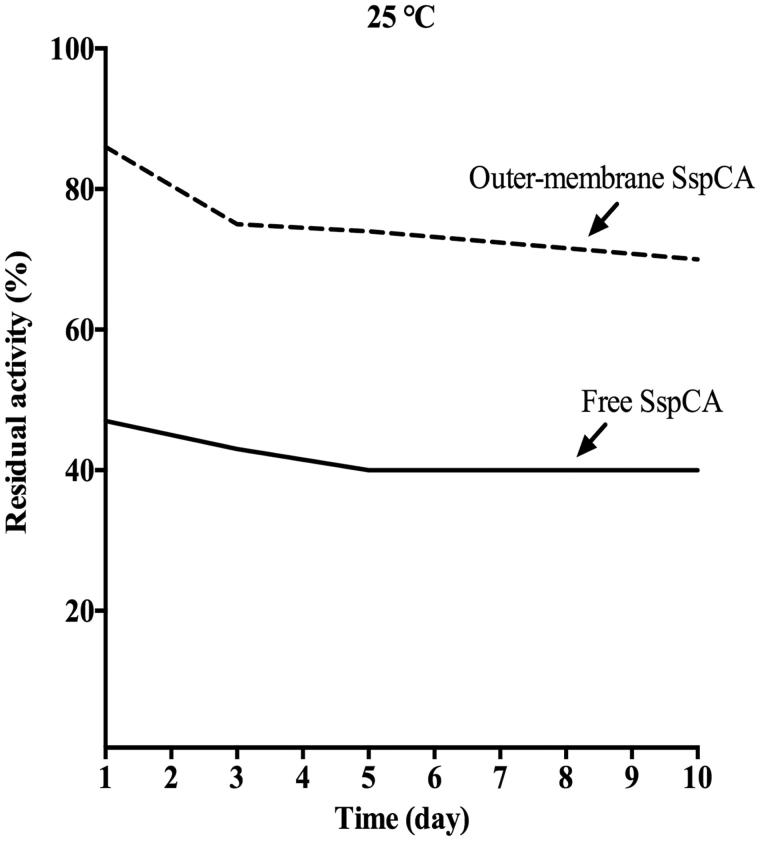
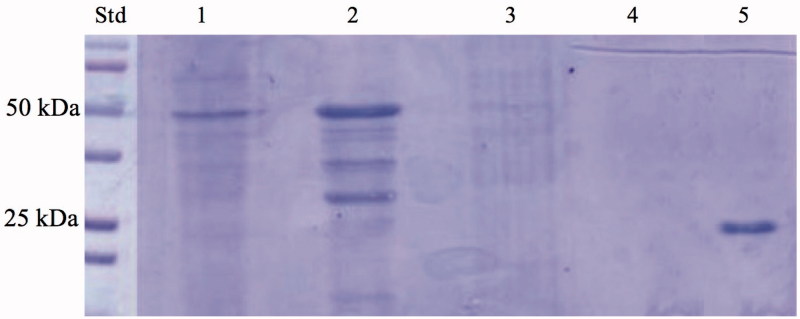
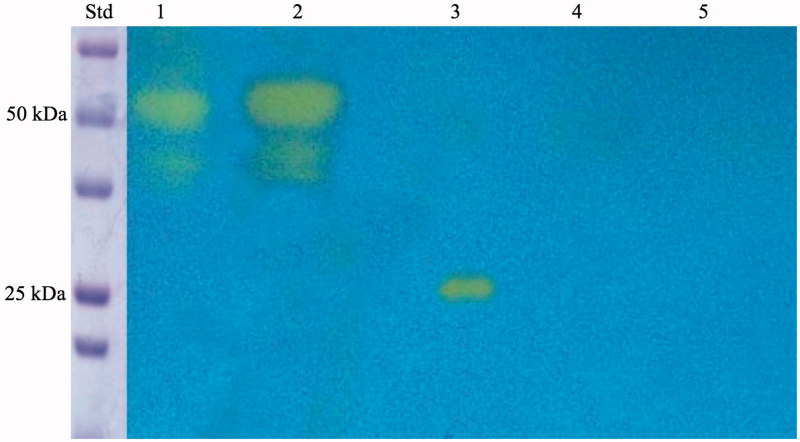
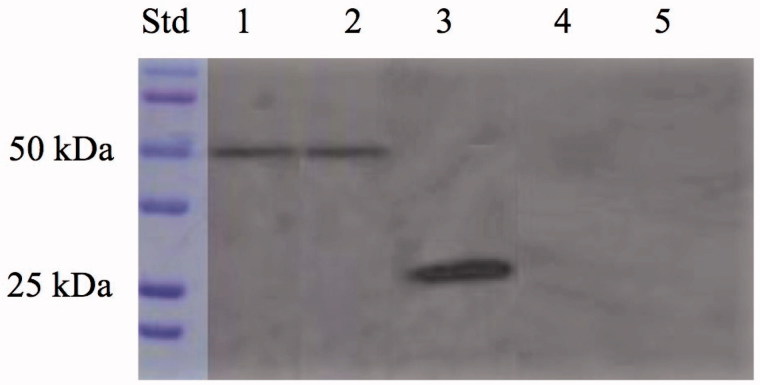
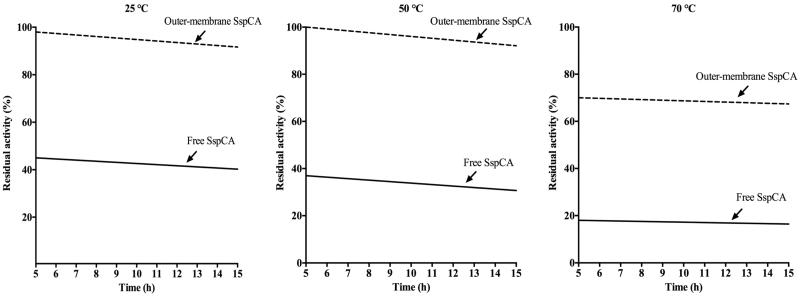
The carbonic anhydrase superfamily (CA, EC 4.2.1.1) of metalloenzymes is present in all three domains of life (Eubacteria, Archaea, and Eukarya), being an interesting example of convergent/divergent evolution, with its seven families (α-, β-, γ-, δ-, ζ-, η-, and θ-CAs) described so far. CAs catalyse the simple, but physiologically crucial reaction of carbon dioxide hydration to bicarbonate and protons. Recently, our groups characterised the α-CA from the thermophilic bacterium, Sulfurihydrogenibium yellowstonense finding a very high catalytic activity for the CO hydration reaction (k = 9.35 × 10 s and k/K = 1.1 × 10 Ms) which was maintained after heating the enzyme at 80 °C for 3 h. This highly thermostable SspCA was covalently immobilised within polyurethane foam and onto the surface of magnetic FeO nanoparticles. Here, we describe a one-step procedure for immobilising the thermostable SspCA directly on the surface membrane of Escherichia coli, using the INPN domain of Pseudomonas syringae. This strategy has clear advantages with respect to other methods, which require as the first step the production and the purification of the biocatalyst, and as the second step the immobilisation of the enzyme onto a specific support. Our results demonstrate that thermostable SspCA fused to the INPN domain of P. syringae ice nucleation protein (INP) was correctly expressed on the outer membrane of engineered E. coli cells, affording for an easy approach to design biotechnological applications for this highly effective thermostable catalyst.
金属酶的碳酸酐酶超家族(CA,EC 4.2.1.1)存在于生命的所有三个域(真细菌、古细菌和真核生物)中,是趋同/趋异进化的一个有趣例子,到目前为止已描述了其七个家族(α-、β-、γ-、δ-、ζ-、η-和θ-CA)。CA催化二氧化碳水合形成碳酸氢根和质子这一简单但生理上至关重要的反应。最近,我们的团队对嗜热细菌黄石硫氢叶菌中的α-CA进行了表征,发现其对CO水合反应具有非常高的催化活性(k = 9.35×10 s且k/K = 1.1×10 Ms),在将该酶于80°C加热3小时后仍能保持。这种高度耐热的SspCA被共价固定在聚氨酯泡沫中以及磁性FeO纳米颗粒的表面上。在此,我们描述了一种使用丁香假单胞菌的INPN结构域将耐热的SspCA直接固定在大肠杆菌表面膜上的一步法。相对于其他方法,该策略具有明显优势,其他方法首先需要生产和纯化生物催化剂,第二步是将酶固定在特定载体上。我们的结果表明,与丁香假单胞菌冰核蛋白(INP)的INPN结构域融合的耐热SspCA在工程化大肠杆菌细胞的外膜上正确表达,为设计这种高效耐热催化剂的生物技术应用提供了一种简便方法。