Enright Heather A, Falso Miranda J S, Malfatti Michael A, Lao Victoria, Kuhn Edward A, Hum Nicholas, Shi Yilan, Sales Ana Paula, Haack Kurt W, Kulp Kristen S, Buchholz Bruce A, Loots Gabriela G, Bench Graham, Turteltaub Kenneth W
Biosciences and Biotechnology Division, Lawrence Livermore National Laboratory, Livermore, CA, United States of America.
Center for Accelerator Mass Spectrometry, Lawrence Livermore National Laboratory, Livermore, CA, United States of America.
PLoS One. 2017 Aug 9;12(8):e0181996. doi: 10.1371/journal.pone.0181996. eCollection 2017.
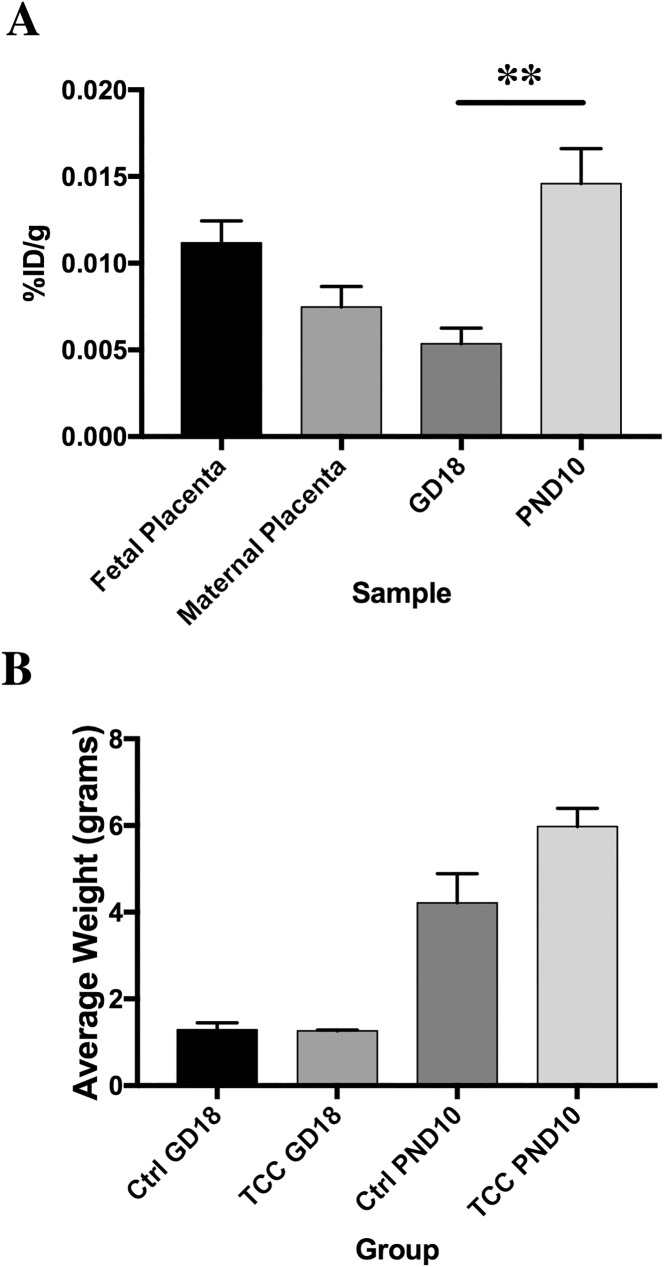
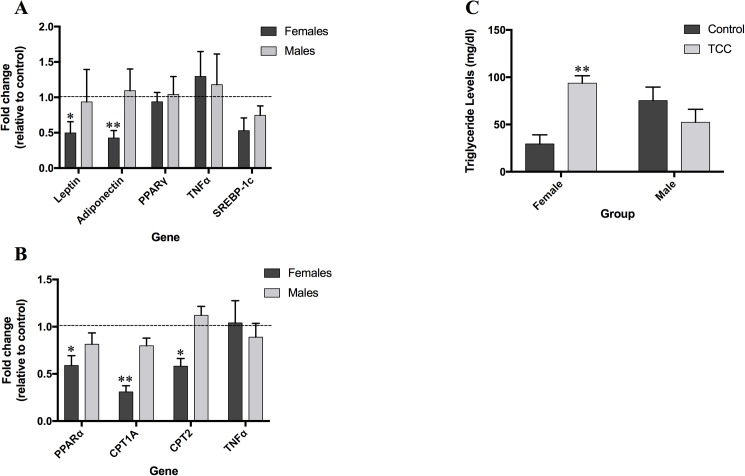
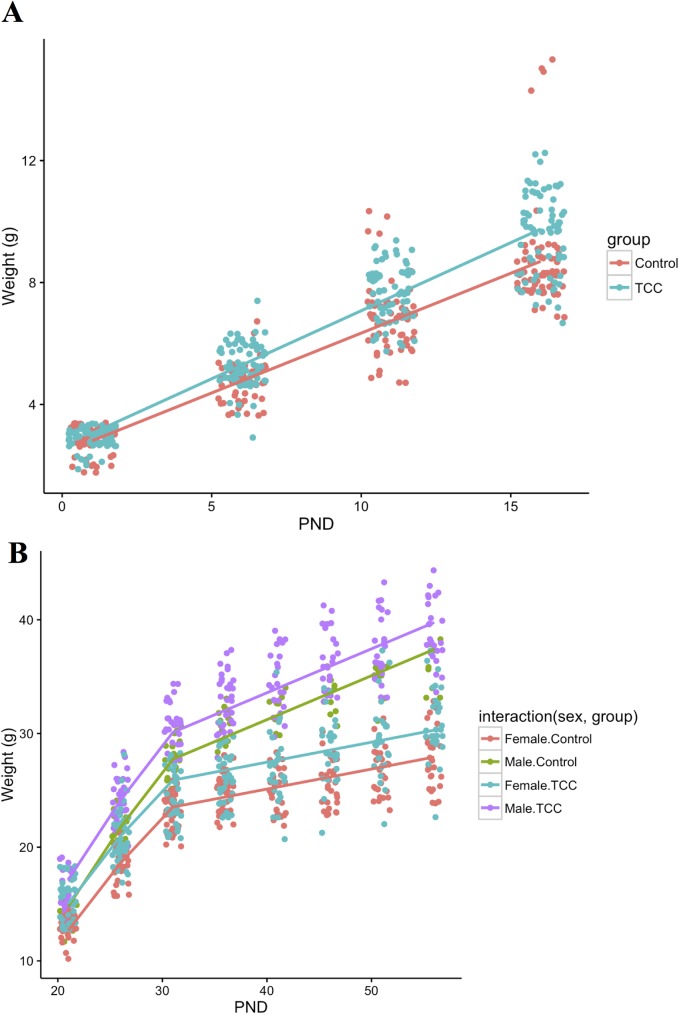
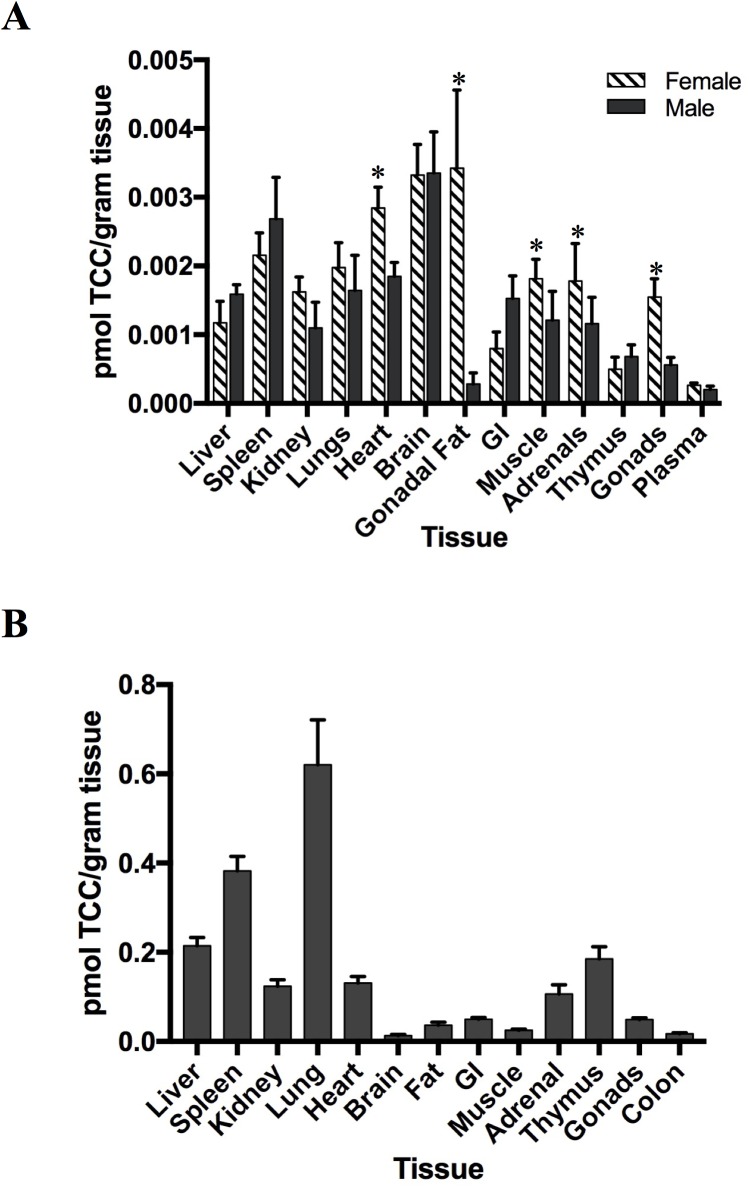
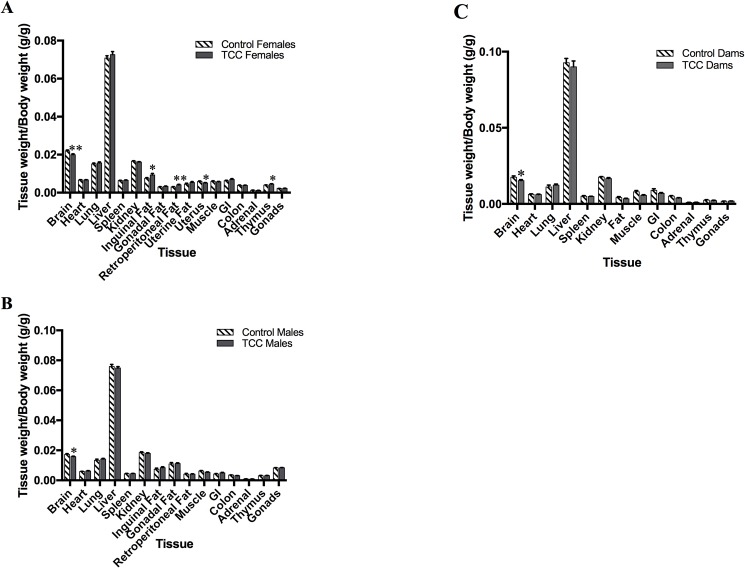
Triclocarban (TCC) is among the top 10 most commonly detected wastewater contaminants in both concentration and frequency. Its presence in water, as well as its propensity to bioaccumulate, has raised numerous questions about potential endocrine and developmental effects. Here, we investigated whether exposure to an environmentally relevant concentration of TCC could result in transfer from mother to offspring in CD-1 mice during gestation and lactation using accelerator mass spectrometry (AMS). 14C-TCC (100 nM) was administered to dams through drinking water up to gestation day 18, or from birth to post-natal day 10. AMS was used to quantify 14C-concentrations in offspring and dams after exposure. We demonstrated that TCC does effectively transfer from mother to offspring, both trans-placentally and via lactation. TCC-related compounds were detected in the tissues of offspring with significantly higher concentrations in the brain, heart and fat. In addition to transfer from mother to offspring, exposed offspring were heavier in weight than unexposed controls demonstrating an 11% and 8.5% increase in body weight for females and males, respectively. Quantitative real-time polymerase chain reaction (qPCR) was used to examine changes in gene expression in liver and adipose tissue in exposed offspring. qPCR suggested alterations in genes involved in lipid metabolism in exposed female offspring, which was consistent with the observed increased fat pad weights and hepatic triglycerides. This study represents the first report to quantify the transfer of an environmentally relevant concentration of TCC from mother to offspring in the mouse model and evaluate bio-distribution after exposure using AMS. Our findings suggest that early-life exposure to TCC may interfere with lipid metabolism and could have implications for human health.
三氯卡班(TCC)在浓度和出现频率方面都是废水中最常检测到的10种污染物之一。它在水中的存在及其生物累积倾向引发了许多关于潜在内分泌和发育影响的问题。在这里,我们使用加速器质谱法(AMS)研究了在妊娠和哺乳期,CD-1小鼠暴露于环境相关浓度的TCC是否会导致从母体转移至后代。在妊娠第18天之前,或从出生到出生后第10天,通过饮用水向母鼠施用14C-TCC(100 nM)。暴露后,使用AMS对后代和母鼠体内的14C浓度进行定量。我们证明,TCC确实能通过胎盘和哺乳从母体有效转移至后代。在后代组织中检测到了与TCC相关的化合物,在脑、心脏和脂肪中的浓度显著更高。除了从母体转移至后代外,暴露的后代体重比未暴露的对照组更重,雌性和雄性的体重分别增加了11%和8.5%。使用定量实时聚合酶链反应(qPCR)检测暴露后代肝脏和脂肪组织中基因表达的变化。qPCR表明,暴露的雌性后代中参与脂质代谢的基因发生了改变,这与观察到的脂肪垫重量增加和肝脏甘油三酯增加一致。本研究首次报告了在小鼠模型中对环境相关浓度的TCC从母体到后代的转移进行定量,并使用AMS评估暴露后的生物分布。我们的研究结果表明,生命早期暴露于TCC可能会干扰脂质代谢,并可能对人类健康产生影响。