Oliveira-Ribeiro Carla, Pimentel Maria Inês Fernandes, Oliveira Raquel de Vasconcellos Carvalhaes, Fagundes Aline, Madeira Maria de Fatima, Mello Cintia Xavier, Mouta-Confort Eliame, Valete-Rosalino Claudia Maria, Vasconcellos Erica de Camargo Ferreira, Lyra Marcelo Rosandiski, Quintella Leonardo Pereira, Fatima Antonio Liliane de, Schubach Armando, Conceição-Silva Fatima
Laboratório de Imunoparasitologia, Instituto Oswaldo Cruz IOC/FIOCRUZ, Pavilhão 26 - 4° andar, sala 406-C, Av. Brasil 4365, Manguinhos, Rio de Janeiro, RJ, 21040-360, Brazil.
Laboratório de Pesquisa Clínica e Vigilância em Leishmanioses - LAPCLIN VIGILEISH, Instituto Nacional de Infectologia Evandro Chagas INI/FIOCRUZ, Rio de Janeiro, Brazil.
BMC Infect Dis. 2017 Aug 10;17(1):559. doi: 10.1186/s12879-017-2658-4.
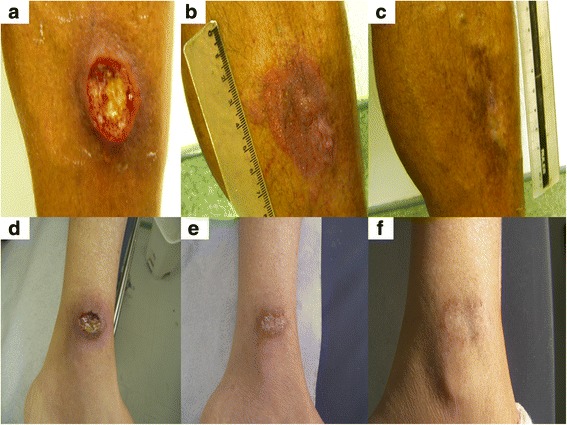
Skin ulcers in American cutaneous leishmaniasis (ACL) may heal spontaneously after months/years. However, few cases may present quick heal even during diagnosis procedure (early spontaneous healing- ESH). The main objective of this study was to compare ESH patients with cases requiring specific treatment [non-ESH (NESH)].
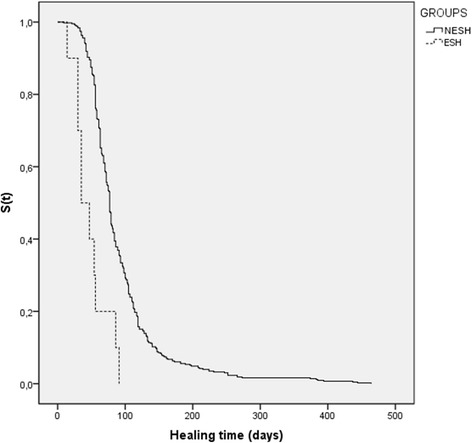
A historical cohort study of ACL patients (n = 445) were divided into 2 groups: ESH - spontaneously healed patients (n = 13; 2.90%), and NESH- treated patients (n = 432; 97.10%). We compared clinical and laboratorial findings at diagnosis, including the lesion healing process.
ESH patients had a higher percentage of single lesions (p = 0.027), epithelialized lesion on initial examination (p = 0.001), lesions located in the dorsal trunk (p = 0.017), besides earlier healing (p < 0.001). NESH presents higher frequency of ulcerated lesions (p = 0.002), amastigotes identified in histopathology exams (p = 0.005), positive cultures (p = 0.001), and higher positivity in ≥3 parasitological exams (p = 0.030). All ESH cases were positive in only a single exam, especially in PCR.
ESH group apparently presented a lower parasitic load evidenced by the difficulty of parasitological confirmation and its positivity only by PCR method. The absence or deficiency of specific treatment is commonly identified as predisposing factors for recurrence and metastasis in ACL. However, due to the drugs toxicity, the treatment of cases which progress to early spontaneous healing is controversial. ESH patients were followed for up to 5 years after cure, with no evidence of recrudescence, therefore suggesting that not treating these patients is justifiable, but periodic dermatological and otorhinolaryngological examinations are advisable to detect a possible relapse.
美洲皮肤利什曼病(ACL)中的皮肤溃疡数月/数年后可能会自行愈合。然而,少数病例甚至在诊断过程中就可能迅速愈合(早期自发愈合-ESH)。本研究的主要目的是比较早期自发愈合患者与需要特殊治疗的病例[非早期自发愈合(NESH)]。
对ACL患者(n = 445)进行历史性队列研究,分为两组:早期自发愈合组-自发愈合患者(n = 13;2.90%),以及非早期自发愈合组-接受治疗的患者(n = 432;97.10%)。我们比较了诊断时的临床和实验室检查结果,包括病变愈合过程。
早期自发愈合患者的单一病变百分比更高(p = 0.027),初次检查时病变已上皮化(p = 0.001),病变位于躯干背部(p = 0.017),此外愈合更早(p < 0.001)。非早期自发愈合组溃疡病变的频率更高(p = 0.002),组织病理学检查中发现无鞭毛体(p = 0.005),培养阳性(p = 0.001),以及在≥3次寄生虫学检查中阳性率更高(p = 0.030)。所有早期自发愈合病例仅在一次检查中呈阳性,尤其是在PCR检查中。
早期自发愈合组显然呈现出较低的寄生虫负荷,这可通过寄生虫学确诊困难以及仅通过PCR方法呈阳性得到证明。在ACL中,缺乏或未进行特殊治疗通常被认为是复发和转移的诱发因素。然而,由于药物毒性,对于进展为早期自发愈合的病例的治疗存在争议。早期自发愈合患者在治愈后随访长达5年,无复发迹象,因此表明不治疗这些患者是合理的,但建议定期进行皮肤科和耳鼻喉科检查以检测可能的复发。