Rajamani Uthra, Gross Andrew R, Ocampo Camille, Andres Allen M, Gottlieb Roberta A, Sareen Dhruv
Board of Governors-Regenerative Medicine Institute, Cedars-Sinai Medical Center, Los Angeles, CA, 90048, USA.
Department of Biomedical Sciences, Cedars-Sinai Medical Center, Los Angeles, CA, 90048, USA.
Nat Commun. 2017 Aug 9;8(1):219. doi: 10.1038/s41467-017-00254-8.
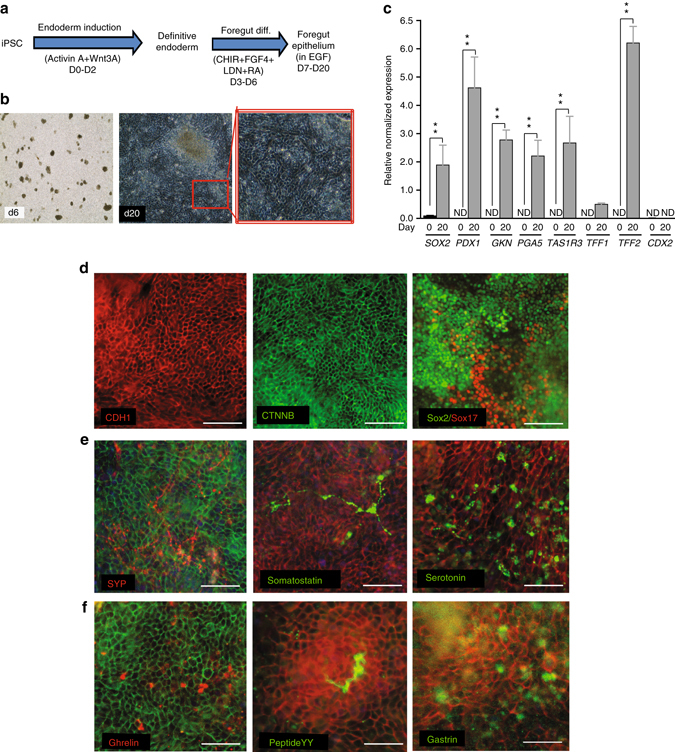
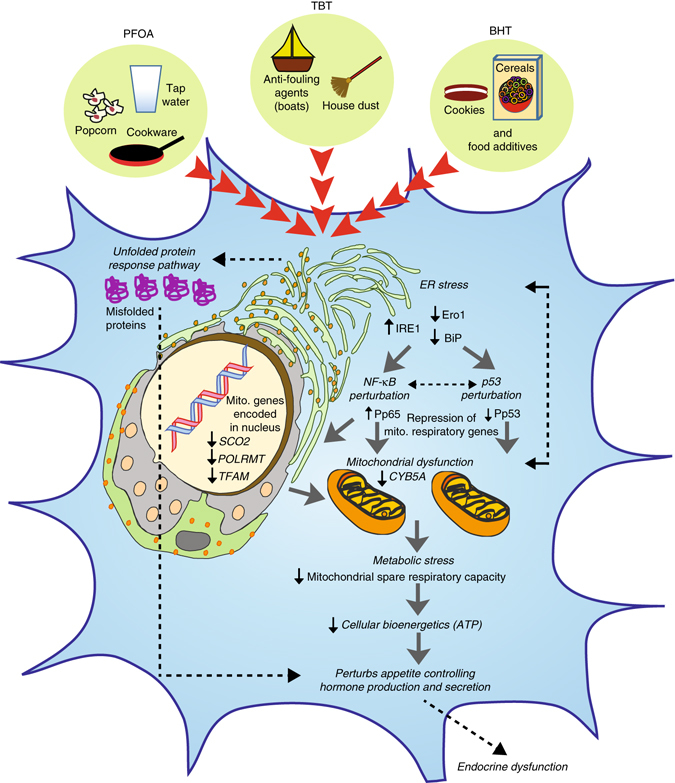
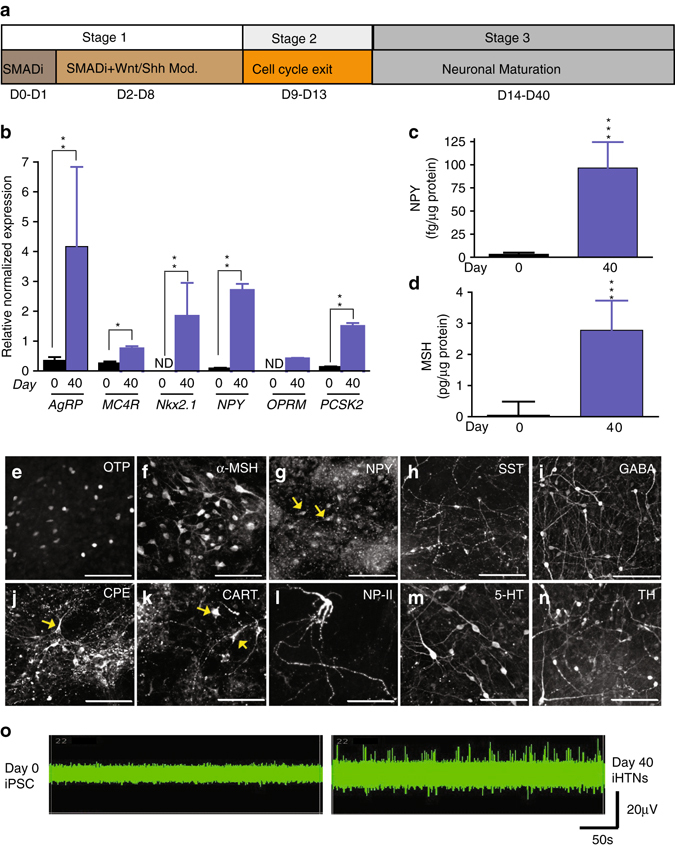
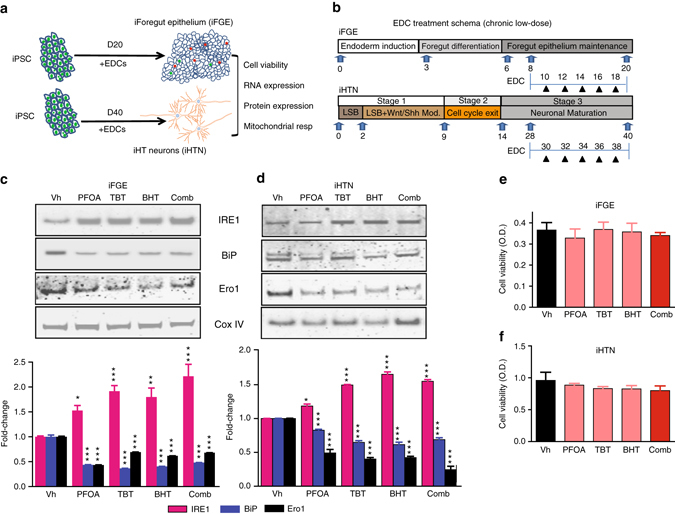
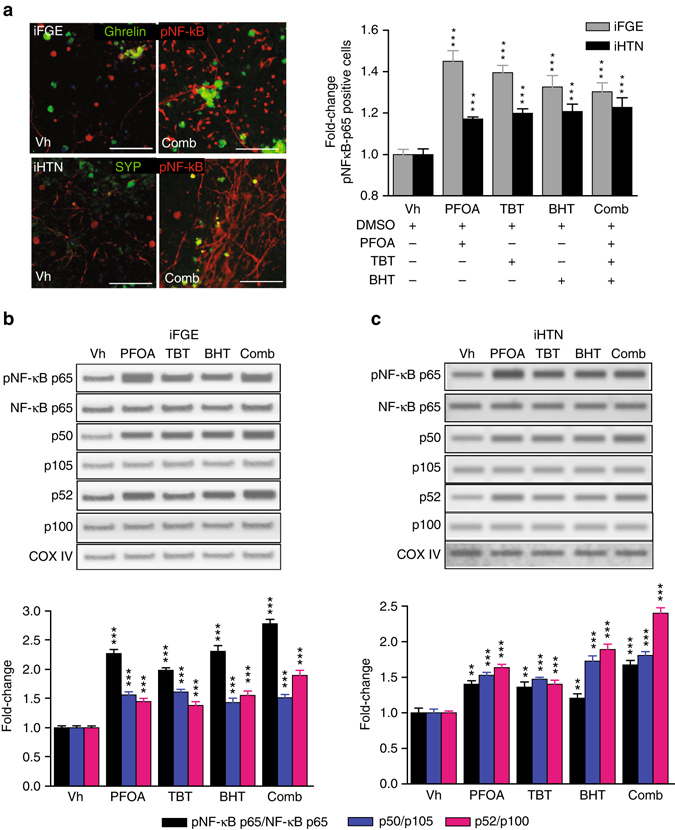
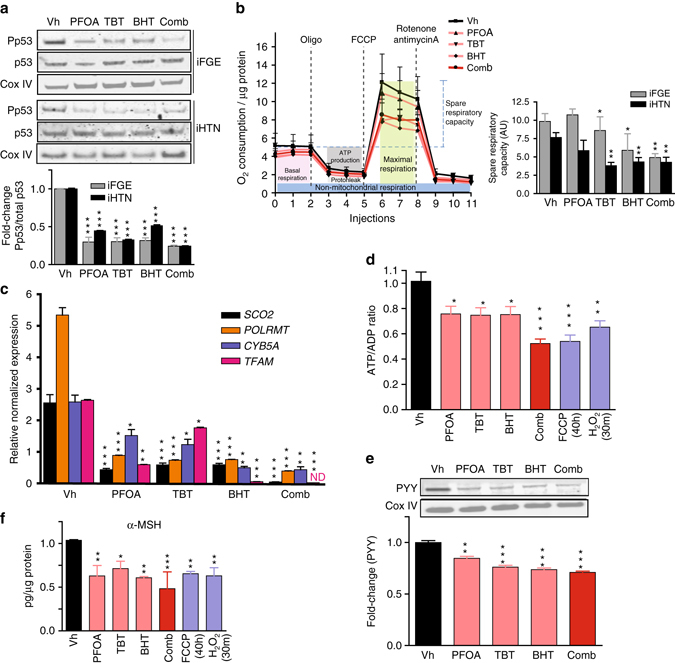
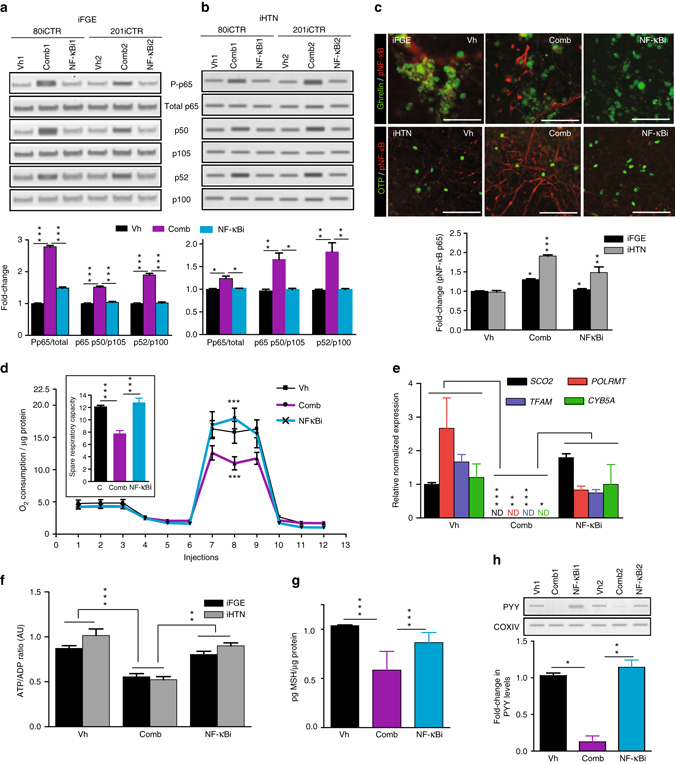
Persistent exposure to man-made endocrine disrupting chemicals during fetal endocrine development may lead to disruption of metabolic homeostasis contributing to childhood obesity. Limited cellular platforms exist to test endocrine disrupting chemical-induced developmental abnormalities in human endocrine tissues. Here we use an human-induced pluripotent stem cell-based platform to demonstrate adverse impacts of obesogenic endocrine disrupting chemicals in the developing endocrine system. We delineate the effects upon physiological low-dose exposure to ubiquitous endocrine disrupting chemicals including, perfluoro-octanoic acid, tributyltin, and butylhydroxytoluene, in endocrine-active human-induced pluripotent stem cell-derived foregut epithelial cells and hypothalamic neurons. Endocrine disrupting chemicals induce endoplasmic reticulum stress, perturb NF-κB, and p53 signaling, and diminish mitochondrial respiratory gene expression, spare respiratory capacity, and ATP levels. As a result, normal production and secretion of appetite control hormones, PYY, α-MSH, and CART, are hampered. Blocking NF-κB rescues endocrine disrupting chemical-induced aberrant mitochondrial phenotypes and endocrine dysregulation, but not ER-stress and p53-phosphorylation changes.Harmful chemicals that disrupt the endocrine system and hormone regulation have been associated with obesity. Here the authors apply a human pluripotent stem cell-based platform to study the effects of such compounds on developing gut endocrine and neuroendocrine systems.
在胎儿内分泌发育过程中持续接触人造内分泌干扰化学物质可能会导致代谢稳态紊乱,进而导致儿童肥胖。目前用于测试内分泌干扰化学物质诱导的人类内分泌组织发育异常的细胞平台有限。在此,我们使用基于人类诱导多能干细胞的平台来证明致肥胖内分泌干扰化学物质对发育中的内分泌系统的不利影响。我们描述了在生理低剂量暴露于普遍存在的内分泌干扰化学物质(包括全氟辛酸、三丁基锡和丁基羟基甲苯)时,对具有内分泌活性的人类诱导多能干细胞衍生的前肠上皮细胞和下丘脑神经元的影响。内分泌干扰化学物质会诱导内质网应激,扰乱核因子κB和p53信号通路,并降低线粒体呼吸基因表达、备用呼吸能力和ATP水平。结果,食欲控制激素PYY、α-MSH和CART的正常产生和分泌受到阻碍。阻断核因子κB可挽救内分泌干扰化学物质诱导的异常线粒体表型和内分泌失调,但不能挽救内质网应激和p53磷酸化变化。破坏内分泌系统和激素调节的有害化学物质与肥胖有关。在此,作者应用基于人类多能干细胞的平台来研究此类化合物对发育中的肠道内分泌和神经内分泌系统的影响。