Sarli Antonia, Skalidakis Iosif, Velissari Aliki, Koutsandrea Chryssanthi, Stefaniotou Maria, Petersen Michael B, Kroupis Christos, Kitsos George, Moschos Marilita M
Department of Clinical Biochemistry, Attikon University General Hospital.
1st Department of Ophthalmology, "G. Gennimatas" General Hospital, Medical School, National and Kapodistrian University of Athens, Athens.
Clin Ophthalmol. 2017 Jul 26;11:1347-1358. doi: 10.2147/OPTH.S134538. eCollection 2017.
Age-related macular degeneration (AMD) is a multifactorial degenerative ocular disease that leads to loss of central vision. Functional gene polymorphisms have already been associated with the disease (for example, A69S, rs10490924).
The goal of our study was to verify the correlation of the aforementioned variation with the disease, to examine, for the first time, the role of the C260T variation (rs2569190), and to investigate the association of two polymorphisms (Asp299Gly or rs4986790 and Thr399Ile or rs4986791) in a Greek population with the wet form of AMD.
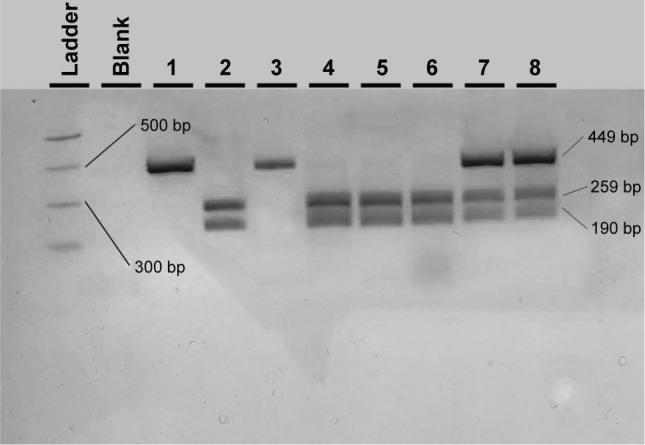
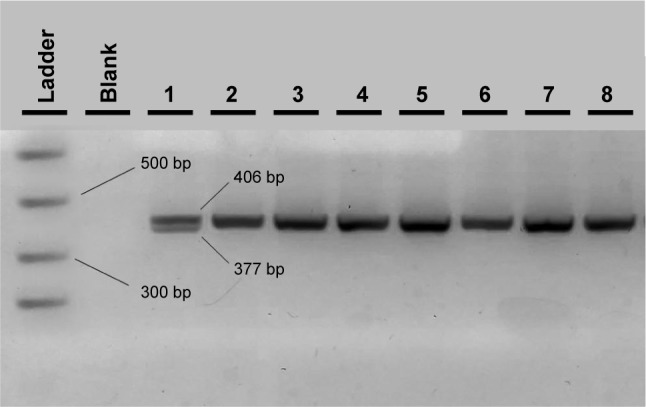
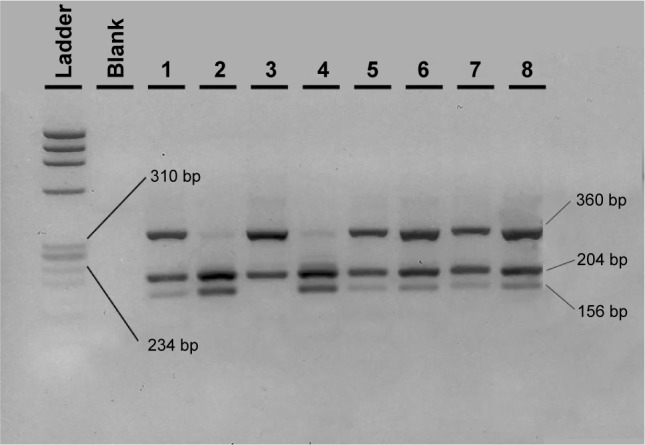
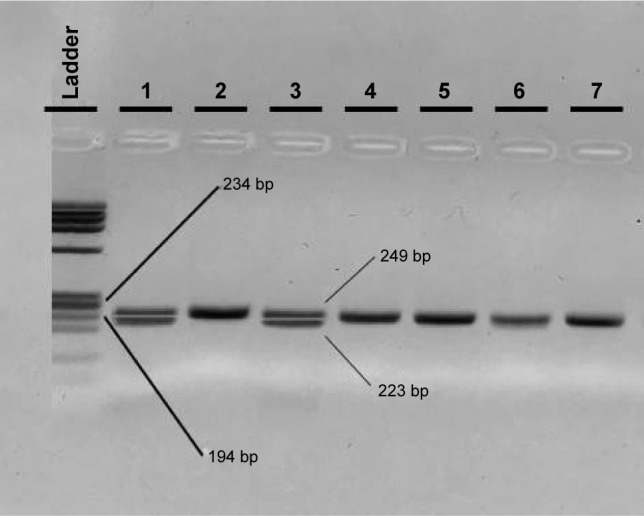
Genomic DNAs were isolated from blood samples of 103 healthy controls and 120 Greek patients with wet AMD who were age- and sex-matched, and all of whom were clinically evaluated. For the genotyping of all selected polymorphisms, polymerase chain reaction-restriction fragment length polymorphism analysis was performed.
This study confirmed the association between the variation and AMD, detecting the T risk allele in a significantly higher frequency in the patient group, compared with the control subjects (45% vs 29.13%, <0.001, odds ratio [OR] 1.99, confidence interval 1.34-2.95). For the polymorphism, no statistically significant correlation was observed. As for the polymorphisms, the percentage of heterozygotes increased from 2.9% to 11.7% in the patient population for Asp299Gly and from 1.9% to 10% for the Thr399Ile polymorphism (ORs 4.40 [=0.01] and 5.61 [=0.0088], respectively). Although our and results provided definite conclusions, the role of innate immunity gene awaits further investigation in larger AMD populations with more clinical data collected on past microbial infections.
年龄相关性黄斑变性(AMD)是一种多因素导致的退行性眼病,可导致中心视力丧失。功能性基因多态性已与该疾病相关(例如,A69S,rs10490924)。
我们研究的目的是验证上述变异与该疾病的相关性,首次研究C260T变异(rs2569190)的作用,并调查希腊人群中两种多态性(Asp299Gly或rs4986790以及Thr399Ile或rs4986791)与湿性AMD的关联。
从103名年龄和性别匹配的健康对照者以及120名希腊湿性AMD患者的血样中分离基因组DNA,所有患者均经过临床评估。对于所有选定多态性的基因分型,进行聚合酶链反应-限制性片段长度多态性分析。
本研究证实了该变异与AMD之间的关联,与对照组相比,患者组中检测到的T风险等位基因频率显著更高(45%对29.13%,<0.001,优势比[OR]1.99,置信区间1.34 - 2.95)。对于该多态性,未观察到统计学上的显著相关性。至于该多态性,患者群体中Asp299Gly杂合子的百分比从2.9%增加到11.7%,Thr399Ile多态性从1.9%增加到10%(OR分别为4.40[=0.01]和5.61[=0.0088])。尽管我们的和结果提供了明确的结论,但先天免疫基因的作用仍有待在更大的AMD人群中进一步研究,收集更多关于既往微生物感染的临床数据。