Price David, Bjermer Leif, Bergin David A, Martinez Rafael
Centre of Academic Primary Care, University of Aberdeen, Aberdeen, UK.
Observational and Pragmatic Research Institute, Singapore.
J Asthma Allergy. 2017 Jul 25;10:209-223. doi: 10.2147/JAA.S134300. eCollection 2017.
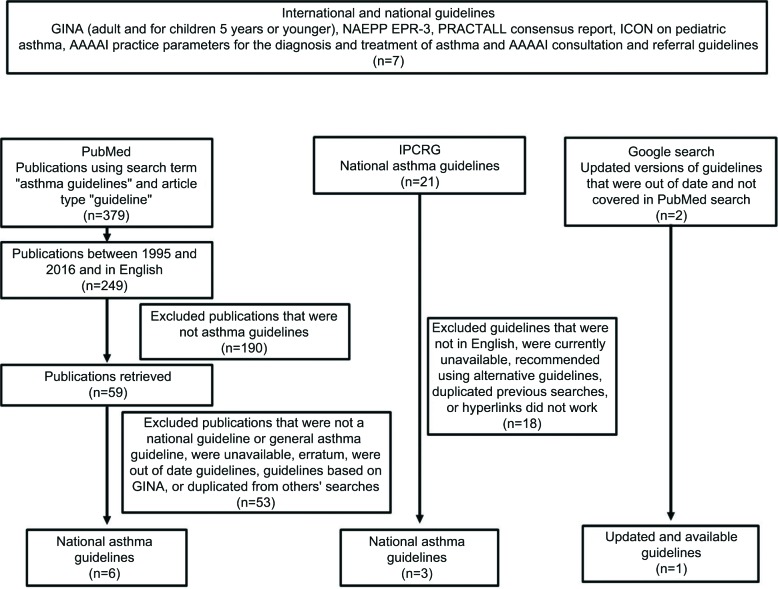
Heterogeneity of asthma and difficulty in achieving optimal control are the major challenges in the management of asthma. To help attain the best possible clinical outcomes in patients with asthma, several guidelines provide recommendations for patients who will require a referral to a specialist. Such referrals can help in clearing the uncertainty from the initial diagnosis, provide tailored treatment options to patients with persistent symptoms and offer the patients access to health care providers with expertise in the management of the asthma; thus, specialist referrals have a substantial impact on disease prognosis and the patient's health status. Hurdles in implementing these recommendations include lack of their dissemination among health care providers and nonadherence to these guidelines; these hurdles considerably limit the implementation of specialist referrals, eventually affecting the rate of referrals. In this review, recommendations for specialist referrals from several key international and national asthma guidelines and other relevant published literature are evaluated. Furthermore, we highlight why referrals are not happening, how this can be improved, and ultimately, what should be done in the specialist setting, based on existing evidence in published literature.
哮喘的异质性以及难以实现最佳控制是哮喘管理中的主要挑战。为帮助哮喘患者获得尽可能好的临床结果,多项指南为需要转诊至专科医生的患者提供了建议。此类转诊有助于消除初始诊断中的不确定性,为有持续症状的患者提供量身定制的治疗方案,并使患者能够接触到在哮喘管理方面具有专业知识的医疗服务提供者;因此,专科转诊对疾病预后和患者健康状况有重大影响。实施这些建议的障碍包括医疗服务提供者之间缺乏传播以及不遵守这些指南;这些障碍极大地限制了专科转诊的实施,最终影响了转诊率。在本综述中,对来自几个关键的国际和国家哮喘指南以及其他相关已发表文献中关于专科转诊的建议进行了评估。此外,我们基于已发表文献中的现有证据,强调了转诊未发生的原因、如何改善这种情况,以及最终在专科环境中应该采取什么措施。