Soni Kapil Dev, Mahindrakar Santosh, Gupta Amit, Kumar Subodh, Sagar Sushma, Jhakal Ashish
Department of Trauma Surgery and Critical Care, Jai Prakash Narayan Trauma Centre, AIIMS, New Delhi, India.
Burns Trauma. 2017 Aug 8;5:25. doi: 10.1186/s41038-017-0087-7. eCollection 2017.
Studies to identify an ideal trauma score tool representing prediction of outcomes of the pediatric fall patient remains elusive. Our study was undertaken to identify better predictor of mortality in the pediatric fall patients.
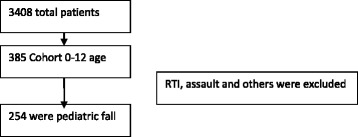
Data was retrieved from prospectively maintained trauma registry project at level 1 trauma center developed as part of Multicentric Project-Towards Improving Trauma Care Outcomes (TITCO) in India. Single center data retrieved from a prospectively maintained trauma registry at a level 1 trauma center, New Delhi, for a period ranging from 1 October 2013 to 17 February 2015 was evaluated. Standard anatomic scores Injury Severity Score (ISS) and New Injury Severity Score (NISS) were compared with physiologic score Revised Trauma Score (RTS) using receiver operating curve (ROC).
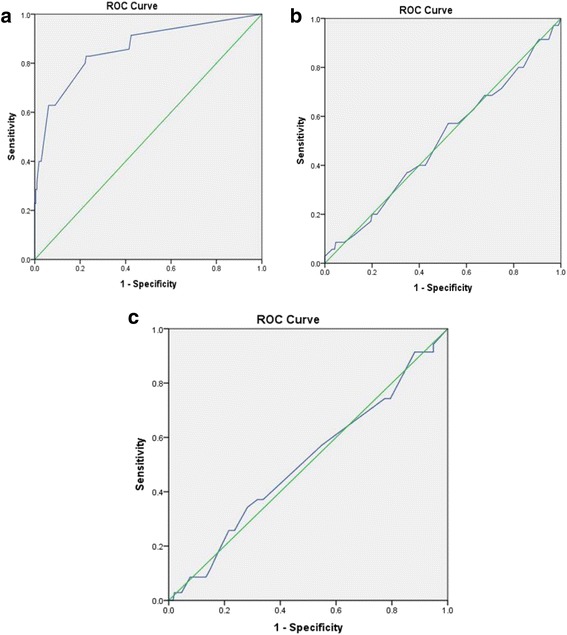
Heart rate and RTS had a statistical difference among the survivors to nonsurvivors. ISS, NISS, and RTS were having 50, 50, and 86% of area under the curve on ROCs, and RTS was statistically significant among them.
Physiologically based trauma score systems (RTS) are much better predictors of inhospital mortality in comparison to anatomical based scoring systems (ISS and NISS) for unintentional pediatric falls.
旨在确定一种能代表小儿跌倒患者预后预测的理想创伤评分工具的研究仍未取得成果。我们开展这项研究是为了找出小儿跌倒患者死亡率的更好预测指标。
数据取自印度多中心改善创伤护理结果项目(TITCO)的一部分——一级创伤中心前瞻性维护的创伤登记项目。对从新德里一家一级创伤中心前瞻性维护的创伤登记处获取的单中心数据进行了评估,该数据涵盖2013年10月1日至2015年2月17日这一时间段。使用受试者工作特征曲线(ROC)将标准解剖学评分损伤严重度评分(ISS)和新损伤严重度评分(NISS)与生理学评分修订创伤评分(RTS)进行比较。
幸存者与非幸存者之间心率和RTS存在统计学差异。ISS、NISS和RTS在ROC曲线上的曲线下面积分别为50%、50%和86%,其中RTS具有统计学意义。
对于小儿意外跌倒,基于生理学的创伤评分系统(RTS)相比基于解剖学的评分系统(ISS和NISS),是住院死亡率更好的预测指标。