Hann Hie-Won, Jain Surbhi, Park Grace, Steffen Jamin D, Song Wei, Su Ying-Hsiu
Liver Disease Prevention Center, Division of Gastroenterology and Hepatology, Thomas Jefferson University Hospital, Philadelphia, PA 19107, USA.
JBS Science, Inc., Doylestown, PA 18902, USA.
Hepatoma Res. 2017;3:105-111. doi: 10.20517/2394-5079.2017.15. Epub 2017 Jun 6.
This study aimed to explore the potential of detecting hepatocellular carcinoma (HCC)-associated DNA markers, mutations and aberrant methylation of and genes, for monitoring HCC recurrence. HCC remains a leading cause of death worldwide, with one of the fastest growing incidence rates in the US. While treatment options are available and new ones emerging, there remains a poor prognosis of this disease mostly due to its late diagnosis and high recurrence rate. Although there are no specific guidelines addressing how HCC recurrence should be monitored, recurrence is usually monitored by serum-alpha fetal protein and imaging methods such as magnetic resonance imaging (MRI). However, early detection of recurrent HCC remains limited, particularly at the site of treated lesion.
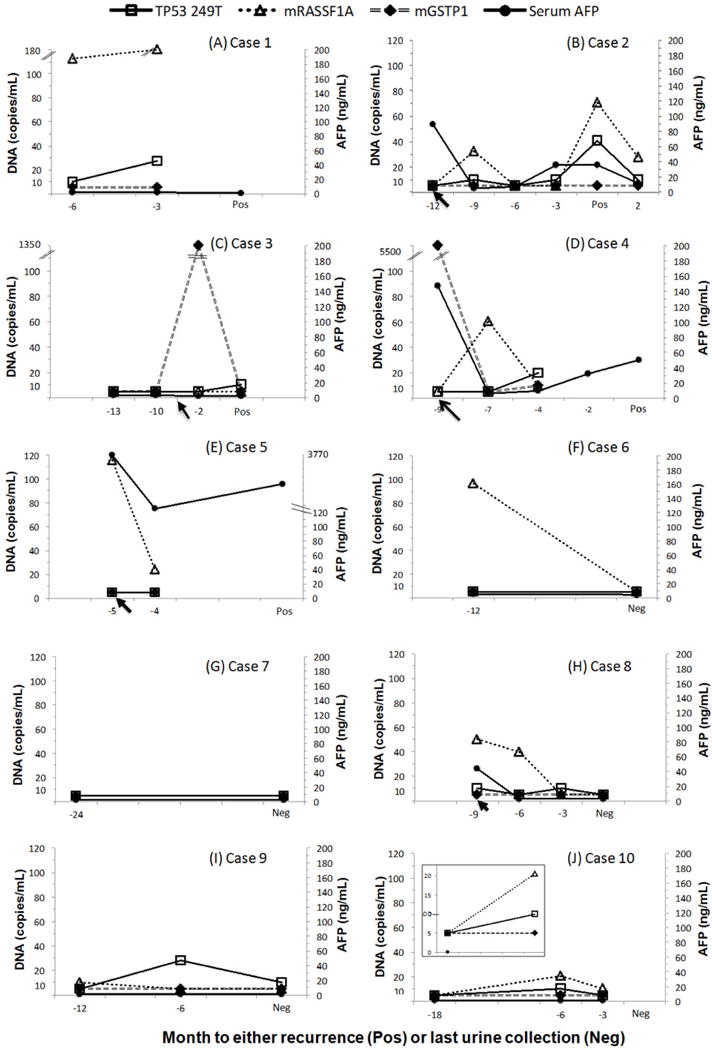
Here, the authors followed 10 patients that were treated for a primary HCC, and monitored for months or years later. At these follow-up visits, urine was collected and tested retrospectively for 3 DNA biomarkers that associate with HCC development.
This 10-patient study compared detection of urine DNA markers with MRI for monitoring HCC recurrence. Five patients were confirmed by MRI for recurrence, and all 5 had detectable DNA biomarkers up to 9 months before recurrence confirmation by MRI.
Overall, this suggests that detection of HCC-associated DNA markers in urine could provide a promising tool to complement detection of recurrent HCC by imaging.
本研究旨在探索检测与肝细胞癌(HCC)相关的DNA标志物、 基因的突变和异常甲基化,用于监测HCC复发的潜力。HCC仍然是全球主要的死亡原因之一,在美国其发病率增长速度最快。虽然有多种治疗选择且新的治疗方法不断涌现,但该疾病的预后仍然很差,主要是由于其诊断较晚且复发率高。尽管没有针对如何监测HCC复发的具体指南,但复发通常通过血清甲胎蛋白和磁共振成像(MRI)等成像方法进行监测。然而,复发性HCC的早期检测仍然有限,尤其是在治疗病变部位。
在此,作者对10例接受原发性HCC治疗的患者进行了随访,并在数月或数年后进行监测。在这些随访中,收集尿液并回顾性检测与HCC发展相关的3种DNA生物标志物。
这项纳入10例患者的研究比较了尿液DNA标志物检测与MRI监测HCC复发的情况。5例患者经MRI确诊复发,所有5例在经MRI确认复发前9个月均可检测到DNA生物标志物。
总体而言,这表明检测尿液中与HCC相关的DNA标志物可能为补充通过成像检测复发性HCC提供一种有前景的工具。