Holopainen Riikka, Eriksson-Kallio Anna Maria, Gadd Tuija
Finnish Food Safety Authority Evira, Research and Laboratory Services Department, Virology Research Unit, Mustialankatu 3, 00790, Helsinki, Finland.
Finnish Food Safety Authority Evira, Research and Laboratory Services Department, Veterinary Bacteriology and Pathology Research Unit, Mustialankatu 3, 00790, Helsinki, Finland.
Arch Virol. 2017 Nov;162(11):3459-3471. doi: 10.1007/s00705-017-3525-8. Epub 2017 Aug 9.
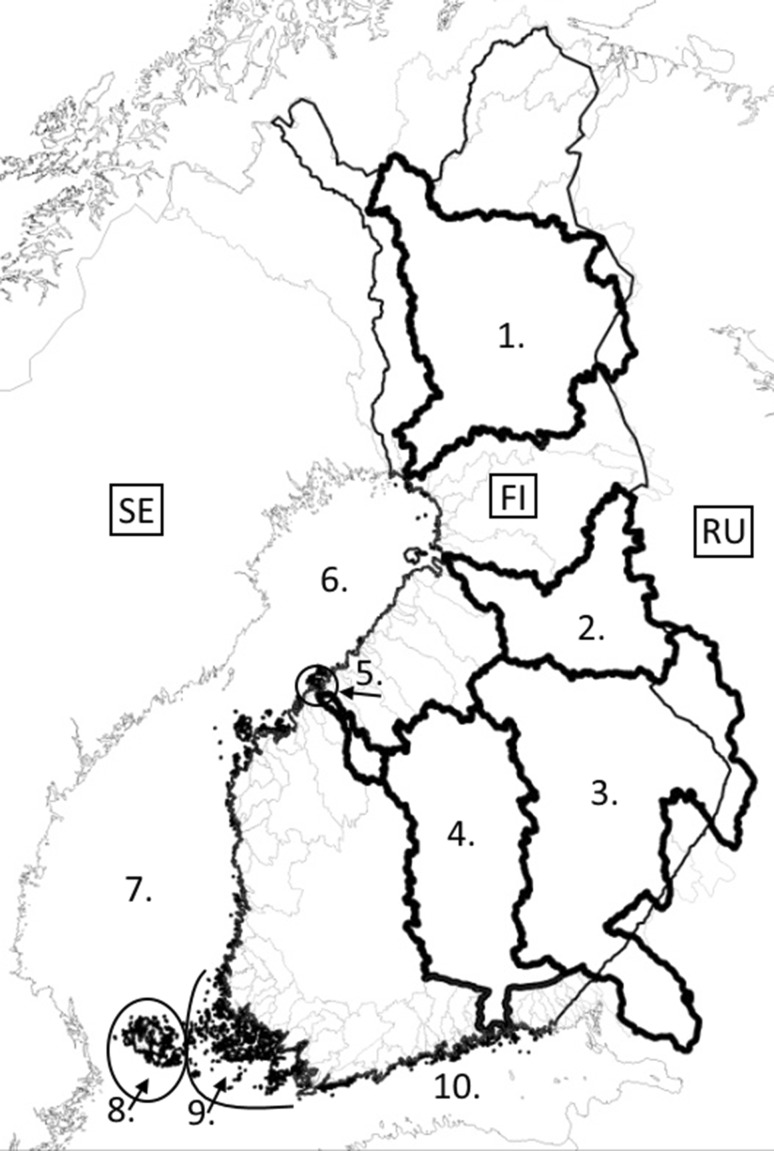
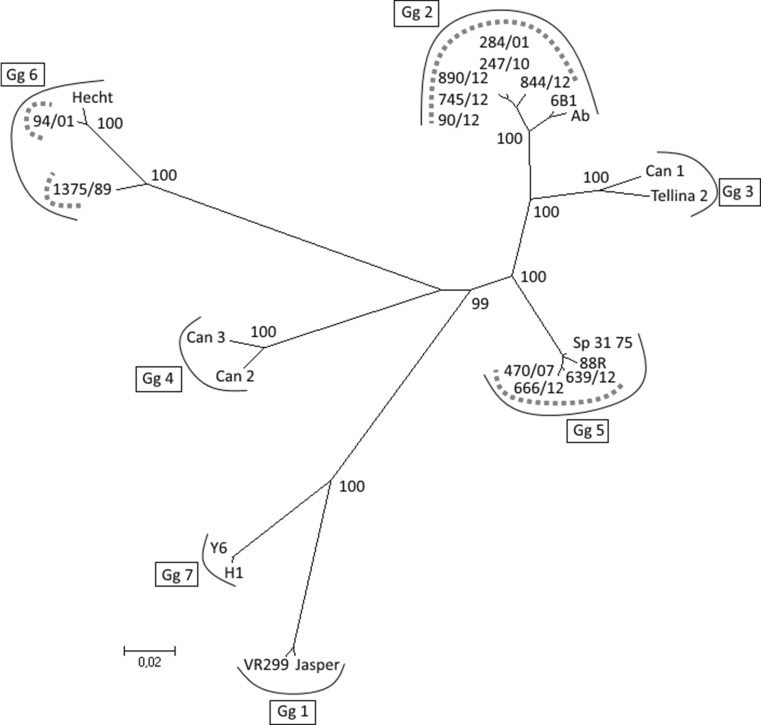
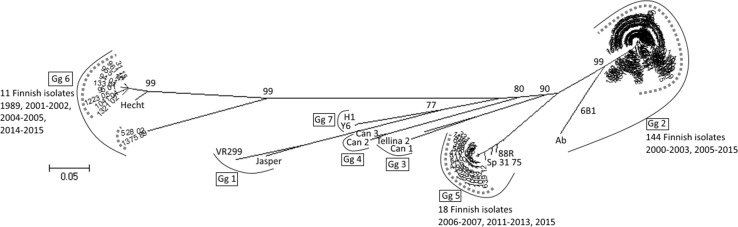
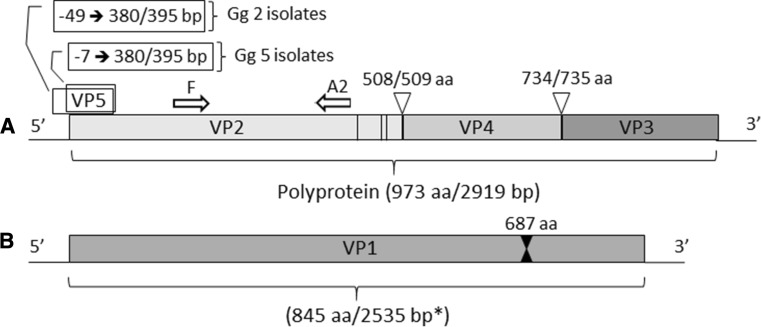
Infectious pancreatic necrosis virus (IPNV) has been isolated annually since 1987 from salmonids without clinical signs at coastal fish farms in Finland. In the inland area, viral isolations were rare until 2012, when IPNV was detected at several freshwater fish farms. Between 2013 and 2015, the infection spread and IPNV was continuously isolated from several farms, both inland and on the coast. The aim of this study was to genetically characterise the IPNV isolates collected from Finnish coastal and inland fish farms over the last 15 years, and to detect genetic changes that may have occurred in the virus populations during the study period. The partial VP2 gene sequence from 88 isolates was analysed. In addition, a complete genomic coding sequence was obtained from 11 isolates. Based on the genetic analyses, Finnish IPNV isolates belong to three genogroups: 2, 5 and 6. The genetic properties of the isolates appear to vary between inland farms producing juveniles and food fish farms in the coastal region: the inland farms harboured genogroup 2 isolates, whereas at coastal farms, all three genogroups were detected. Little genetic variation was observed within the Finnish genogroup 2 and 5 isolates, whereas among the genogroup 6 isolates, two subgroups were detected. All isolates studied demonstrated amino acid patterns in the viral VP2 gene previously associated with avirulence. However, increased mortality was detected at some of the farms, indicating that more research is needed to clarify the relationship between the pathogenicity and genetic properties of IPNV isolates from different genogroups.
自1987年以来,芬兰沿海养鱼场每年都能从无临床症状的鲑科鱼类中分离出传染性胰腺坏死病毒(IPNV)。在内陆地区,直到2012年病毒分离情况都很罕见,当时在几个淡水养鱼场检测到了IPNV。2013年至2015年期间,感染蔓延,在内陆和沿海的几个养鱼场都持续分离出了IPNV。本研究的目的是对过去15年从芬兰沿海和内陆养鱼场收集的IPNV分离株进行基因特征分析,并检测研究期间病毒群体中可能发生的基因变化。分析了88个分离株的部分VP2基因序列。此外,从11个分离株中获得了完整的基因组编码序列。基于基因分析,芬兰的IPNV分离株属于三个基因群:2、5和6。在内陆生产幼鱼的养鱼场和沿海地区的食用鱼养鱼场中,分离株的基因特性似乎有所不同:内陆养鱼场中存在基因群2的分离株,而在沿海养鱼场中,检测到了所有三个基因群。在芬兰的基因群2和5分离株中观察到的基因变异很少,而在基因群6分离株中,检测到了两个亚群。所有研究的分离株在病毒VP2基因中都表现出先前与无毒力相关的氨基酸模式。然而,在一些养鱼场检测到死亡率增加,这表明需要更多研究来阐明来自不同基因群的IPNV分离株的致病性与基因特性之间的关系。