Potpara Tatjana S, Trendafilova Elina, Dan Gheorghe-Andrei, Goda Artan, Kusljugic Zumreta, Manola Sime, Music Ljilja, Gjini Viktor, Pojskic Belma, Popescu Mircea Ioakim, Georgescu Catalina Arsenescu, Dimitrova Elena S, Kamenova Delyana, Ekmeciu Uliks, Mrsic Denis, Nenezic Ana, Brusich Sandro, Milanov Srdjan, Zeljkovic Ivan, Lip Gregory Y H
School of Medicine, Belgrade University, Belgrade, Serbia.
Cardiology Clinic, Clinical Centre of Serbia, Belgrade, Serbia.
Adv Ther. 2017 Aug;34(8):2043-2057. doi: 10.1007/s12325-017-0589-5. Epub 2017 Aug 9.
Data on management of atrial fibrillation (AF) in the Balkan Region are scarce. To capture the patterns in AF management in contemporary clinical practice in the Balkan countries a prospective survey was conducted between December 2014 and February 2015, and we report results pertinent to the use of non-vitamin K antagonist oral anticoagulants (NOACs).
A 14-week prospective, multicenter survey of consecutive AF patients seen by cardiologists or internal medicine specialists was conducted in Albania, Bosnia and Herzegovina, Bulgaria, Croatia, Montenegro, Romania, and Serbia (a total of about 50 million inhabitants).
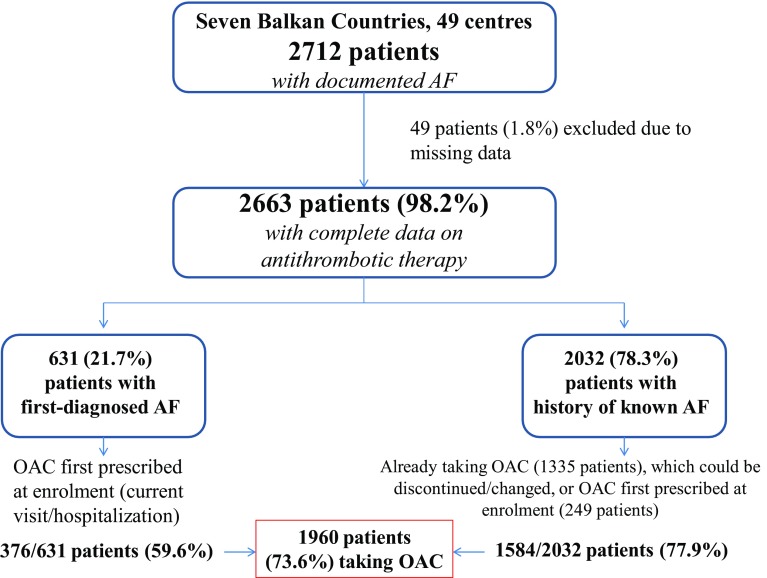
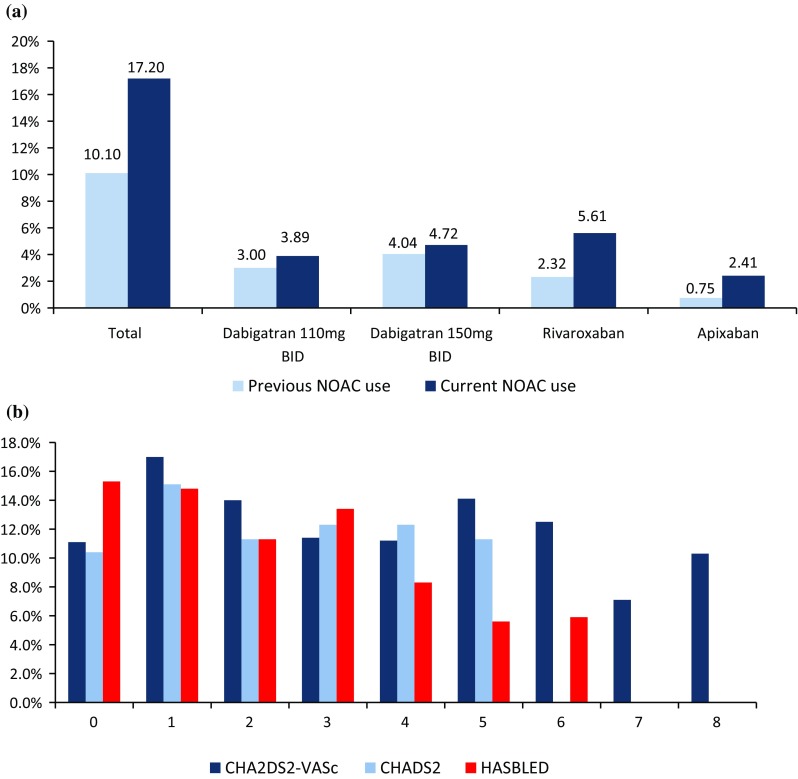
Of 2712 enrolled patients, 2663 (98.2%) had complete data relevant to oral anticoagulant (OAC) use (mean age 69.1 ± 10.9 years, female 44.6%). Overall, OAC was used in 1960 patients (73.6%) of whom 338 (17.2%) received NOACs. Malignancy [odds ratio (OR), 95% confidence interval (CI) 2.06, 1.20-3.56], rhythm control (OR 1.64, 1.25-2.16), and treatment by cardiologists were independent predictors of NOAC use (OR 2.32, 1.51-3.54) [all p < 0.01)], whilst heart failure and valvular disease were negatively associated with NOAC use (both p < 0.01). Individual stroke and bleeding risk were not significantly associated with NOAC use on multivariate analysis.
NOACs are increasingly used in AF patients in the Balkan Region, but NOAC use is predominantly guided by factors other than evidence-based decision-making (e.g., drug availability on the market or reimbursement policy). Efforts are needed to establish an evidence-based approach to OAC selection and to facilitate the optimal use of OAC, thus improving the outcomes in AF patients in this large region.
巴尔干地区心房颤动(AF)管理的数据匮乏。为了解巴尔干国家当代临床实践中AF管理的模式,于2014年12月至2015年2月进行了一项前瞻性调查,我们报告了与非维生素K拮抗剂口服抗凝药(NOACs)使用相关的结果。
在阿尔巴尼亚、波斯尼亚和黑塞哥维那、保加利亚、克罗地亚、黑山、罗马尼亚和塞尔维亚(共约5000万居民)对心脏病专家或内科专家诊治的连续性AF患者进行了为期14周的前瞻性多中心调查。
在2712名登记患者中,2663名(98.2%)有与口服抗凝药(OAC)使用相关的完整数据(平均年龄69.1±10.9岁,女性占44.6%)。总体而言,1960名患者(73.6%)使用了OAC,其中338名(17.2%)接受了NOACs。恶性肿瘤[比值比(OR),95%置信区间(CI)2.06,1.20 - 3.56]、节律控制(OR 1.64,1.25 - 2.16)以及心脏病专家的治疗是NOAC使用的独立预测因素(OR 2.32,1.51 - 3.54)[均p < 0.01],而心力衰竭和瓣膜病与NOAC使用呈负相关(均p < 0.01)。多因素分析显示,个体的卒中及出血风险与NOAC使用无显著相关性。
NOACs在巴尔干地区AF患者中的使用日益增加,但NOAC的使用主要受循证决策以外因素的指导(如市场上药物的可获得性或报销政策)。需要努力建立基于证据的OAC选择方法,并促进OAC的最佳使用,从而改善该广大地区AF患者的治疗结局。