Yin Huiming, Zhang Shu, Sun Yahong, Li Sha, Ning Yunye, Dong Yuchao, Shang Yan, Bai Chong
Department of Respiration, First Affiliated Hospital, Hunan University of Medicine, Huaihua 418000, China.
Department of Respiratory Medicine, Seventh People's Hospital of Shanghai University of TCM, Shanghai 200137, China.
Cell Death Dis. 2017 Aug 10;8(8):e2998. doi: 10.1038/cddis.2017.357.
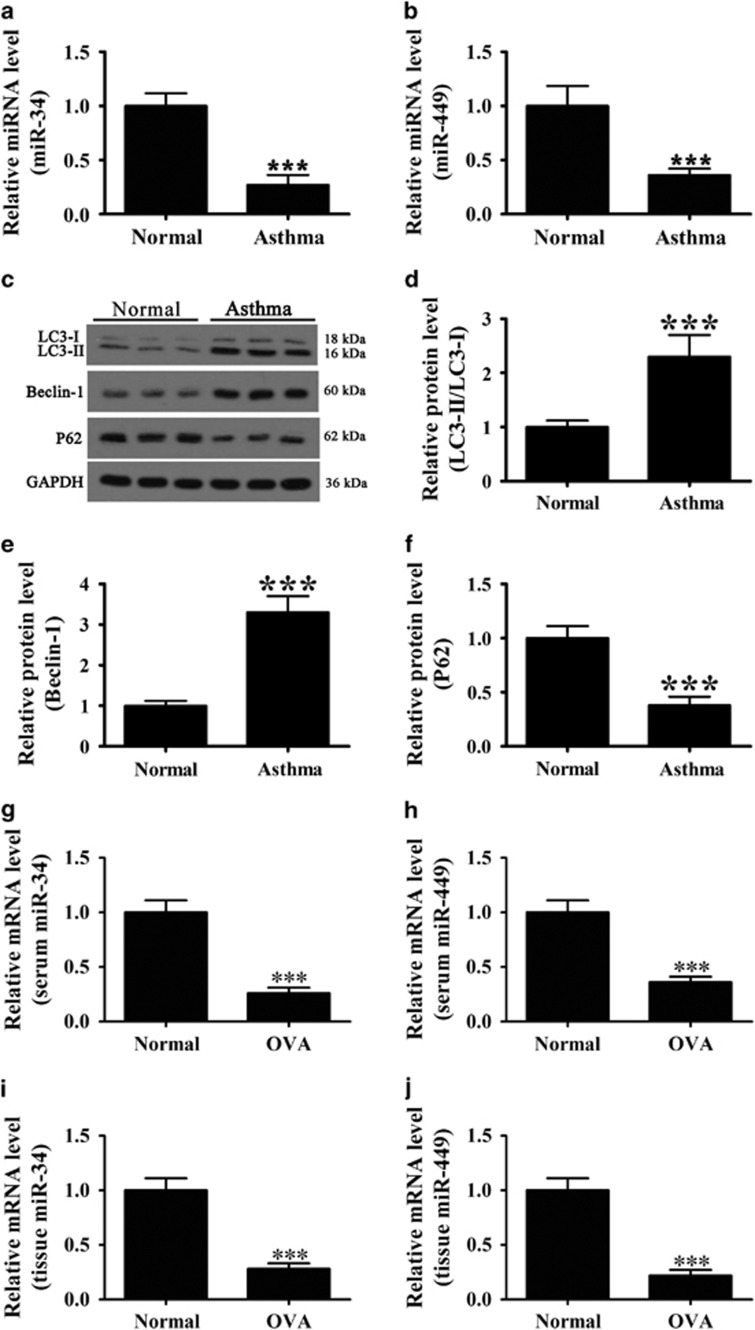
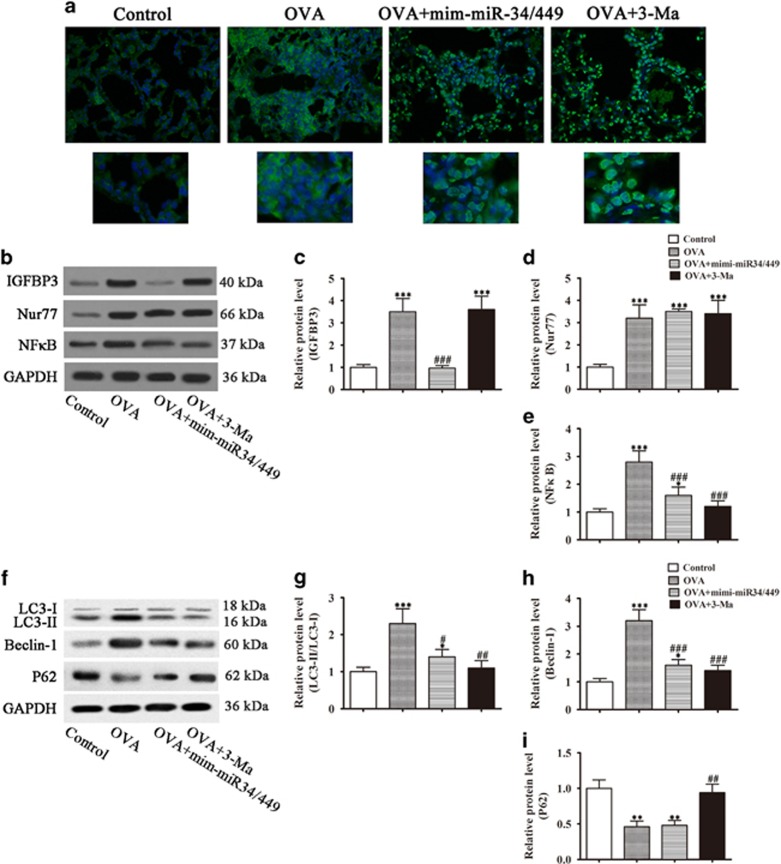
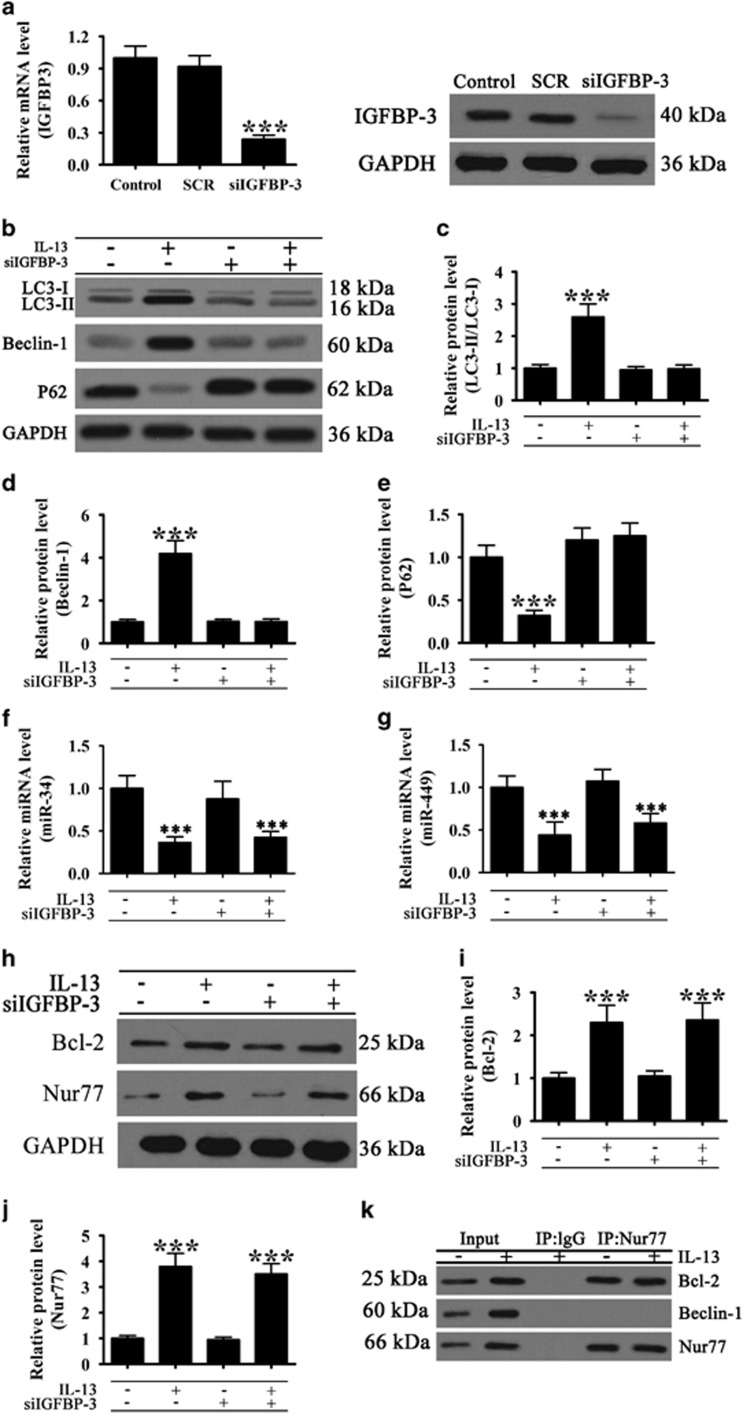
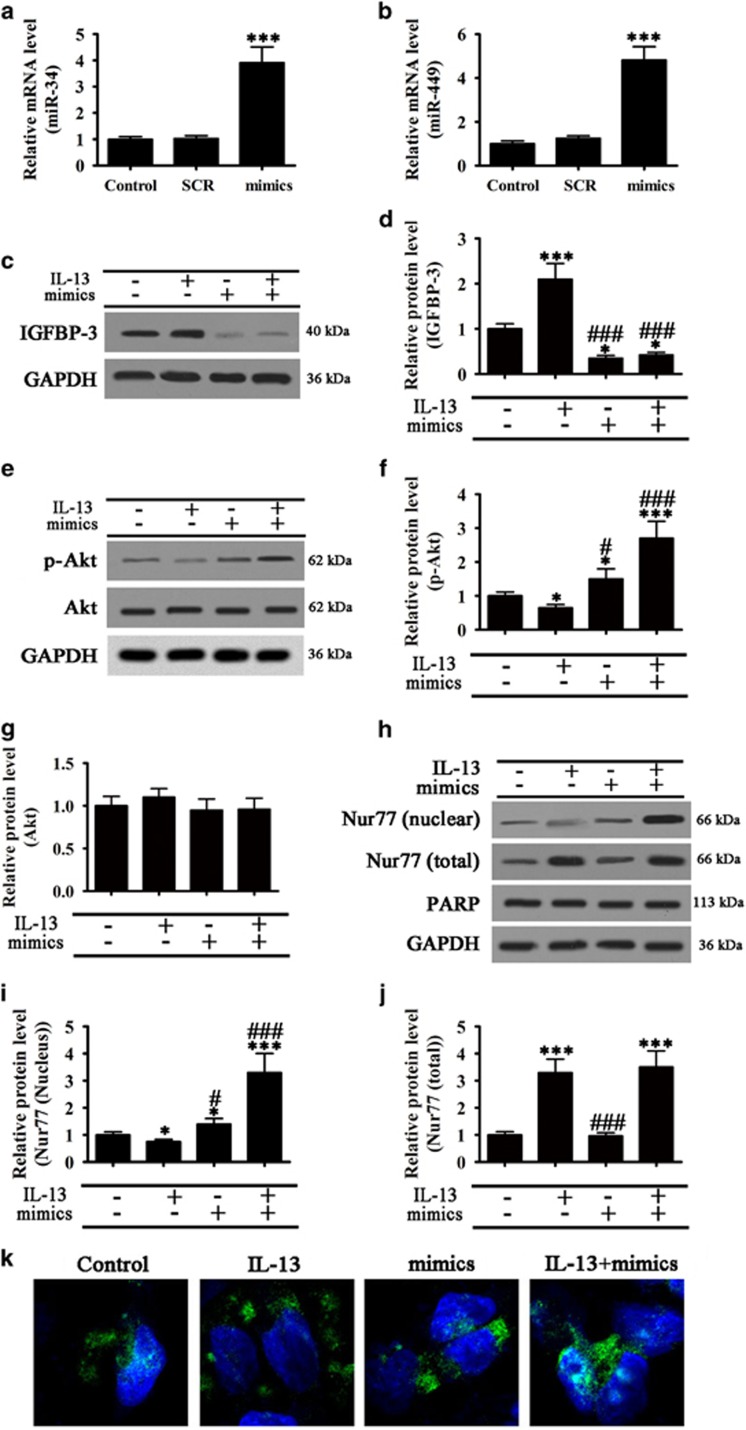
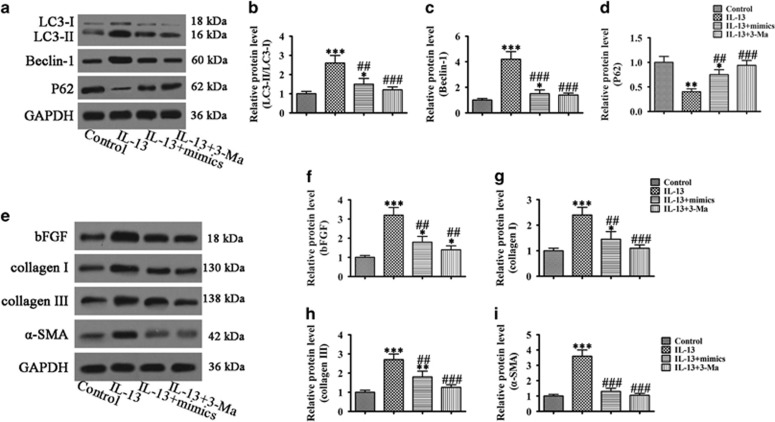
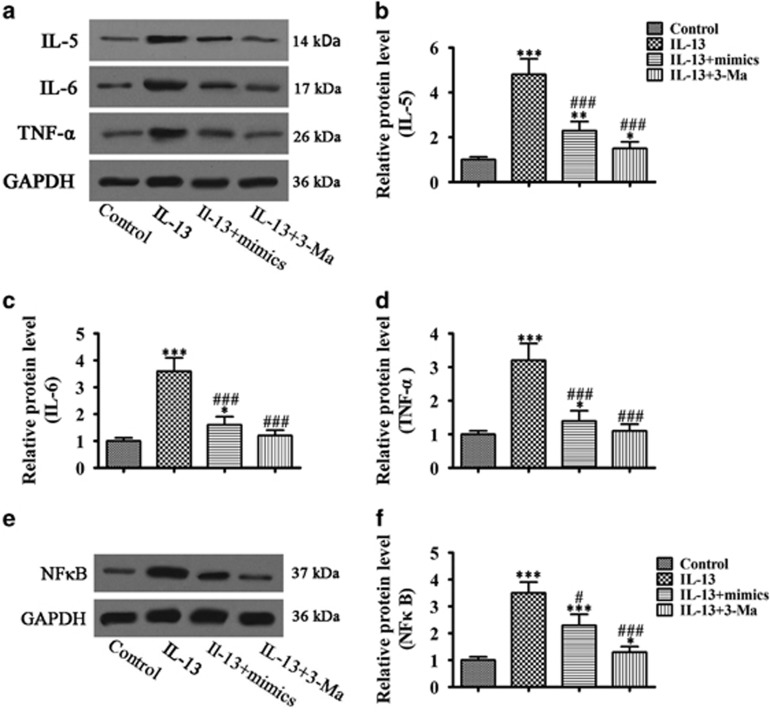
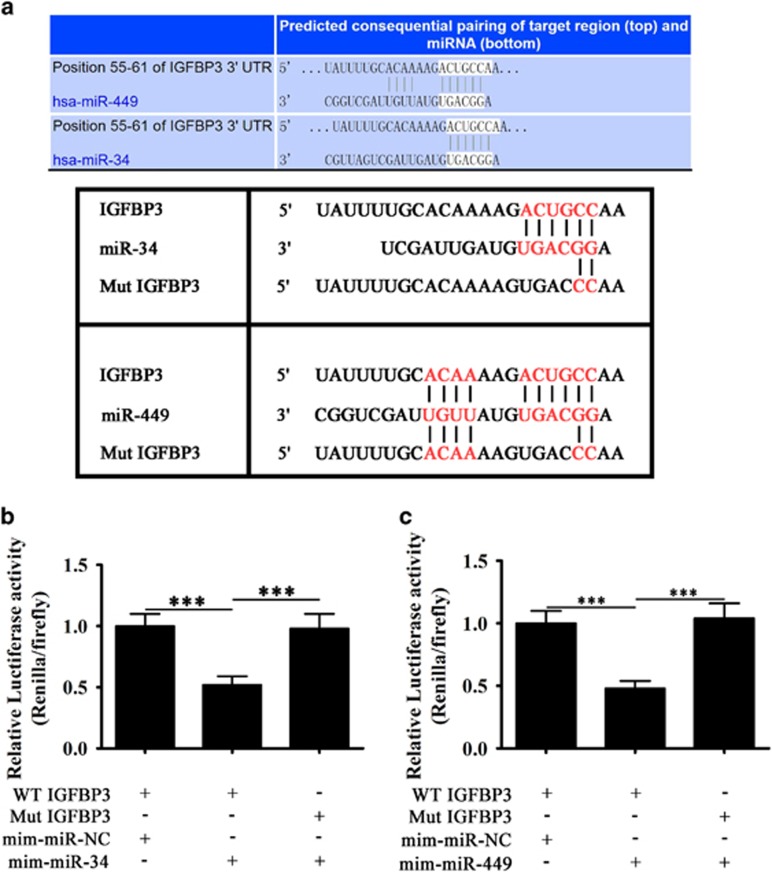
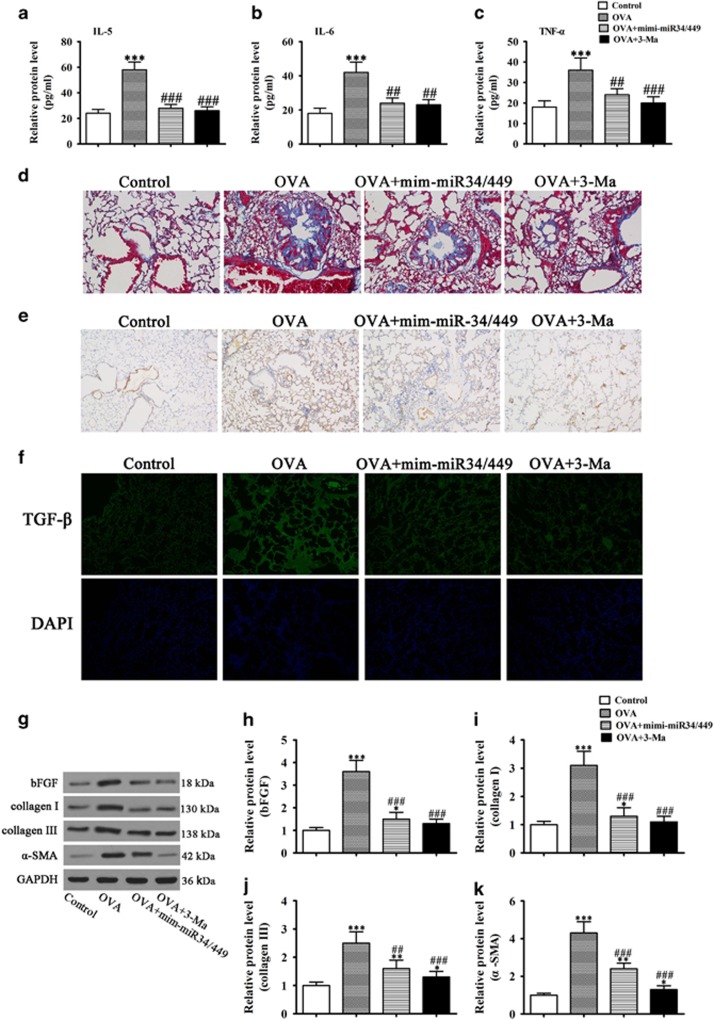
Autophagy plays critical roles in airway inflammation and fibrosis-mediated airway remodeling and many factors including proinflammatory cytokines and inflammation related pathways are involved in the process. The aim of the present study was to examine the role of epithelial microRNAs (miRNAs) in autophagy-mediated airway remodeling and to identify the factors involved and the underlying mechanisms. Serum miR-34/449, inflammatory factors, and autophagy and fibrosis-related proteins were determined by real-time PCR, enzyme-linked immunosorbent assay and western blotting in 46 subjects with asthma and 10 controls and in the lung epithelial cell line BEAS-2B induced with IL-13 and treated with miRNA mimics. Luciferase assays were used to verify IGFBP-3 as a target of miR-34/449, and immunohistochemistry, immunofluorescence and co-immunoprecipitation were used in vitro and in vivo study. miR-34/449 were downregulated in patients with asthma in parallel with the upregulation of autophagy-related proteins. Proinflammatory factors and fibrosis-related proteins were significantly higher in asthma patients than in healthy controls. IL-13 induction promoted autophagy and upregulated miR-34/449 in BEAS-2B cells, and these effects were restored by IGFBP-3 silencing. miR-34/449 overexpression suppressed autophagy, decreased fibrosis, activated Akt, downregulated fibrosis-related factors, and downregulated proinflammatory cytokines and nuclear factor κB by targeting IGFBP-3. In vivo experiments showed that miR-34/449 overexpression was associated with Nur77 nuclear translocation and IGFBP-3 downregulation in parallel with decreased airway remodeling by decreased autophagy. miR-34/449 are potential biomarkers and therapeutic targets in asthma. miR-34/449 may contribute to airway inflammation and fibrosis by modulating IGFBP-3 mediated autophagy activation.
自噬在气道炎症和纤维化介导的气道重塑中起关键作用,包括促炎细胞因子和炎症相关途径在内的许多因素都参与了这一过程。本研究的目的是探讨上皮微小RNA(miRNA)在自噬介导的气道重塑中的作用,确定其中涉及的因素及其潜在机制。通过实时聚合酶链反应、酶联免疫吸附测定和蛋白质印迹法,检测了46例哮喘患者和10例对照以及经白细胞介素-13诱导并用miRNA模拟物处理的肺上皮细胞系BEAS-2B中的血清miR-34/449、炎症因子以及自噬和纤维化相关蛋白。荧光素酶报告基因检测用于验证胰岛素样生长因子结合蛋白3(IGFBP-3)是miR-34/449的靶标,免疫组织化学、免疫荧光和免疫共沉淀用于体外和体内研究。哮喘患者中miR-34/449下调,同时自噬相关蛋白上调。哮喘患者的促炎因子和纤维化相关蛋白明显高于健康对照。白细胞介素-13诱导促进了BEAS-2B细胞中的自噬并上调了miR-34/449,而IGFBP-3沉默可恢复这些作用。miR-34/449过表达抑制了自噬,减少了纤维化,激活了蛋白激酶B(Akt),下调了纤维化相关因子,并且通过靶向IGFBP-3下调了促炎细胞因子和核因子κB。体内实验表明,miR-34/449过表达与神经元衍生孤儿受体77(Nur77)核转位和IGFBP-3下调相关,同时通过减少自噬降低了气道重塑。miR-34/449是哮喘潜在的生物标志物和治疗靶点。miR-34/449可能通过调节IGFBP-3介导的自噬激活而导致气道炎症和纤维化。