1 Department of Human Genetics, Leiden University Medical Center , Leiden, the Netherlands .
2 John Walton Muscular Dystrophy Research Centre, Institute of Genetic Medicine, Newcastle University , Newcastle upon Tyne, United Kingdom .
Nucleic Acid Ther. 2017 Oct;27(5):251-259. doi: 10.1089/nat.2017.0682. Epub 2017 Aug 10.
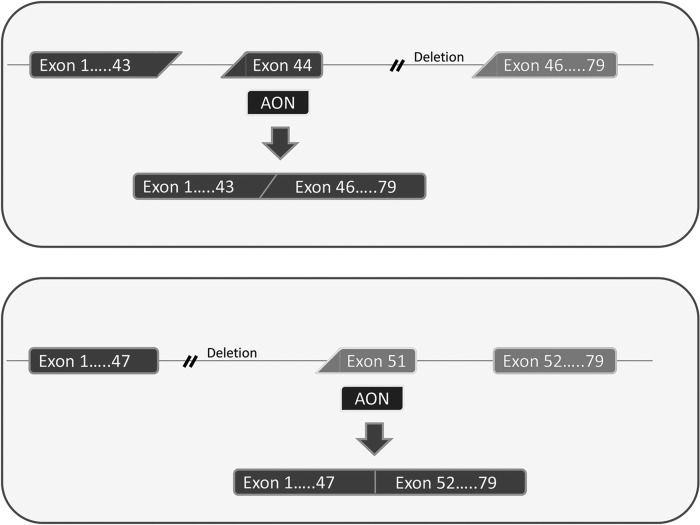
Duchenne muscular dystrophy (DMD) is a rare, severe, progressive muscle-wasting disease leading to disability and premature death. Patients lack the muscle membrane-stabilizing protein dystrophin. Antisense oligonucleotide (AON)-mediated exon skipping is a therapeutic approach that aims to induce production of partially functional dystrophins. Recently, an AON targeting exon 51 became the first of its class to be approved by the United States regulators [Food and Drug Administration (FDA)] for the treatment of DMD. A unique aspect of the exon-skipping approach for DMD is that, depending on the size and location of the mutation, different exons need to be skipped. This challenge raises a number of questions regarding the development and regulatory approval of those individual compounds. In this study, we present a perspective on those questions, following a European stakeholder meeting involving academics, regulators, and representatives from industry and patient organizations, and in the light of the most recent scientific and regulatory experience.
杜氏肌营养不良症(DMD)是一种罕见的、严重的、进行性的肌肉消耗疾病,导致残疾和过早死亡。患者缺乏肌肉膜稳定蛋白肌营养不良蛋白。反义寡核苷酸(AON)介导的外显子跳跃是一种治疗方法,旨在诱导产生部分功能的肌营养不良蛋白。最近,一种针对外显子 51 的 AON 成为首个获得美国监管机构[美国食品和药物管理局(FDA)]批准用于治疗 DMD 的同类药物。DMD 外显子跳跃方法的一个独特方面是,根据突变的大小和位置,需要跳过不同的外显子。这一挑战引发了许多关于这些单一化合物的开发和监管批准的问题。在这项研究中,我们根据最近的科学和监管经验,从涉及学术界、监管机构以及行业和患者组织代表的欧洲利益相关者会议的角度介绍了这些问题。