Doucet Marika, El-Turabi Aadil, Zabel Franziska, Hunn Benjamin H M, Bengoa-Vergniory Nora, Cioroch Milena, Ramm Mauricio, Smith Amy M, Gomes Ariane Cruz, Cabral de Miranda Gustavo, Wade-Martins Richard, Bachmann Martin F
Department of Physiology, Anatomy and Genetics, University of Oxford, South Parks Road, Oxford, United Kingdom.
The Jenner Institute, Nuffield Department of Medicine, The Henry Wellcome Building for Molecular Physiology, University of Oxford, Roosevelt Drive, Oxford, United Kingdom.
PLoS One. 2017 Aug 10;12(8):e0181844. doi: 10.1371/journal.pone.0181844. eCollection 2017.
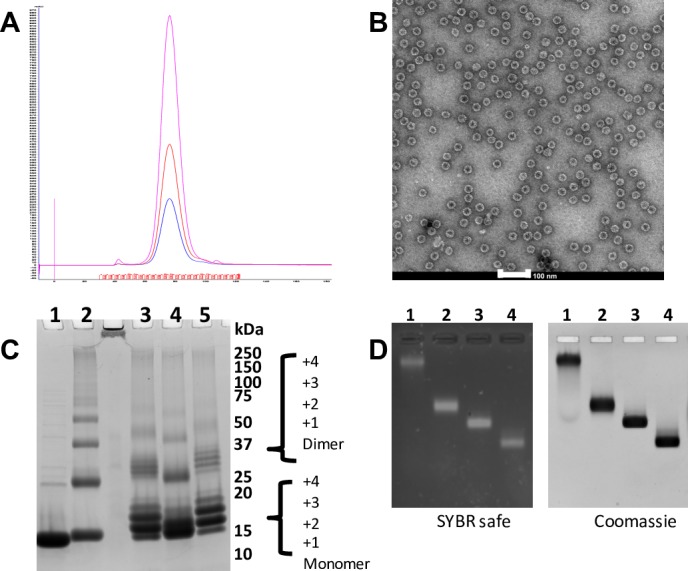
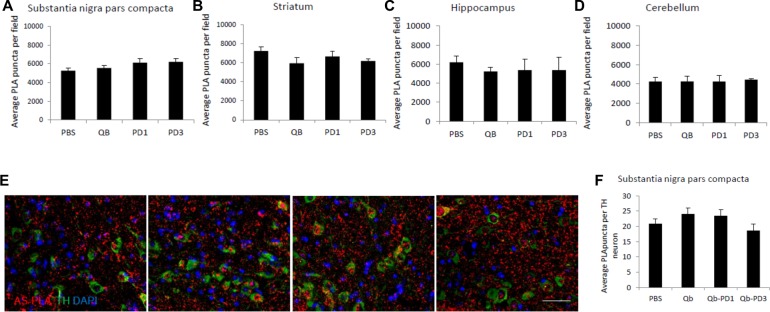
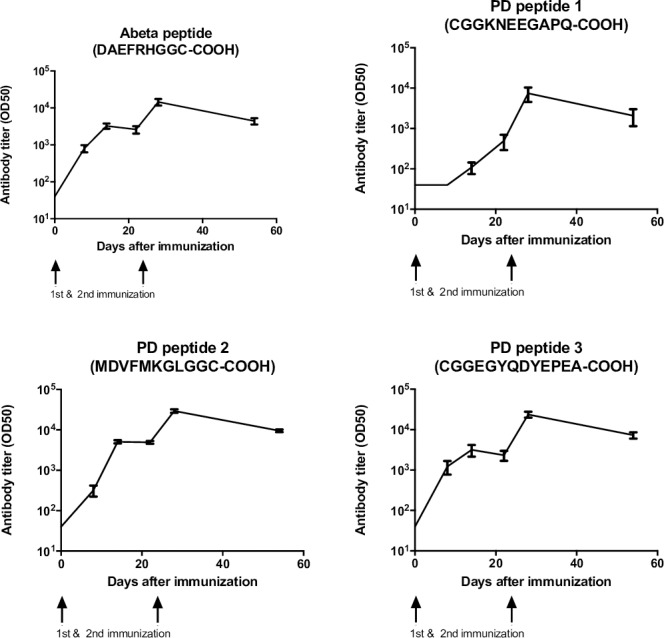
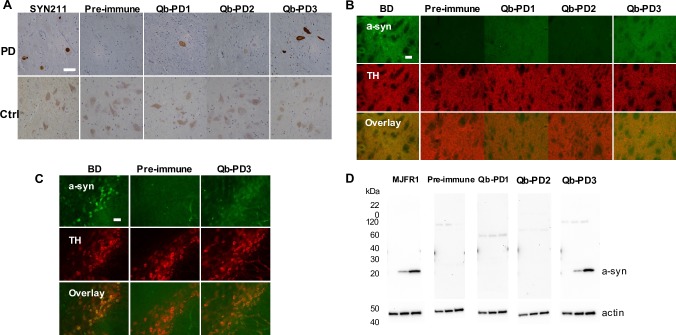
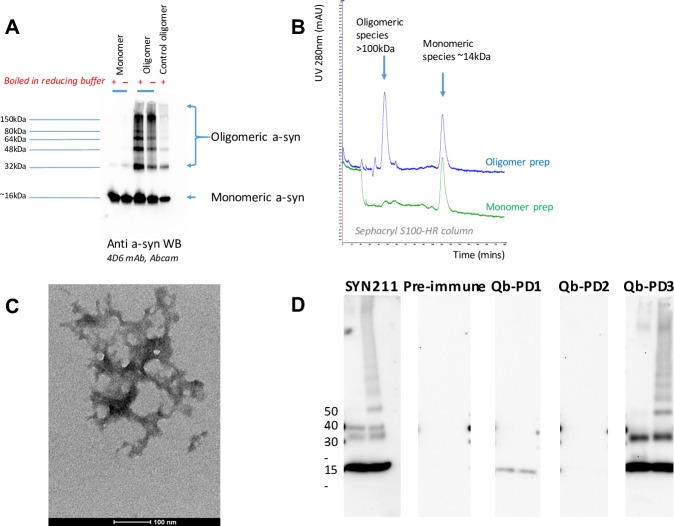
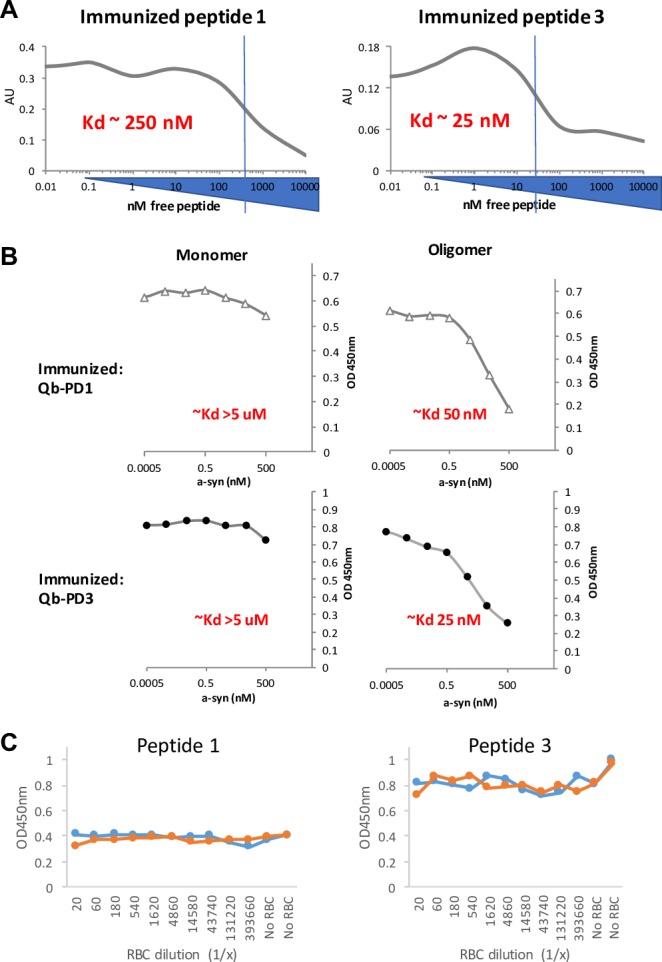
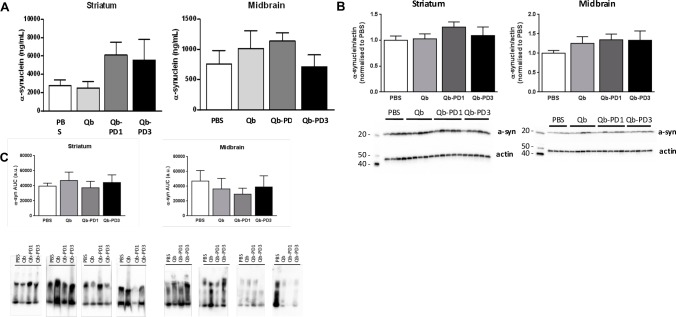
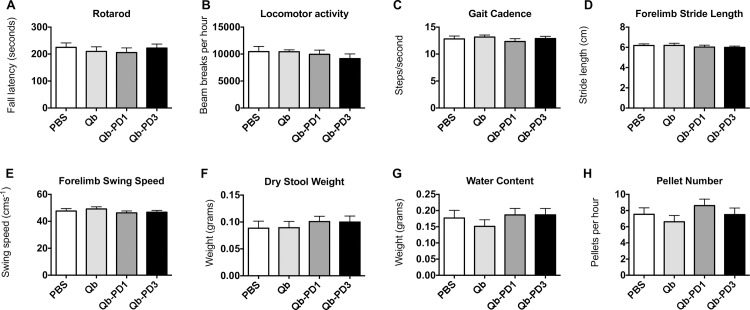
Parkinson's disease (PD) is a progressive and currently incurable neurological disorder characterised by the loss of midbrain dopaminergic neurons and the accumulation of aggregated alpha-synuclein (a-syn). Oligomeric a-syn is proposed to play a central role in spreading protein aggregation in the brain with associated cellular toxicity contributing to a progressive neurological decline. For this reason, a-syn oligomers have attracted interest as therapeutic targets for neurodegenerative conditions such as PD and other alpha-synucleinopathies. In addition to strategies using small molecules, neutralisation of the toxic oligomers by antibodies represents an attractive and highly specific strategy for reducing disease progression. Emerging active immunisation approaches using vaccines are already being trialled to induce such antibodies. Here we propose a novel vaccine based on the RNA bacteriophage (Qbeta) virus-like particle conjugated with short peptides of human a-syn. High titres of antibodies were successfully and safely generated in wild-type and human a-syn over-expressing (SNCA-OVX) transgenic mice following vaccination. Antibodies from vaccine candidates targeting the C-terminal regions of a-syn were able to recognise Lewy bodies, the hallmark aggregates in human PD brains. Furthermore, antibodies specifically targeted oligomeric and aggregated a-syn as they exhibited 100 times greater affinity for oligomeric species over monomer a-syn proteins in solution. In the SNCA-OVX transgenic mice used, vaccination was, however, unable to confer significant changes to oligomeric a-syn bioburden. Similarly, there was no discernible effect of vaccine treatment on behavioural phenotype as compared to control groups. Thus, antibodies specific for oligomeric a-syn induced by vaccination were unable to treat symptoms of PD in this particular mouse model.
帕金森病(PD)是一种进行性且目前无法治愈的神经疾病,其特征是中脑多巴胺能神经元丧失以及α-突触核蛋白(α-syn)聚集物的积累。寡聚α-syn被认为在大脑中蛋白质聚集的传播中起核心作用,相关的细胞毒性导致神经功能逐渐衰退。因此,α-syn寡聚体作为帕金森病和其他α-突触核蛋白病等神经退行性疾病的治疗靶点引起了人们的关注。除了使用小分子的策略外,用抗体中和有毒寡聚体是一种有吸引力且高度特异性的减缓疾病进展的策略。使用疫苗的新兴主动免疫方法已经在进行试验以诱导产生此类抗体。在此,我们提出一种基于与人类α-syn短肽偶联的RNA噬菌体(Qβ)病毒样颗粒的新型疫苗。接种疫苗后,在野生型和过度表达人类α-syn(SNCA-OVX)的转基因小鼠中成功且安全地产生了高滴度抗体。针对α-syn C端区域的候选疫苗产生的抗体能够识别路易小体,这是人类帕金森病大脑中的标志性聚集体。此外,抗体特异性靶向寡聚和聚集的α-syn,因为它们在溶液中对寡聚体的亲和力比对单体α-syn蛋白高100倍。然而,在所使用的SNCA-OVX转基因小鼠中,接种疫苗未能使寡聚α-syn生物负荷发生显著变化。同样,与对照组相比,疫苗治疗对行为表型没有明显影响。因此,在这个特定的小鼠模型中,接种疫苗诱导产生的针对寡聚α-syn的抗体无法治疗帕金森病症状。