Department of general surgery, Shanghai Jiao Tong University Affiliated Sixth People's Hospital, 600 Yishan Rd, Shanghai, 200233, People's Republic of China.
Department of Pancreatic Surgery, Pancreatic Cancer Institute, Fudan University Shanghai Cancer Center, 270 Dong-An Road, Shanghai, 200032, People's Republic of China.
J Exp Clin Cancer Res. 2017 Aug 10;36(1):107. doi: 10.1186/s13046-017-0579-0.
Pancreatic cancer is susceptible to gemcitabine resistance, and patients receive less benefit from gemcitabine chemotherapy. Previous studies report that gambogic acid possesses antineoplastic properties; however, to our knowledge, there have been no specific studies on its effects in pancreatic cancer. Therefore, the purpose of this study was to explore whether increases the sensitivity of pancreatic cancer to gemcitabine, and determine the synergistic effects of gambogic acid and gemcitabine against pancreatic cancer.
The effects of gambogic acid on cell viability, the cell cycle, and apoptosis were assessed using 4,5-dimethylthiazol-2-yl)-3,5-diphenylformazan (MTT) and flow cytometry in pancreatic cancer cell lines. Protein expression was detected by western blot analysis and mRNA expression was detected using q-PCR. A xenograft tumor model of pancreatic cancer was used to investigate the synergistic effects of gambogic acid and gemcitabine.
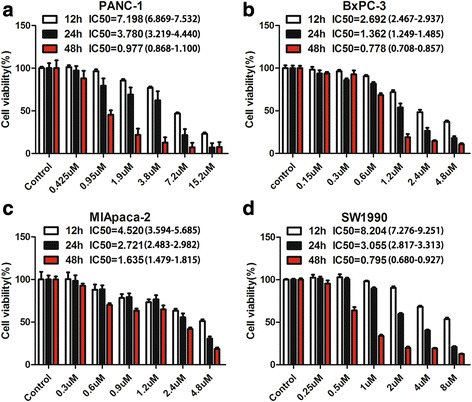
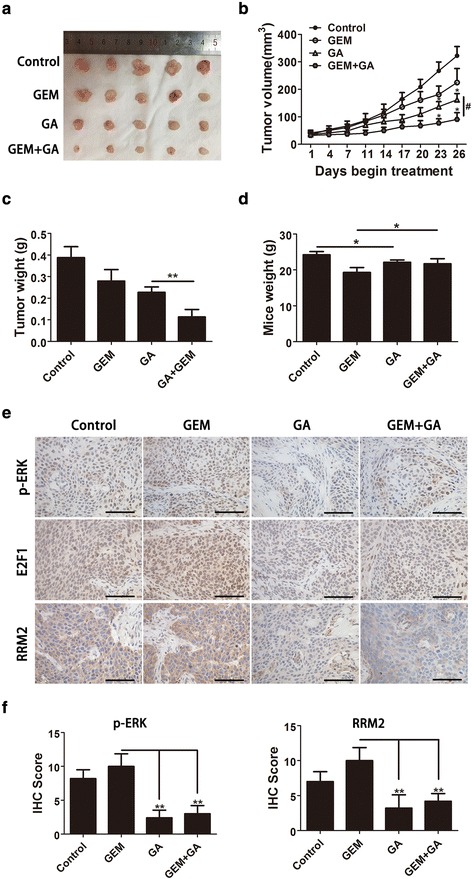
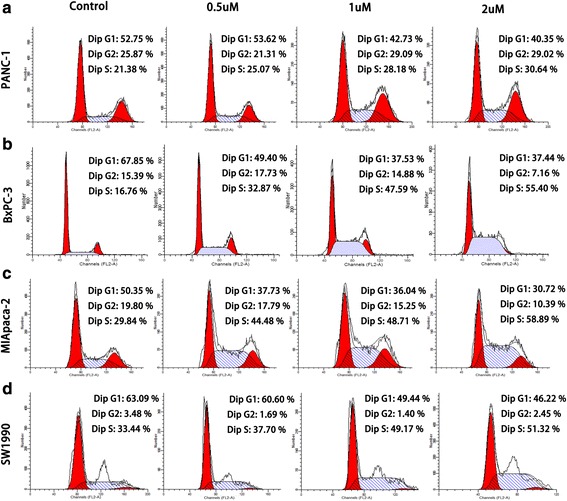
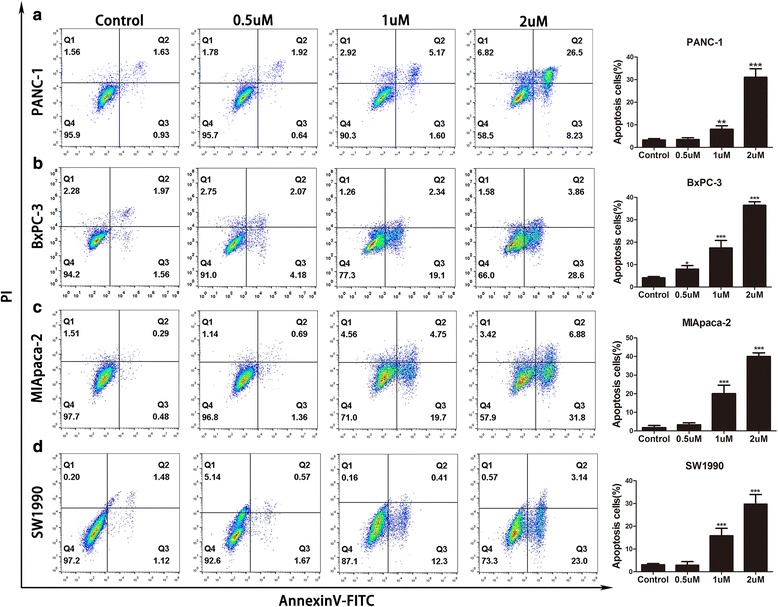
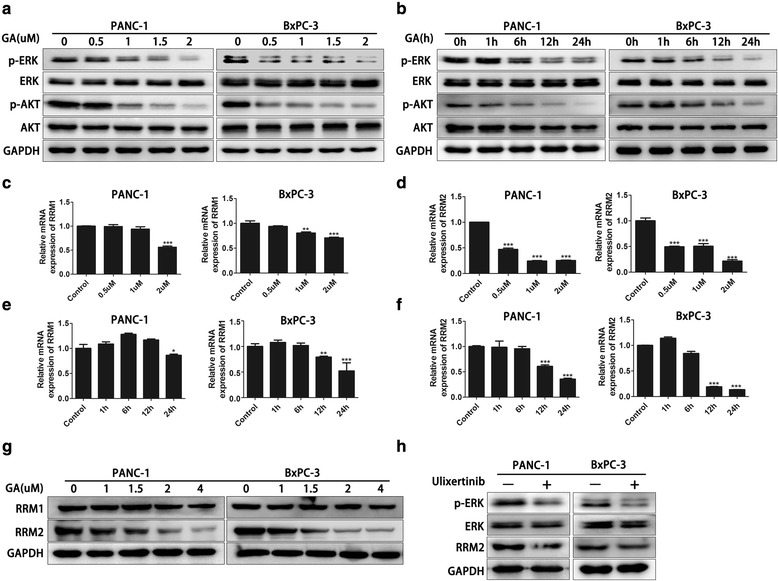
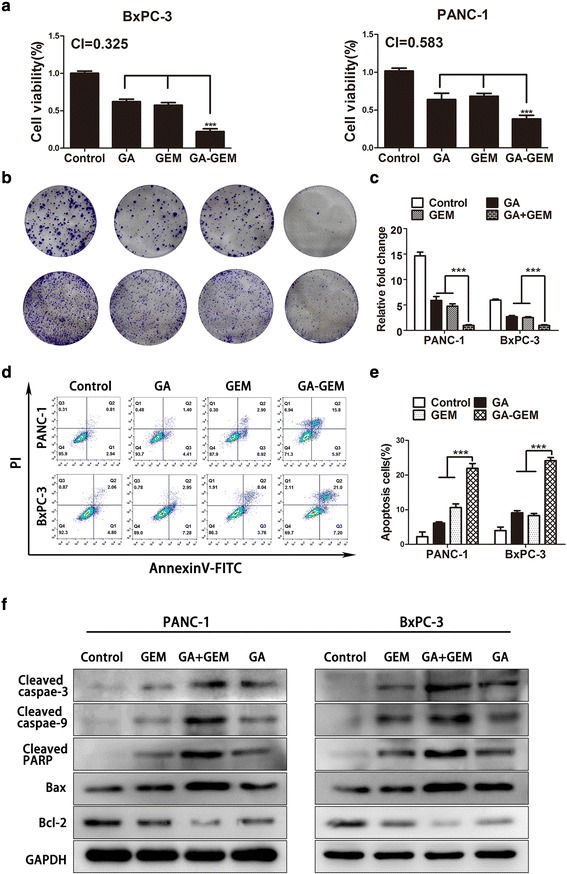
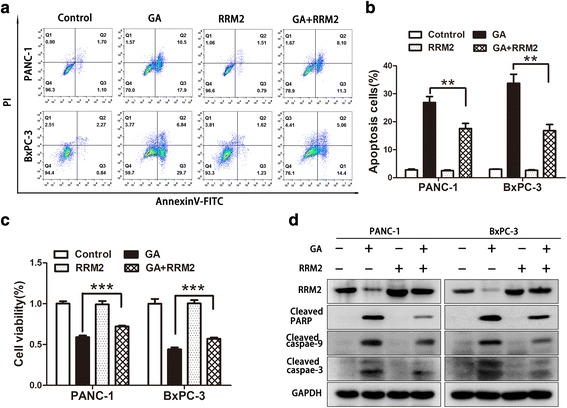
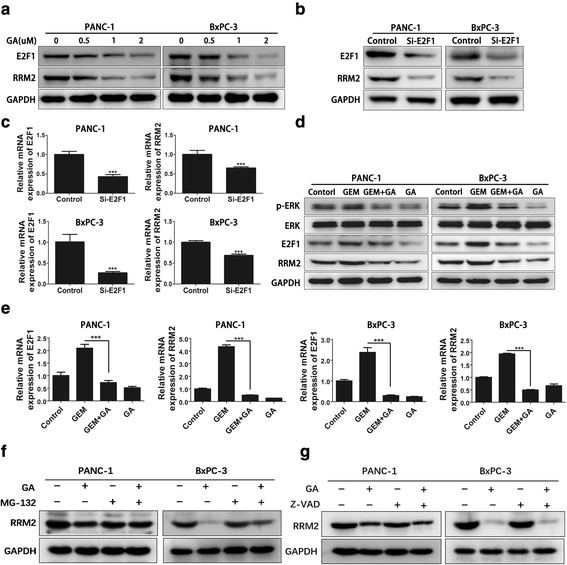
Gambogic acid effectively inhibited the growth of pancreatic cancer cell lines by inducing S-phase cell cycle arrest and apoptosis. Synergistic activity of gambogic acid combined with gemcitabine was observed in PANC-1 and BxPC-3 cells based on the results of MTT, colony formation, and apoptosis assays. Western blot results demonstrated that gambogic acid sensitized gemcitabine-induced apoptosis by enhancing the expression of cleaved caspase-3, cleaved caspase-9, cleaved-PARP, and Bax, and reducing the expression of Bcl-2. In particular, gambogic acid reduced the expression of the ribonucleotide reductase subunit-M2 (RRM2) protein and mRNA, a trend that correlated with resistance to gemcitabine through inhibition of the extracellular signal-regulated kinase (ERK)/E2F1 signaling pathway. Treatment with gambogic acid and gemcitabine significantly repressed tumor growth in the xenograft pancreatic cancer model. Immunohistochemistry results demonstrated a downregulation of p-ERK, E2F1, and RRM2 in mice receiving gambogic acid treatment and combination treatment.
These results demonstrate that gambogic acid sensitizes pancreatic cancer cells to gemcitabine in vitro and in vivo by inhibiting the activation of the ERK/E2F1/RRM2 signaling pathway. The results also indicate that gambogic acid treatment combined with gemcitabine might be a promising chemotherapy strategy for pancreatic cancer.
胰腺癌对吉西他滨易产生耐药性,因此患者从吉西他滨化疗中获益较少。先前的研究报告表明,藤黄酸具有抗肿瘤特性;然而,据我们所知,尚未有专门针对其在胰腺癌中作用的研究。因此,本研究旨在探讨藤黄酸是否能提高胰腺癌对吉西他滨的敏感性,并确定藤黄酸和吉西他滨对胰腺癌的协同作用。
采用 4,5-二甲基噻唑-2-基)-3,5-二苯基四唑鎓(MTT)和流式细胞术评估藤黄酸对胰腺癌细胞系的细胞活力、细胞周期和细胞凋亡的影响。采用 Western blot 分析检测蛋白表达,采用 q-PCR 检测 mRNA 表达。使用胰腺癌异种移植肿瘤模型研究藤黄酸和吉西他滨的协同作用。
藤黄酸通过诱导 S 期细胞周期阻滞和细胞凋亡,有效抑制胰腺癌细胞系的生长。MTT、集落形成和凋亡检测结果显示,藤黄酸与吉西他滨联合使用在 PANC-1 和 BxPC-3 细胞中具有协同活性。Western blot 结果表明,藤黄酸通过增强 cleaved caspase-3、cleaved caspase-9、cleaved-PARP 和 Bax 的表达,降低 Bcl-2 的表达,使吉西他滨诱导的凋亡敏感化。特别是,藤黄酸降低了核糖核苷酸还原酶亚基 M2(RRM2)蛋白和 mRNA 的表达,这一趋势与通过抑制细胞外信号调节激酶(ERK)/E2F1 信号通路对吉西他滨的耐药性相关。藤黄酸和吉西他滨联合治疗显著抑制异种移植胰腺癌模型中的肿瘤生长。免疫组化结果表明,在接受藤黄酸治疗和联合治疗的小鼠中,p-ERK、E2F1 和 RRM2 的表达下调。
这些结果表明,藤黄酸通过抑制 ERK/E2F1/RRM2 信号通路的激活,在体外和体内使胰腺癌细胞对吉西他滨敏感。研究结果还表明,藤黄酸联合吉西他滨治疗可能是治疗胰腺癌的一种有前途的化疗策略。