Institute of Biomaterials and Biomolecular Systems (IBBS), University of Stuttgart, Stuttgart, 70569, Germany.
Institute for Integrated Cell-Material Sciences, Kyoto University, Kyoto, 606-8501, Japan.
Sci Rep. 2017 Aug 10;7(1):7757. doi: 10.1038/s41598-017-08011-z.
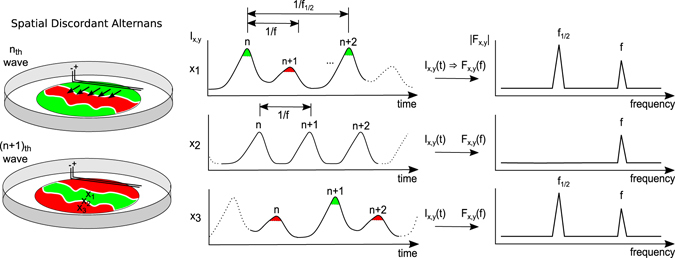
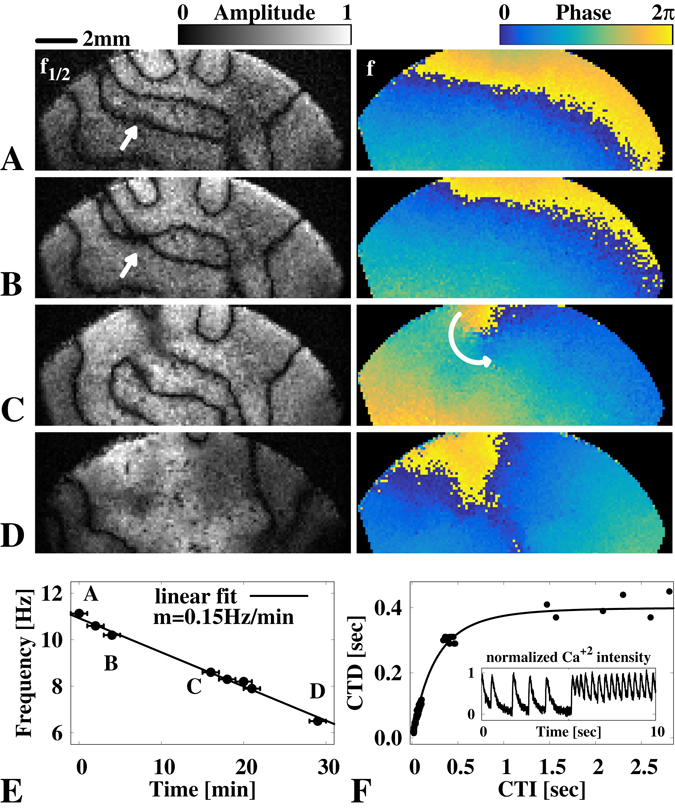
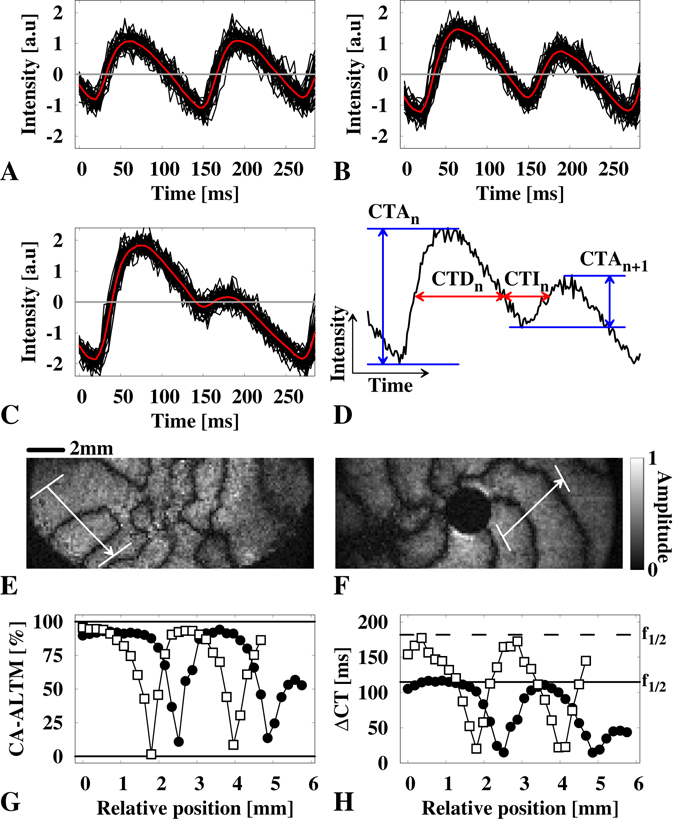
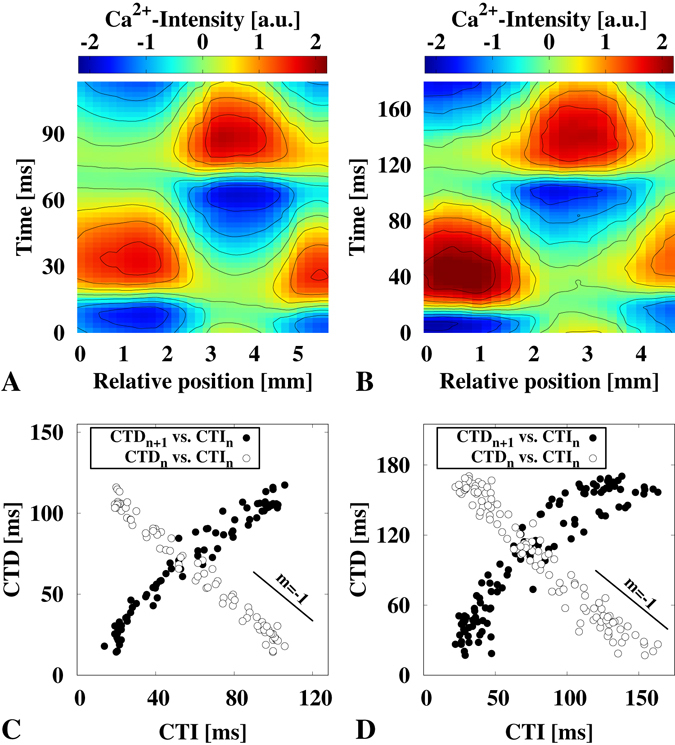
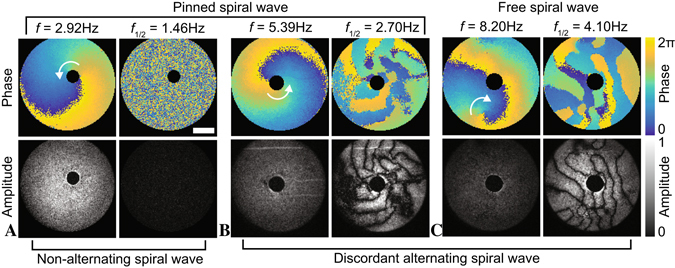
Spatiotemporal pattern formation governs dynamics and functions in various biological systems. In the heart, excitable waves can form complex oscillatory and chaotic patterns even at an abnormally higher frequency than normal heart beats, which increase the risk of fatal heart conditions by inhibiting normal blood circulation. Previous studies suggested that line defects (nodal lines) play a critical role in stabilizing those undesirable patterns. However, it remains unknown if the line defects are static or dynamically changing structures in heart tissue. Through in vitro experiments of heart tissue observation, we reveal the spatiotemporal dynamics of line defects in rotating spiral waves. We combined a novel signaling over-sampling technique with a multi-dimensional Fourier analysis, showing that line defects can translate, merge, collapse and form stable singularities with even and odd parity while maintaining a stable oscillation of the spiral wave in the tissue. These findings provide insights into a broad class of complex periodic systems, with particular impact to the control and understanding of heart diseases.
时空模式形成控制着各种生物系统的动力学和功能。在心脏中,兴奋波即使在比正常心跳频率更高的异常频率下也能形成复杂的振荡和混沌模式,这通过抑制正常血液循环增加了致命心脏疾病的风险。先前的研究表明,线缺陷(节线)在稳定这些不理想的模式方面起着关键作用。然而,线缺陷在心脏组织中是静态的还是动态变化的结构仍不清楚。通过心脏组织观察的体外实验,我们揭示了旋转螺旋波中线缺陷的时空动力学。我们结合了一种新颖的信号超采样技术和多维傅里叶分析,表明线缺陷可以平移、合并、坍塌,并在组织中螺旋波保持稳定振荡的同时形成具有偶数和奇数奇偶性的稳定奇点。这些发现为广泛的复杂周期系统提供了深入的了解,对心脏疾病的控制和理解具有特别的影响。