Hoy Wendy E, Mott Susan Anne, McLeod Beverly June
Faculty of Medicine, Centre for Chronic Disease, UQCCR, The University of Queensland, Brisbane, Australia.
Menzies School of Health Research, Darwin, Australia.
BMJ Open. 2017 Aug 11;7(8):e016094. doi: 10.1136/bmjopen-2017-016094.
To describe trends in ages and causes of death in a remote-living Australian Aboriginal group over a recent 50-year period.
A retrospective observational study, from 1960 to 2010, of deaths and people starting dialysis, using data from local clinic, parish, dialysis and birthweight registers.
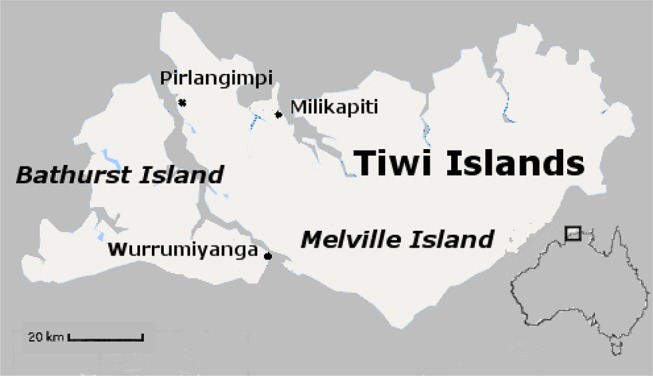
A remote island community in the Top End of Australia's Northern Territory, where a Catholic mission was established in 1911. The estimated Aboriginal population was about 800 in 1960 and 2260 in 2011.
All Aboriginal residents of this community whose deaths had been recorded.
Annual frequencies and rates of terminal events (deaths and dialysis starts) by age group and cause of death.
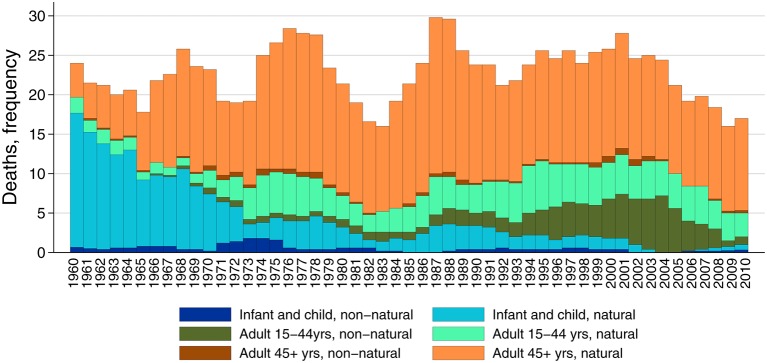
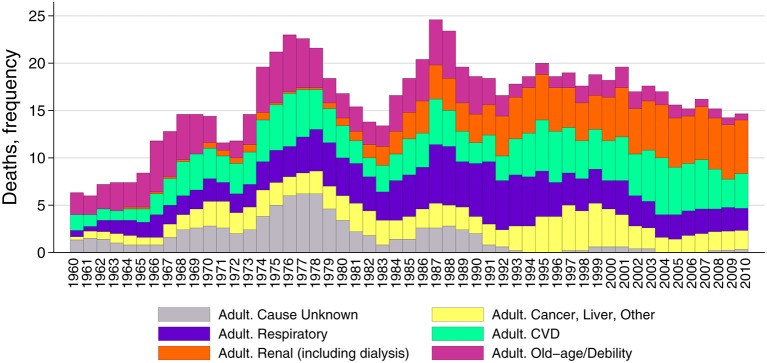
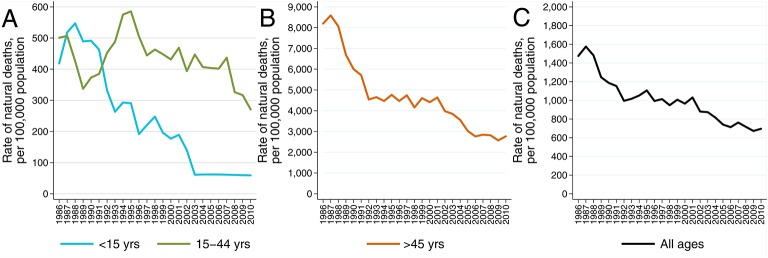
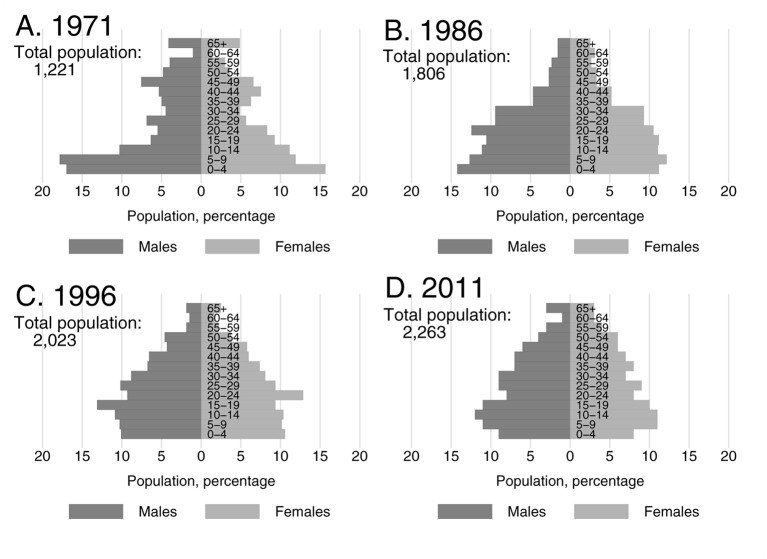
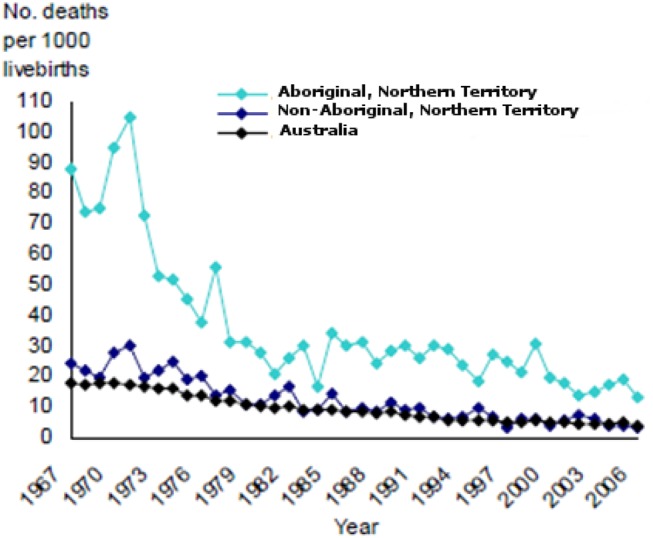
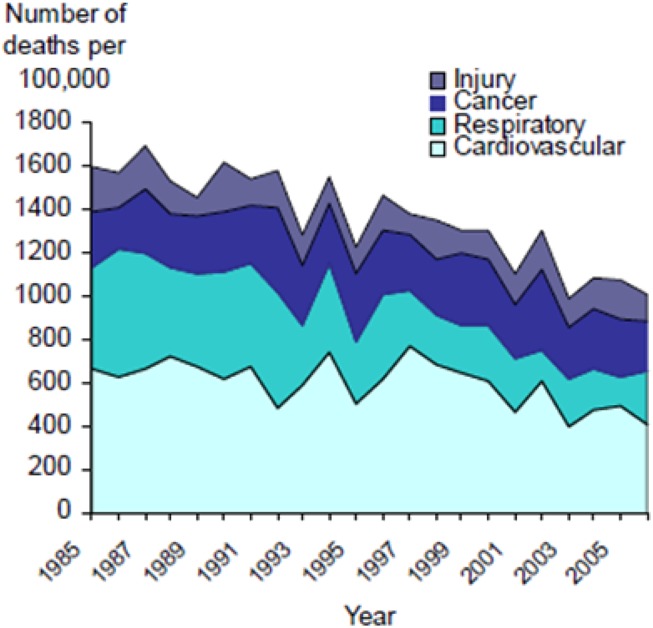
Against a background of high rates of low birth weight, 223 deaths in infants and children and 934 deaths in adults (age 15 years) were recorded; 88% were of natural causes. Most deaths in the 1960s were in infants and children. However, over time these fell dramatically, across the birthweight spectrum, while adult deaths progressively increased. The leading causes of adult natural deaths were chronic lung disease, cardiovascular disease and, more recently, renal failure, and rates were increased twofold in those of low birth weight. However, rates of natural adult deaths have been falling briskly since 1986, most markedly among people of age ≥45 years. The population is increasing and its age structure is maturing.
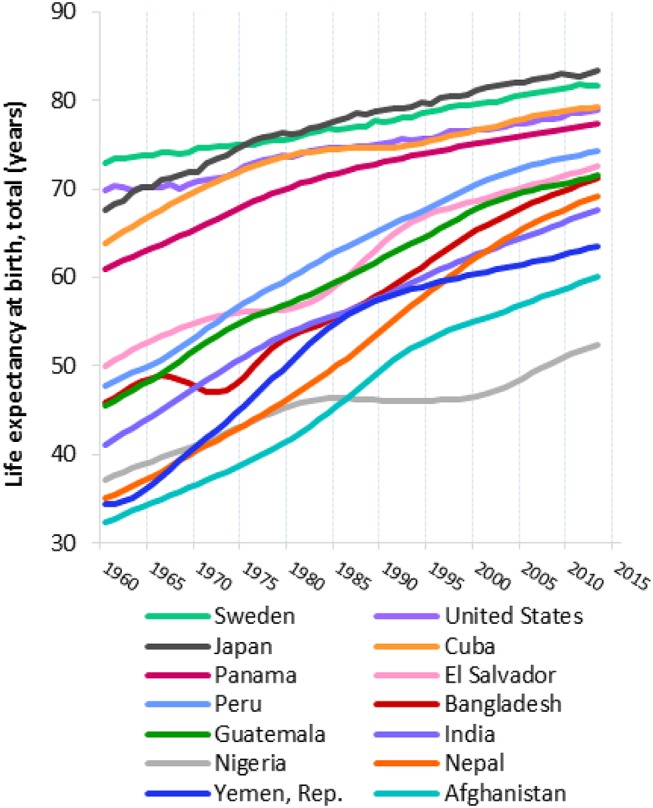
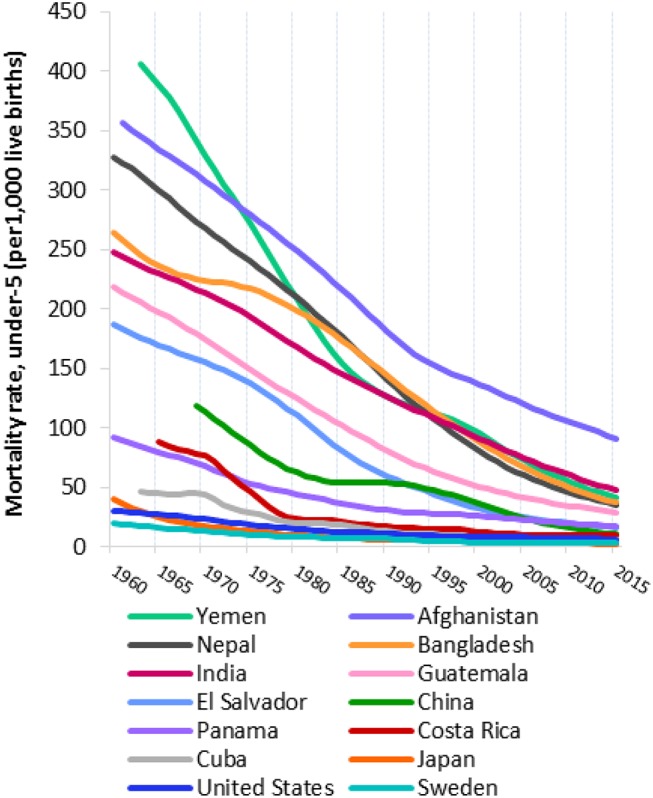
The changes in death profiles, the expression of the Barker hypothesis and the ongoing increases in adult life expectancy reflect epidemiological and health transitions of astonishing rapidity. These probably flow from advances in public health policy and healthcare delivery, as well as improved inter-sectoral services, which are all to be celebrated. Other remote communities in Australia are experiencing the same phenomena, and similar events are well advanced in many developing countries.
描述澳大利亚一个偏远地区原住民群体在最近50年期间的年龄和死因趋势。
一项回顾性观察研究,利用当地诊所、教区、透析和出生体重登记处的数据,对1960年至2010年期间的死亡情况和开始透析的人员进行研究。
澳大利亚北领地顶端的一个偏远岛屿社区,1911年在此建立了一个天主教传教区。1960年原住民估计人口约为800人,2011年为2260人。
该社区所有死亡记录已被登记的原住民居民。
按年龄组和死因划分的终末期事件(死亡和开始透析)的年度频率和发生率。
在低出生体重率较高的背景下,记录到223例婴幼儿死亡和934例成人(年龄≥15岁)死亡;88%为自然原因导致。20世纪60年代的死亡大多发生在婴幼儿和儿童中。然而,随着时间的推移,这些死亡人数在整个出生体重范围内大幅下降,而成人死亡人数则逐渐增加。成人自然死亡的主要原因是慢性肺病、心血管疾病,以及最近的肾衰竭,低出生体重者的发生率增加了两倍。然而,自1986年以来,成人自然死亡率一直在迅速下降,在年龄≥45岁的人群中下降最为明显。该人群正在增加,其年龄结构正在成熟。
死亡情况的变化、巴克假说的表现以及成人预期寿命的持续增加反映了惊人的快速流行病学和健康转变。这些变化可能源于公共卫生政策和医疗服务的进步,以及部门间服务的改善,所有这些都值得庆贺。澳大利亚的其他偏远社区也在经历同样的现象,许多发展中国家也正在经历类似且程度较深的情况。