Department of Physiology, Yonsei University College of Medicine, Seoul, 03722, Republic of Korea.
Brain Korea 21 PLUS Project for Medical Science, Yonsei University College of Medicine, Seoul, 03722, Republic of Korea.
Sci Rep. 2017 Aug 11;7(1):7986. doi: 10.1038/s41598-017-08208-2.
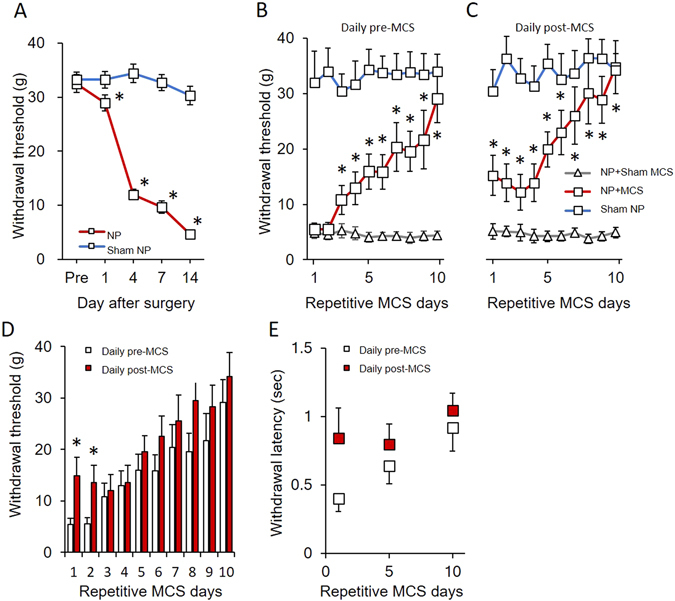
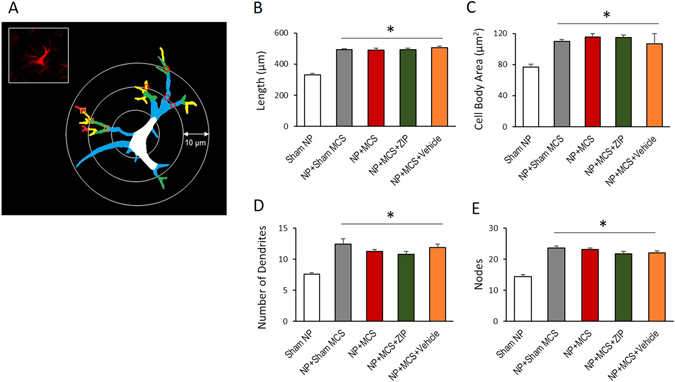
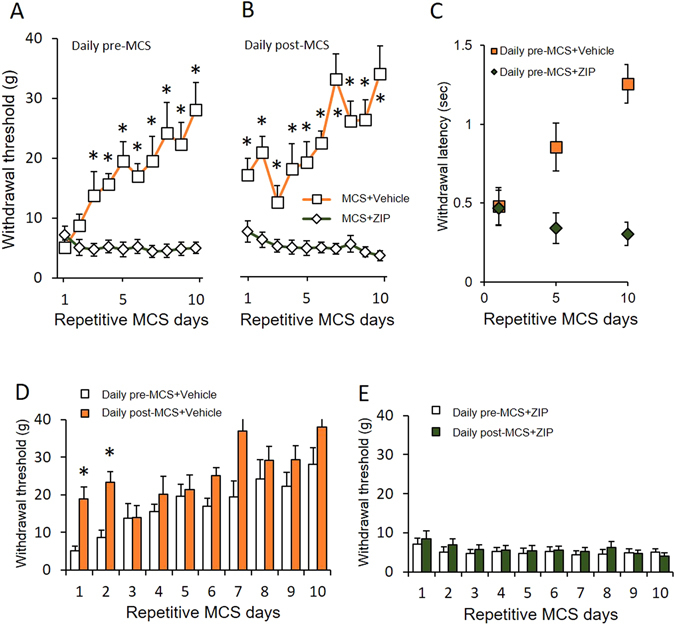
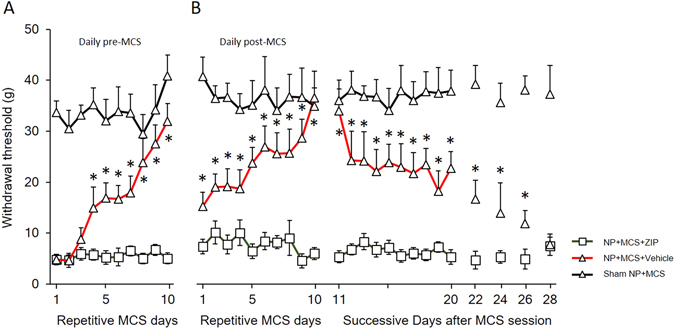
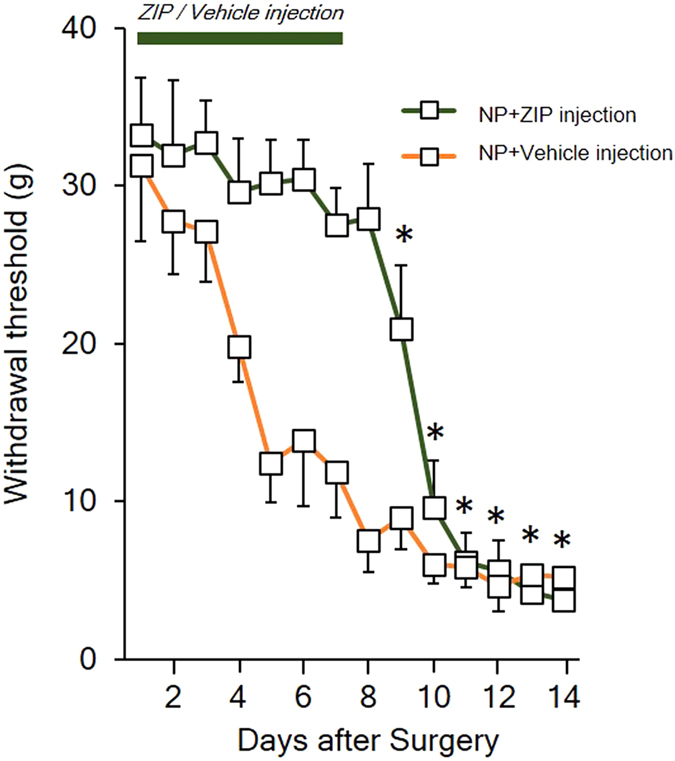
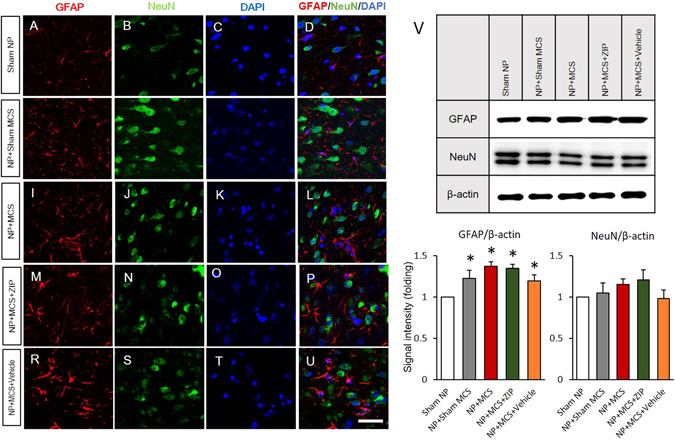
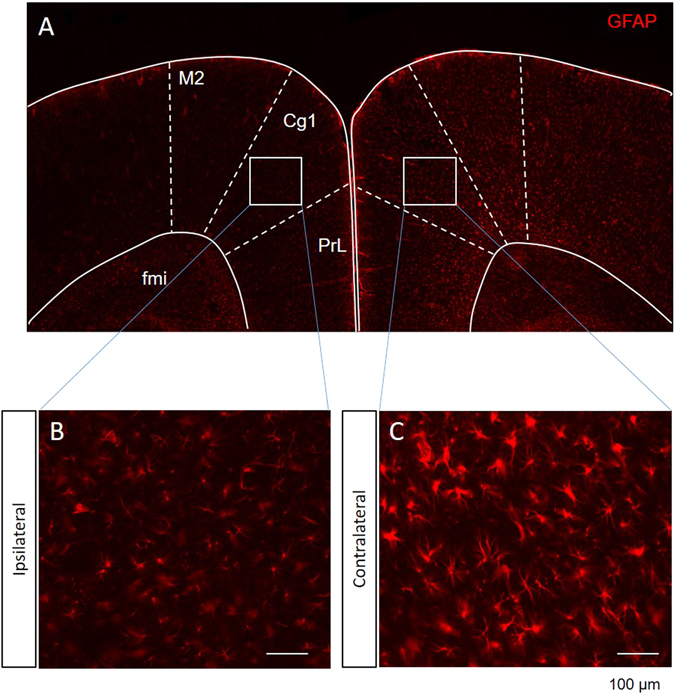
Recent evidence indicates that motor cortex stimulation (MCS) is a potentially effective treatment for chronic neuropathic pain. However, the neural mechanisms underlying the attenuated hyperalgesia after MCS are not completely understood. In this study, we investigated the neural mechanism of the effects of MCS using an animal model of neuropathic pain. After 10 daily sessions of MCS, repetitive MCS reduced mechanical allodynia and contributed to neuronal changes in the anterior cingulate cortex (ACC). Interestingly, inhibition of protein kinase M zeta (PKMζ), a regulator of synaptic plasticity, in the ACC blocked the effects of repetitive MCS. Histological and molecular studies showed a significantly increased level of glial fibrillary acidic protein (GFAP) expression in the ACC after peripheral neuropathy, and neither MCS treatment nor ZIP administration affected this increase. These results suggest that repetitive MCS can attenuate the mechanical allodynia in neuropathic pain, and that the activation of PKMζ in the ACC may play a role in the modulation of neuropathic pain via MCS.
最近的证据表明,运动皮层刺激(MCS)是治疗慢性神经性疼痛的一种潜在有效方法。然而,MCS 后痛觉过敏减轻的神经机制尚不完全清楚。在这项研究中,我们使用神经性疼痛动物模型研究了 MCS 效应的神经机制。在 10 天的 MCS 治疗后,重复 MCS 减轻了机械性痛觉过敏,并导致扣带前皮质(ACC)中的神经元变化。有趣的是,ACC 中的蛋白激酶 M zeta(PKMζ)抑制剂(突触可塑性的调节剂)阻断了重复 MCS 的作用。组织学和分子研究表明,周围神经病变后 ACC 中的神经胶质纤维酸性蛋白(GFAP)表达水平显著增加,MCS 治疗或 ZIP 给药均未影响这种增加。这些结果表明,重复 MCS 可减轻神经性疼痛的机械性痛觉过敏,而 ACC 中的 PKMζ 激活可能通过 MCS 调节神经性疼痛。