Williams Chad M, Schonnesen Alexandra A, Zhang Shu-Qi, Ma Ke-Yue, He Chenfeng, Yamamoto Tori, Eckhardt S Gail, Klebanoff Christopher A, Jiang Ning
Department of Biomedical Engineering, University of Texas at Austin, Austin, TX, United States.
McKetta Department of Chemical Engineering, University of Texas at Austin, Austin, TX, United States.
Front Immunol. 2017 Jul 28;8:894. doi: 10.3389/fimmu.2017.00894. eCollection 2017.
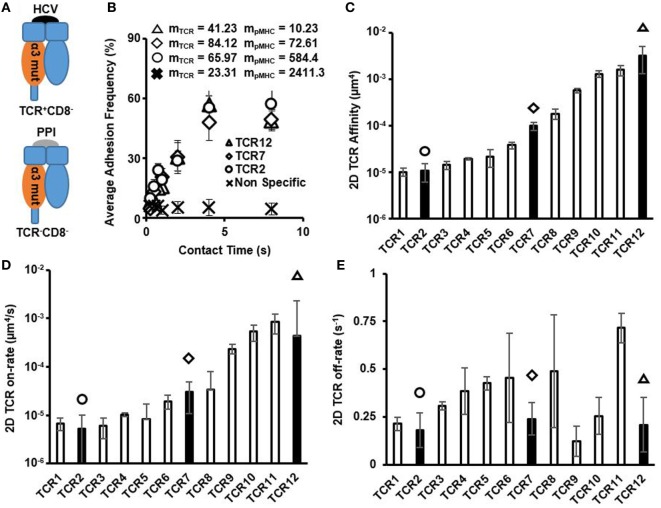
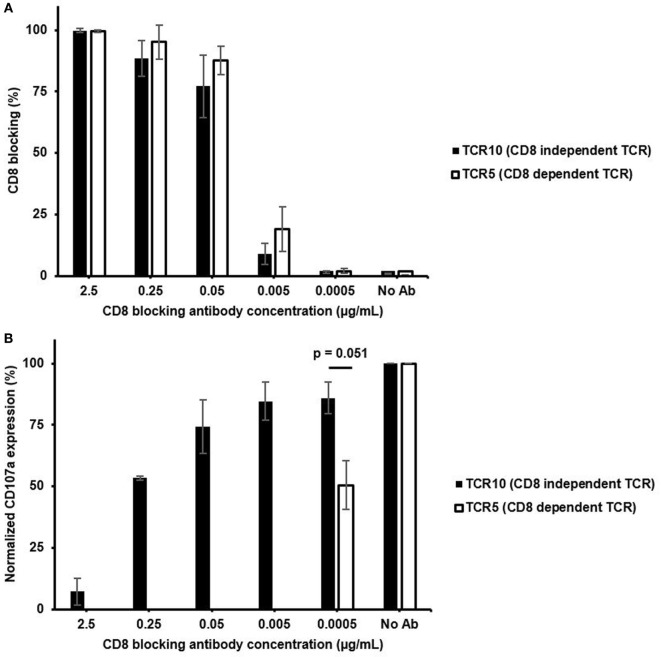
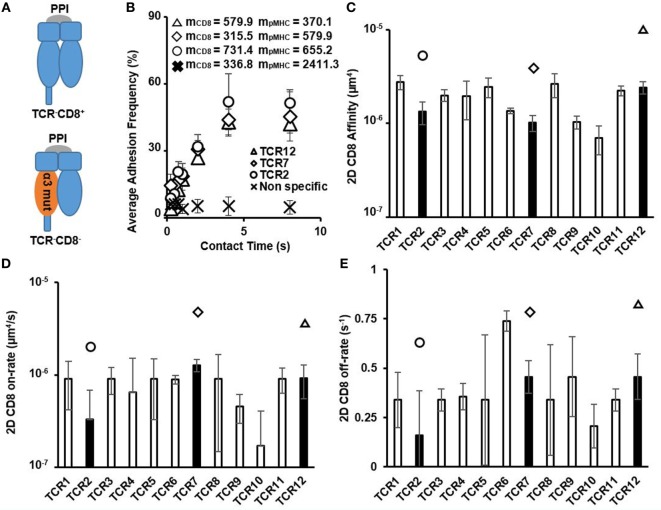
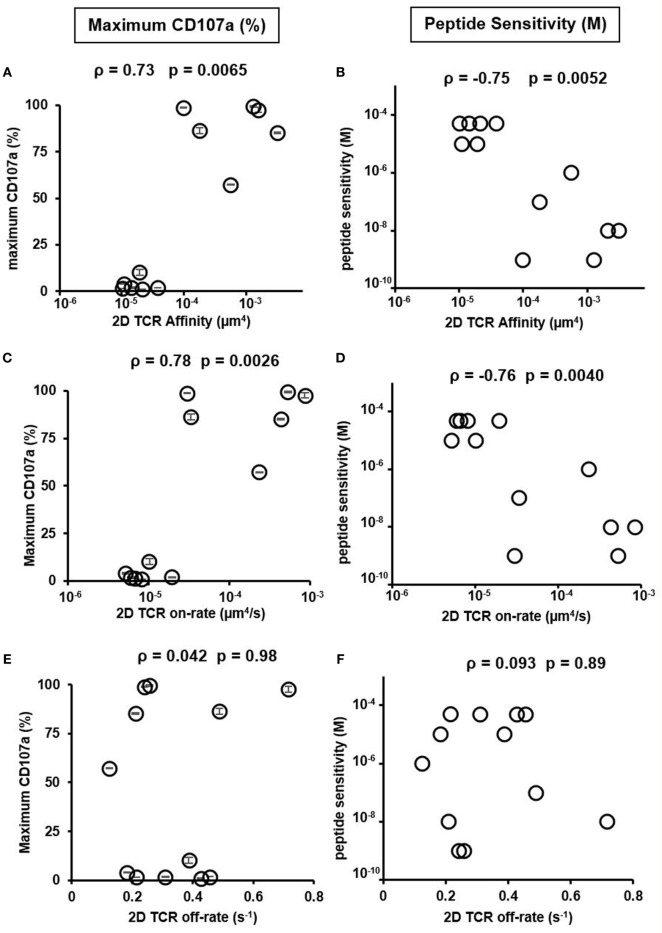
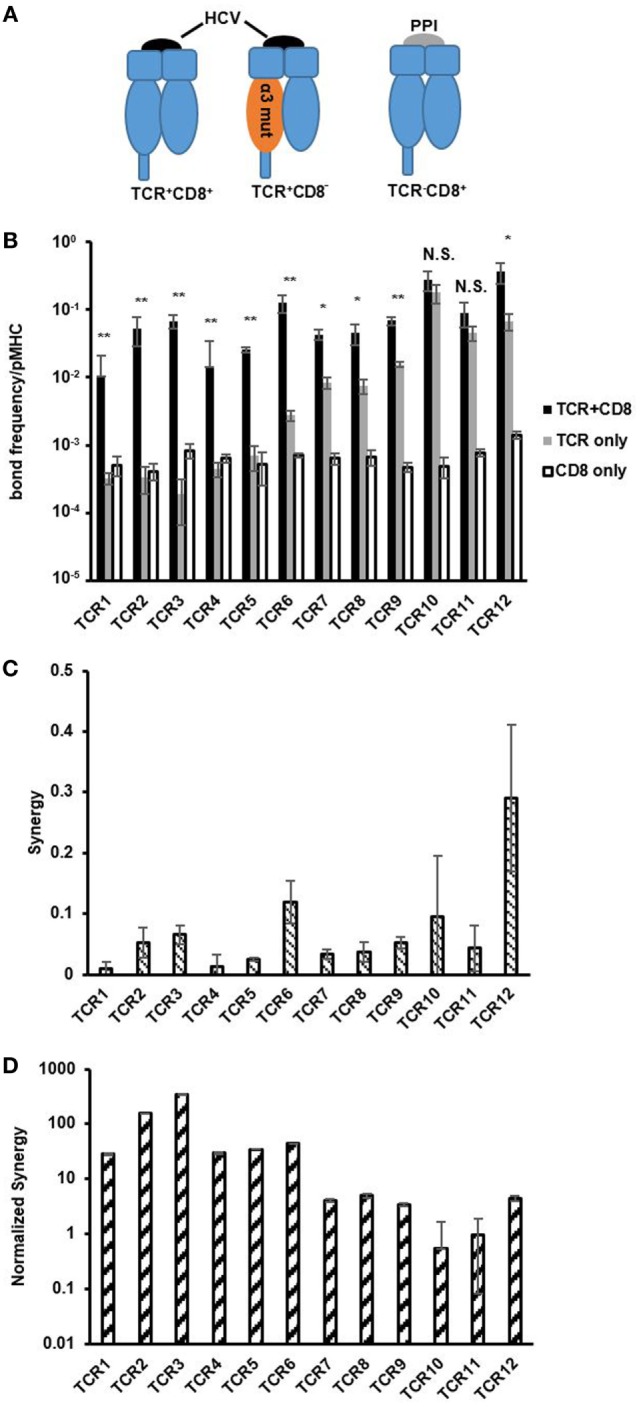
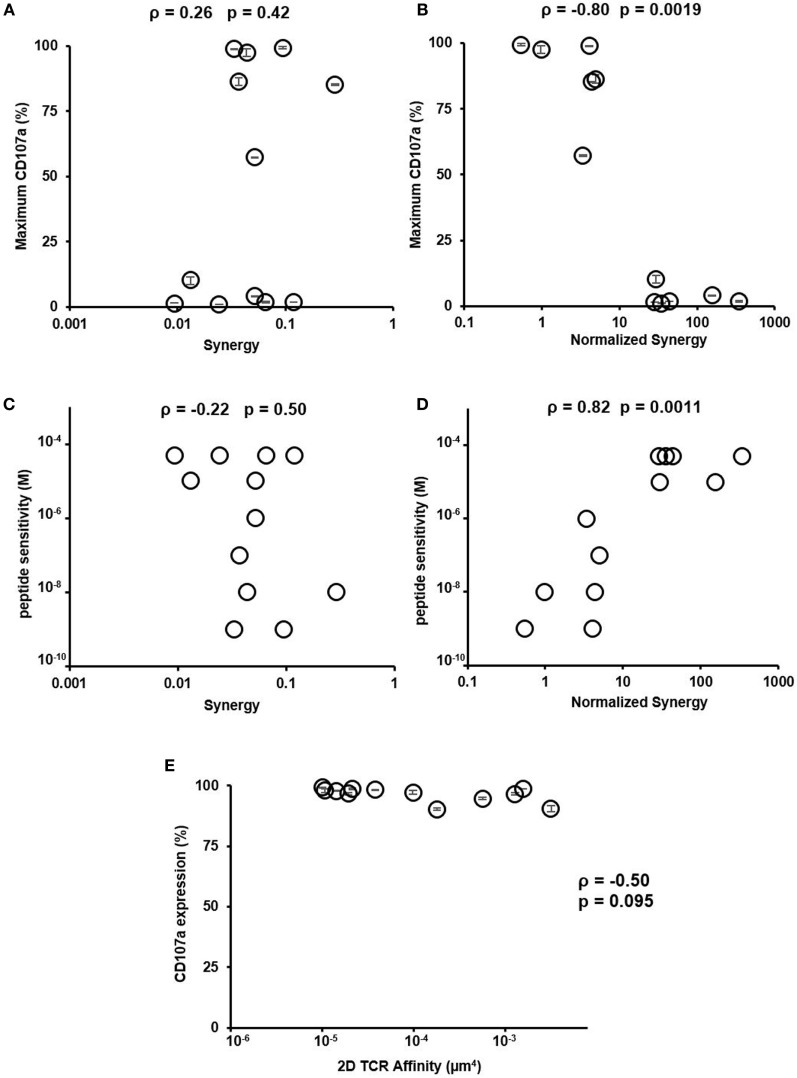
The discovery of naturally occurring T cell receptors (TCRs) that confer specific, high-affinity recognition of pathogen and cancer-associated antigens remains a major goal in cellular immunotherapies. The contribution of the CD8 co-receptor to the interaction between the TCR and peptide-bound major histocompatibility complex (pMHC) has previously been correlated with the activation and responsiveness of CD8 T cells. However, these studies have been limited to model systems of genetically engineered hybridoma TCRs or transgenic mouse TCRs against either a single epitope or an array of altered peptide ligands. CD8 contribution in a native human antigen-specific T cell response remains elusive. Here, using Hepatitis C Virus-specific precursor CTLs spanning a large range of TCR affinities, we discovered that the functional responsiveness of any given TCR correlated with the contribution of CD8 to TCR/pMHC binding. Furthermore, we found that CD8 contribution to TCR/pMHC binding in the two-dimensional (2D) system was more accurately reflected by normalized synergy (CD8 cooperation normalized by total TCR/pMHC bonds) rather than synergy (total CD8 cooperation) alone. While synergy showed an increasing trend with TCR affinity, normalized synergy was demonstrated to decrease with the increase of TCR affinity. Critically, normalized synergy was shown to correlate with CTL functionality and peptide sensitivity, corroborating three-dimensional (3D) analysis of CD8 contribution with respect to TCR affinity. In addition, we identified TCRs that were independent of CD8 for TCR/pMHC binding. Our results resolve the current discrepancy between 2D and 3D analysis on CD8 contribution to TCR/pMHC binding, and demonstrate that naturally occurring high-affinity TCRs are more capable of CD8-independent interactions that yield greater functional responsiveness even with CD8 blocking. Taken together, our data suggest that addition of the normalized synergy parameter to our previously established TCR discovery platform using 2D TCR affinity and sequence test would allow for selection of TCRs specific to any given antigen with the desirable attributes of high TCR affinity, CD8 co-receptor independence and functional superiority. Utilizing TCRs with less CD8 contribution could be beneficial for adoptive cell transfer immunotherapies using naturally occurring or genetically engineered T cells against viral or cancer-associated antigens.
发现能够对病原体和癌症相关抗原进行特异性、高亲和力识别的天然存在的T细胞受体(TCR)仍然是细胞免疫疗法的一个主要目标。CD8共受体对TCR与肽结合的主要组织相容性复合体(pMHC)之间相互作用的贡献,此前已与CD8 T细胞的激活和反应性相关联。然而,这些研究仅限于针对单一表位或一系列改变的肽配体的基因工程杂交瘤TCR或转基因小鼠TCR的模型系统。CD8在天然人类抗原特异性T细胞反应中的作用仍然难以捉摸。在这里,我们使用了一系列具有广泛TCR亲和力的丙型肝炎病毒特异性前体CTL,发现任何给定TCR的功能反应性与CD8对TCR/pMHC结合的贡献相关。此外,我们发现,在二维(2D)系统中,CD8对TCR/pMHC结合的贡献通过归一化协同作用(通过总TCR/pMHC键归一化的CD8协同作用)比单独的协同作用(总CD8协同作用)更能准确反映。虽然协同作用随着TCR亲和力呈上升趋势,但归一化协同作用被证明随着TCR亲和力的增加而降低。至关重要的是,归一化协同作用与CTL功能和肽敏感性相关,证实了关于TCR亲和力的CD8贡献的三维(3D)分析。此外,我们鉴定出了在TCR/pMHC结合方面不依赖CD8的TCR。我们的结果解决了目前在CD8对TCR/pMHC结合的贡献的二维和三维分析之间的差异,并表明天然存在的高亲和力TCR更能够进行不依赖CD8的相互作用,即使在CD8阻断的情况下也能产生更大的功能反应性。综上所述,我们的数据表明,在我们之前建立的使用二维TCR亲和力和序列测试的TCR发现平台中加入归一化协同作用参数,将允许选择针对任何给定抗原的具有高TCR亲和力、CD8共受体独立性和功能优越性等理想属性的TCR。利用CD8贡献较小的TCR可能有利于使用天然存在的或基因工程改造的T细胞针对病毒或癌症相关抗原的过继性细胞转移免疫疗法。