Chavatte Jean-Marc, Jureen Roland
Malaria Reference Centre, National Public Health Laboratory, Ministry of Health, 3 Biopolis Drive, Synapse 05-14/16, Singapore 138623.
Department of Laboratory Medicine, National University Hospital, 5 Lower Kent Ridge Road, Singapore 119074.
Case Rep Infect Dis. 2017;2017:1972587. doi: 10.1155/2017/1972587. Epub 2017 Jul 18.
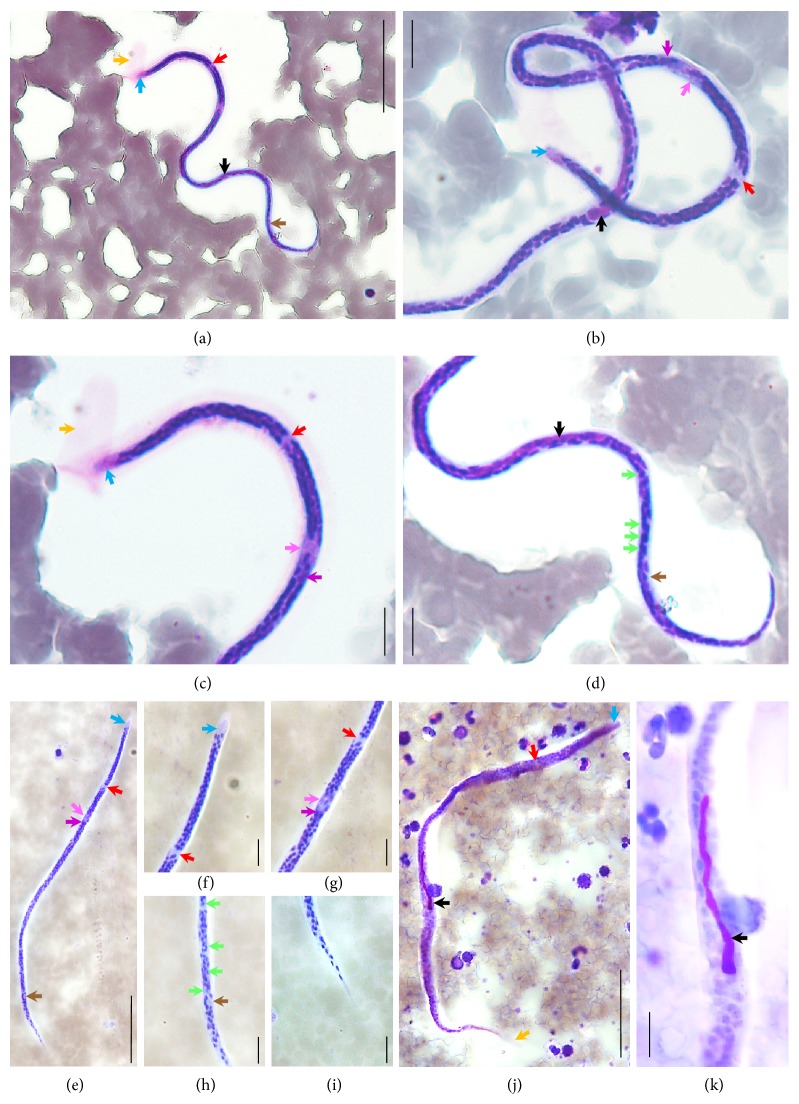
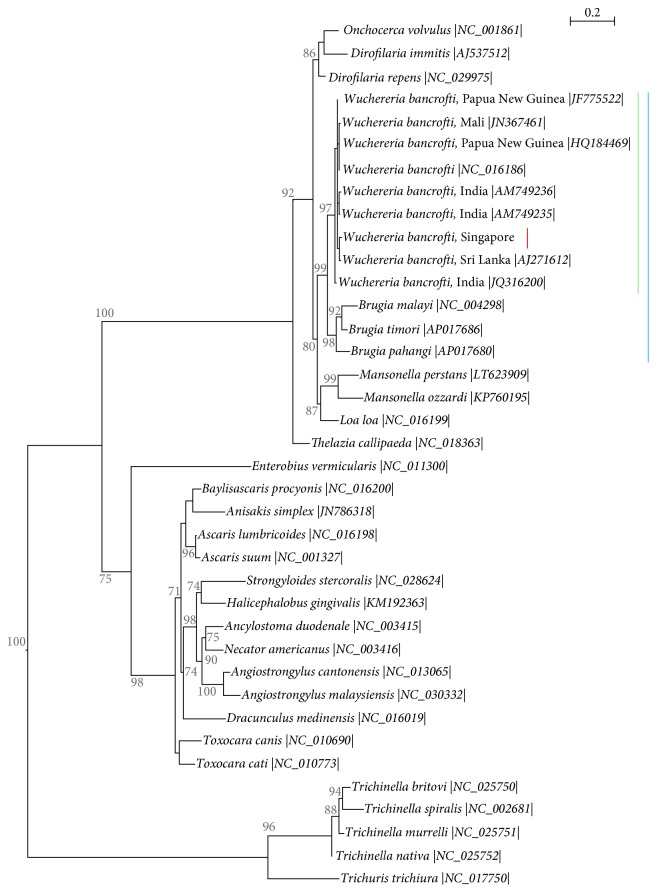
Human lymphatic filariasis is a vector-borne disease mainly caused by the parasitic nematode and transmitted worldwide within the tropical and subtropical regions. Singapore was once endemic for bancroftian filariasis but recent reports are scarce and the disease is nearly forgotten. The case report presented here reports the incidental hospital laboratory finding of an asymptomatic microfilaremia in a relapsing imported case during a malaria treatment follow-up appointment. The parasite was identified by microscopy as and retrospective investigation of the sample collected during malaria onset was found to be also positive. Additional confirmation was obtained by DNA amplification, sequencing, and phylogenetic analysis of the mitochondrial gene that further related the parasite to strains from the Indian region. Considering the large proportion of asymptomatic filariasis with microfilaremia, the high number of migrants and travellers arriving from the surrounding endemic countries, and the common presence of local competent mosquito vectors, Singapore remains vulnerable to the introduction, reemergence, and the spread of lymphatic filariasis. This report brings out from the shadow the potential risk of lymphatic filariasis in Singapore and could help to maintain awareness about this parasitic disease and its public health importance.
人类淋巴丝虫病是一种主要由寄生线虫引起的媒介传播疾病,在热带和亚热带地区全球范围内传播。新加坡曾是班氏丝虫病的流行地区,但最近的报告很少,这种疾病几乎被遗忘。本文报告的病例是在疟疾治疗随访预约期间,在一例复发性输入性病例中偶然发现无症状微丝蚴血症的医院实验室检查结果。通过显微镜鉴定该寄生虫为[具体寄生虫名称未给出],对疟疾发作期间采集的样本进行回顾性调查发现也呈阳性。通过线粒体[具体基因名称未给出]基因的DNA扩增、测序和系统发育分析获得了进一步的确认,这进一步将该寄生虫与来自印度地区的[具体寄生虫名称未给出]菌株联系起来。考虑到无症状微丝蚴血症的丝虫病比例很大、来自周边流行国家的移民和旅行者数量众多以及当地有能力传播的蚊媒普遍存在,新加坡仍然容易受到淋巴丝虫病的传入、再次出现和传播的影响。本报告揭示了新加坡淋巴丝虫病的潜在风险,有助于保持对这种寄生虫病及其公共卫生重要性的认识。