Levytskyy Roman M, Bohovych Iryna, Khalimonchuk Oleh
Department of Biochemistry, University of Nebraska-Lincoln , Lincoln, Nebraska 68588-0664, United States.
Nebraska Redox Biology Center, University of Nebraska-Lincoln , Lincoln, Nebraska 68588-0662, United States.
Biochemistry. 2017 Sep 12;56(36):4737-4746. doi: 10.1021/acs.biochem.7b00663. Epub 2017 Aug 30.
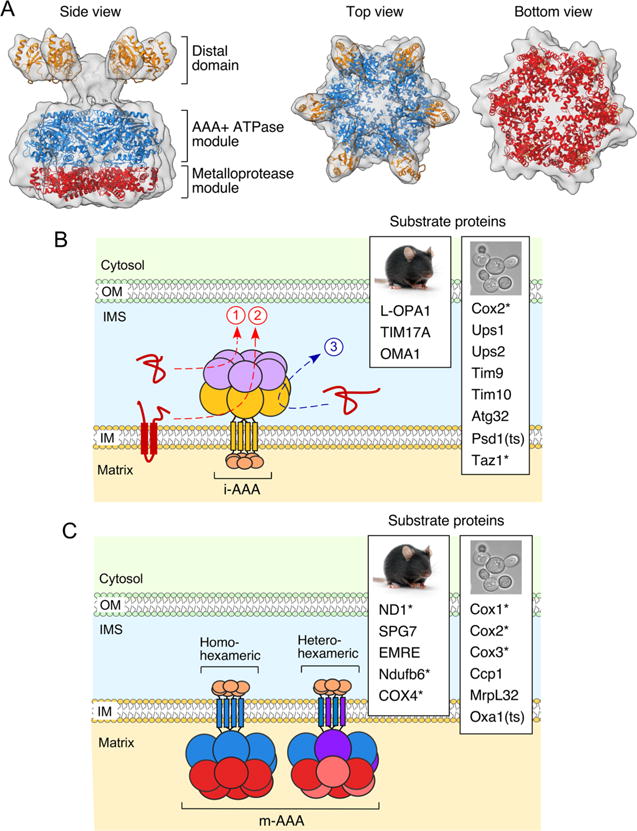
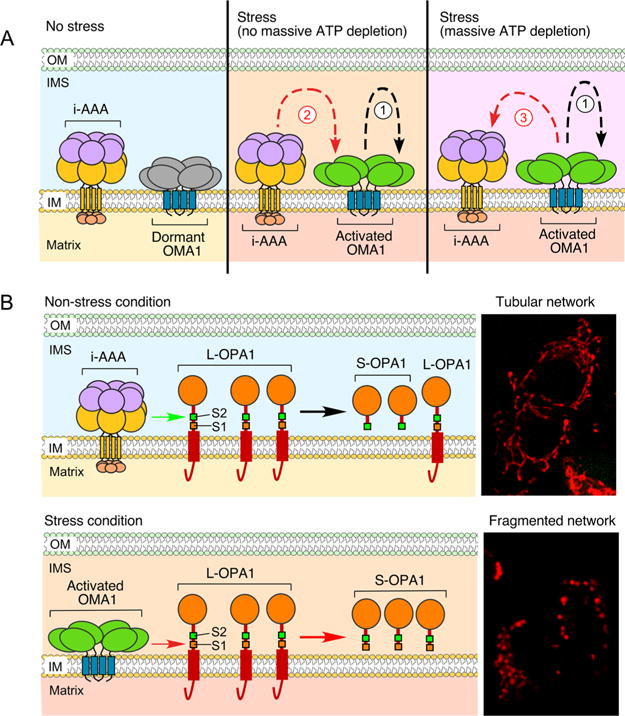
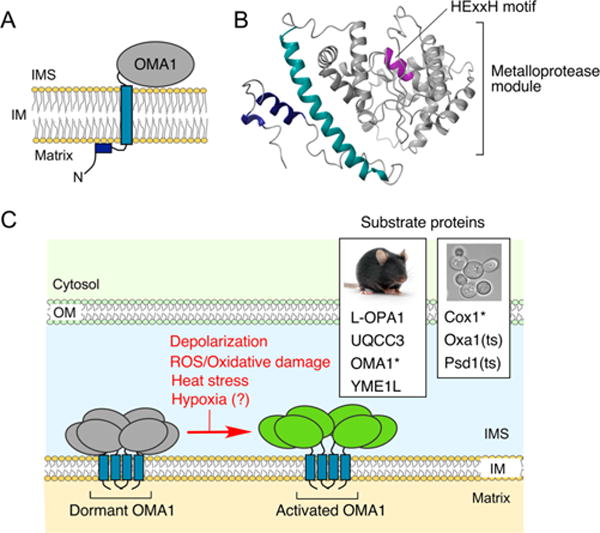
The inner mitochondrial membrane (IM) is among the most protein-rich cellular compartments. The metastable IM subproteome where the concentration of proteins is approaching oversaturation creates a challenging protein folding environment with a high probability of protein malfunction or aggregation. Failure to maintain protein homeostasis in such a setting can impair the functional integrity of the mitochondria and drive clinical manifestations. The IM is equipped with a series of highly conserved, proteolytic complexes dedicated to the maintenance of normal protein homeostasis within this mitochondrial subcompartment. Particularly important is a group of membrane-anchored metallopeptidases commonly known as m-AAA and i-AAA proteases, and the ATP-independent Oma1 protease. Herein, we will summarize the current biochemical knowledge of these proteolytic machines and discuss recent advances in our understanding of mechanistic aspects of their functioning.
线粒体内膜(IM)是蛋白质含量最高的细胞区室之一。蛋白质浓度接近过饱和的亚稳态线粒体内膜亚蛋白质组创造了一个具有挑战性的蛋白质折叠环境,蛋白质发生故障或聚集的可能性很高。在这种情况下未能维持蛋白质稳态会损害线粒体的功能完整性并引发临床表现。线粒体内膜配备了一系列高度保守的蛋白水解复合物,专门用于维持这个线粒体亚区室内的正常蛋白质稳态。特别重要的是一组通常被称为m-AAA和i-AAA蛋白酶的膜锚定金属肽酶,以及不依赖ATP的Oma1蛋白酶。在此,我们将总结这些蛋白水解机制目前的生化知识,并讨论我们在理解其功能机制方面的最新进展。