Yang Ye, Yang Cai-Rong, Han Seung Jin, Daldello Enrico Maria, Cho Ara, Martins Joao P Sousa, Xia Guoliang, Conti Marco
State Key Laboratory of Agrobiotechnology, College of Biological Sciences, China Agricultural University (CAU), Beijing 100193, People's Republic of China.
Center for Reproductive Sciences, University of California at San Francisco, San Francisco California 94143, USA.
Genes Dev. 2017 Jul 1;31(13):1302-1307. doi: 10.1101/gad.296871.117.
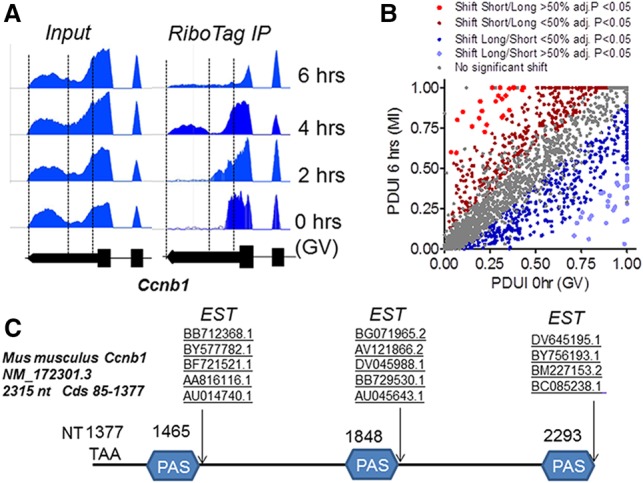
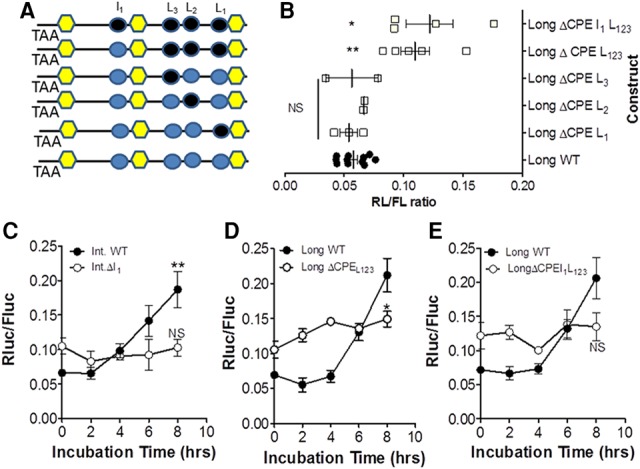
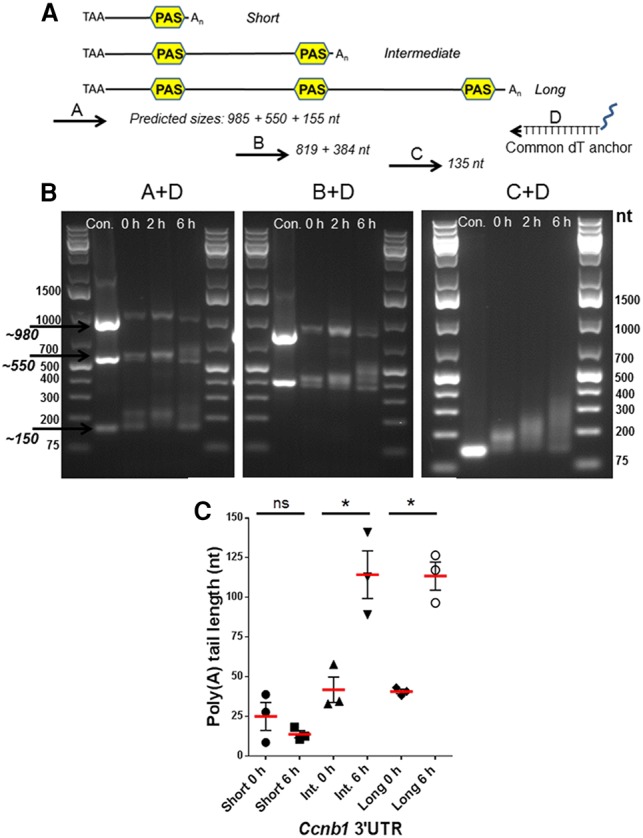
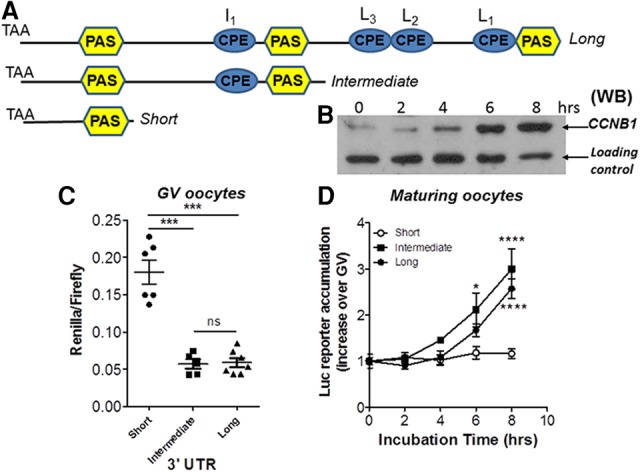
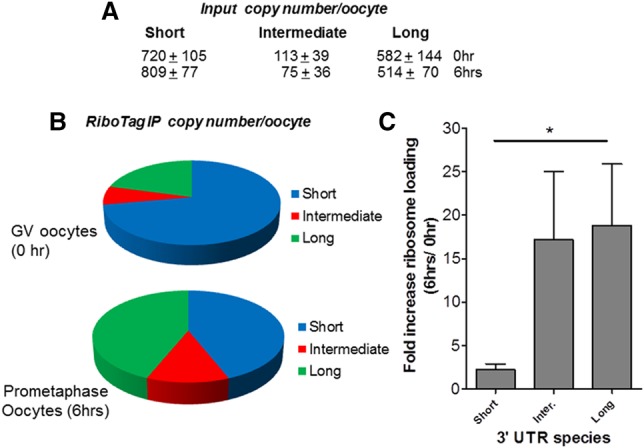
The final stages of female gamete maturation occur in the virtual absence of transcription, with gene expression driven by a program of selective unmasking, translation, and degradation of maternal mRNAs. Here we demonstrate that the timing of mRNA translation in mouse oocytes is dependent on the presence of transcripts with different 3' untranslated regions (UTRs). This 3' UTR heterogeneity directs distinct temporal patterns of translational activation or repression. Inclusion or exclusion of -acting elements is responsible for these divergent regulations. Our findings reveal an additional layer of translation control through alternative polyadenylation usage required to fine-tune the timing of meiosis progression.
雌性配子成熟的最后阶段在几乎没有转录的情况下发生,基因表达由母体mRNA的选择性去掩盖、翻译和降解程序驱动。在这里,我们证明小鼠卵母细胞中mRNA翻译的时间取决于具有不同3'非翻译区(UTR)的转录本的存在。这种3'UTR异质性指导翻译激活或抑制的不同时间模式。顺式作用元件的包含或排除导致了这些不同的调控。我们的研究结果揭示了通过选择性多聚腺苷酸化使用进行翻译控制的额外层面,这对于微调减数分裂进程的时间是必需的。