Key Laboratory of Craniocerebral Diseases of Ningxia Hui Autonomous Region and Department Human Anatomy, Histology and Embryology, Ningxia Medical University, Yinchuan 750004, China.
Department of Pharmaceutical Sciences, Biomanufacturing Research Institute Biotechnology Enterprise (BRITE), North Carolina Central University, 1801 Fayetteville Street, Durham, NC 27707, USA.
Int J Biol Sci. 2017 Jul 7;13(7):878-887. doi: 10.7150/ijbs.18976. eCollection 2017.
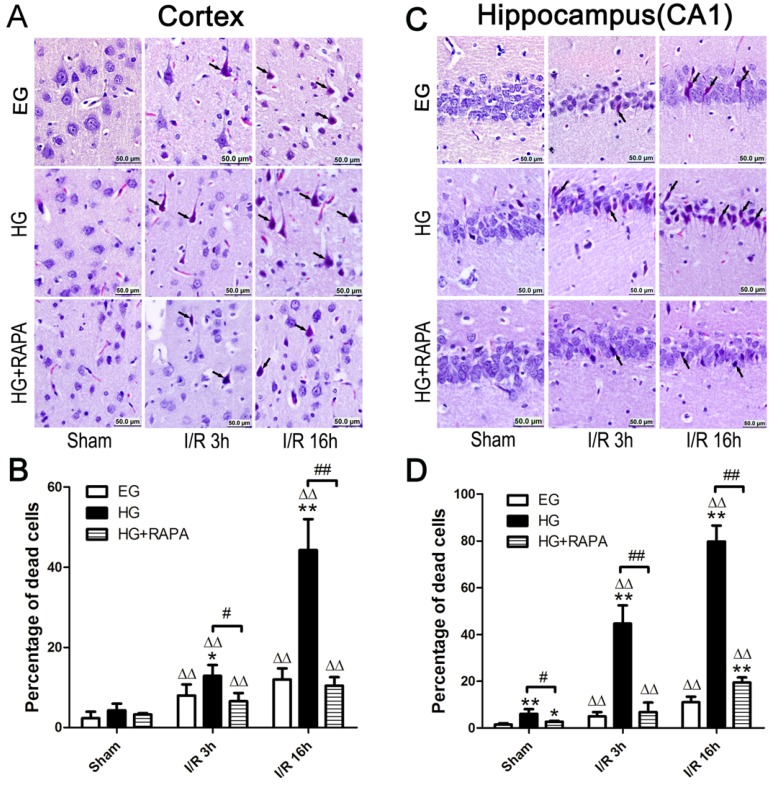
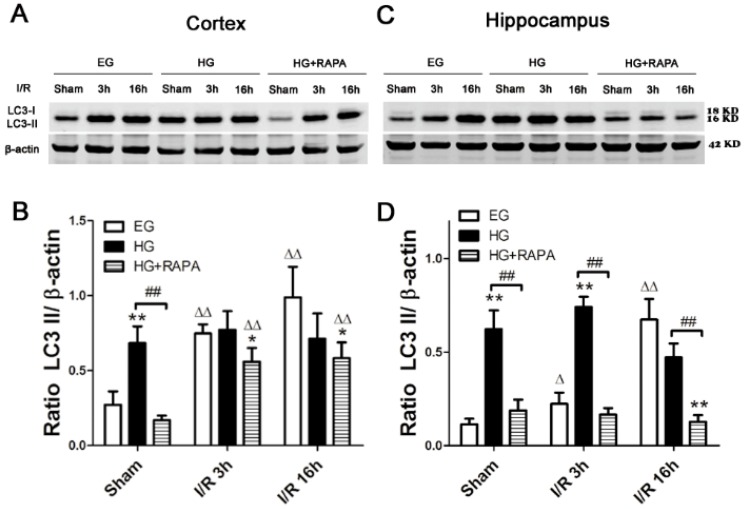
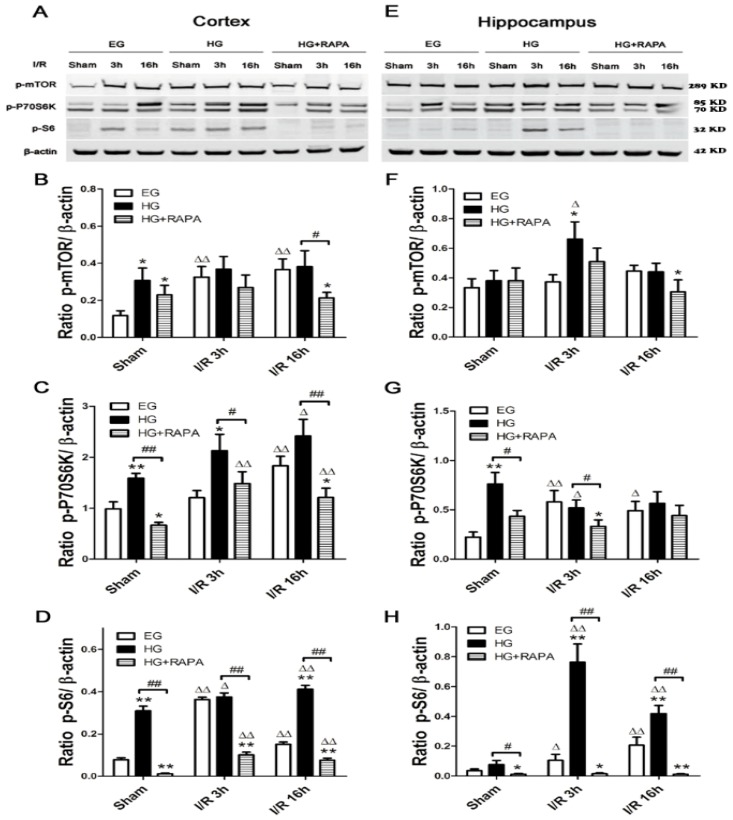
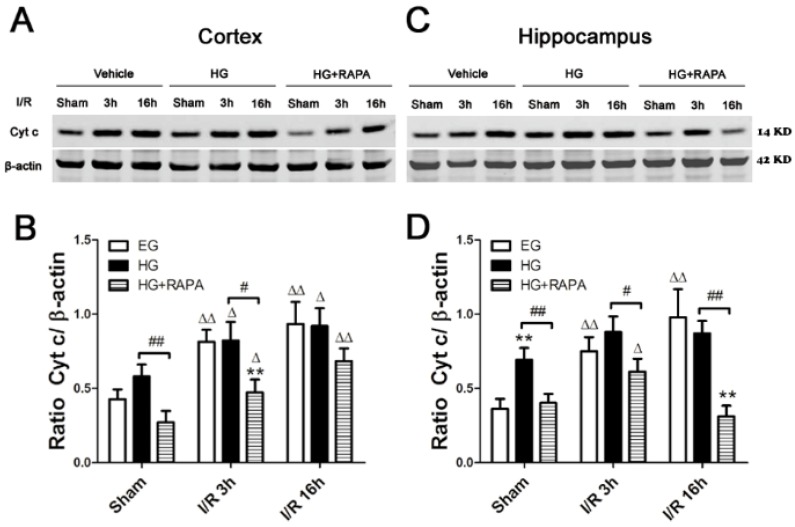
Hyperglycemia is known to exacerbate neuronal death resulted from cerebral ischemia. The mechanisms are not fully understood. The mammalian target of rapamycin (mTOR) pathway regulates cell growth, division and apoptosis. Recent studies suggest that activation of mTOR may mediate ischemic brain damage. The objective of the present experiment is to explore whether mTOR mediates ischemic brain damage in acute hyperglycemic animals. Rats were subjected to 10 min of forebrain ischemia under euglycemic, hyperglycemic and rapamycin-treated hyperglycemic conditions. The rat brain samples were collected from the cortex and hippocampi after 3h and 16h of reperfusion. The results showed that hyperglycemia significantly increased neuronal death in the cortex and hippocampus and the exacerbation effect of hyperglycemia was associated with further activation of mTOR under control and/or ischemic conditions. Inhibition of mTOR with rapamycin ameliorated the damage and suppressed hyperglycemia-elevated p-MTOR, p-P70S6K and p-S6. In addition, hyperglycemia increased the levels of cytosolic cytochrome and autophagy marker LC3-II, while rapamycin alleviated these alterations. It is concluded that activation of mTOR signaling may play a detrimental role in mediating the aggravating effect of hyperglycemia on cerebral ischemia.
高血糖已知会加重脑缺血引起的神经元死亡。其机制尚未完全阐明。雷帕霉素靶蛋白(mTOR)途径调节细胞生长、分裂和凋亡。最近的研究表明,mTOR 的激活可能介导缺血性脑损伤。本实验的目的是探讨 mTOR 是否介导急性高血糖动物的缺血性脑损伤。大鼠在正常血糖、高血糖和雷帕霉素处理高血糖条件下接受 10 分钟的前脑缺血。再灌注 3 小时和 16 小时后,从皮质和海马区采集大鼠脑样本。结果表明,高血糖显著增加皮质和海马区的神经元死亡,高血糖的加重作用与在对照和/或缺血条件下 mTOR 的进一步激活有关。用雷帕霉素抑制 mTOR 可减轻损伤并抑制高血糖诱导的 p-MTOR、p-P70S6K 和 p-S6 升高。此外,高血糖增加了细胞质细胞色素和自噬标志物 LC3-II 的水平,而雷帕霉素减轻了这些改变。结论:mTOR 信号的激活可能在介导高血糖对脑缺血的加重作用中起有害作用。