Wood Christopher S, Ronson Tanya K, McConnell Anna J, Roberts Derrick A, Nitschke Jonathan R
Department of Chemistry , University of Cambridge , Lensfield Road , CB2 1EW , UK . Email:
Chem Sci. 2016 Mar 1;7(3):1702-1706. doi: 10.1039/c5sc03926f. Epub 2015 Nov 17.
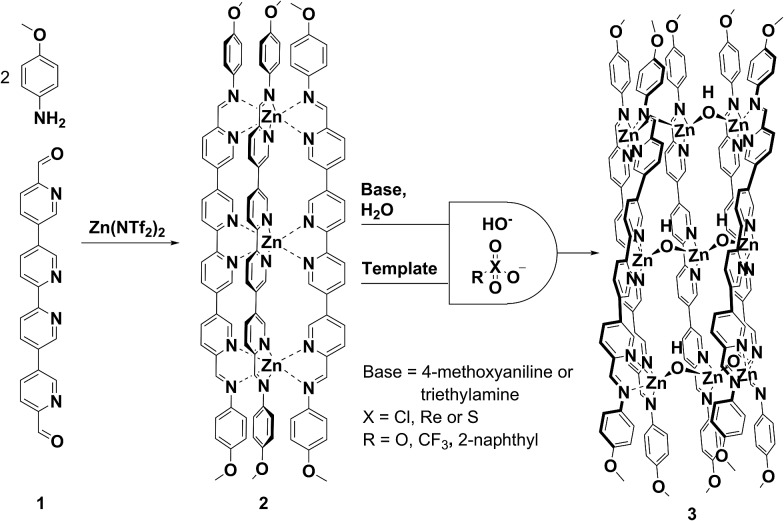
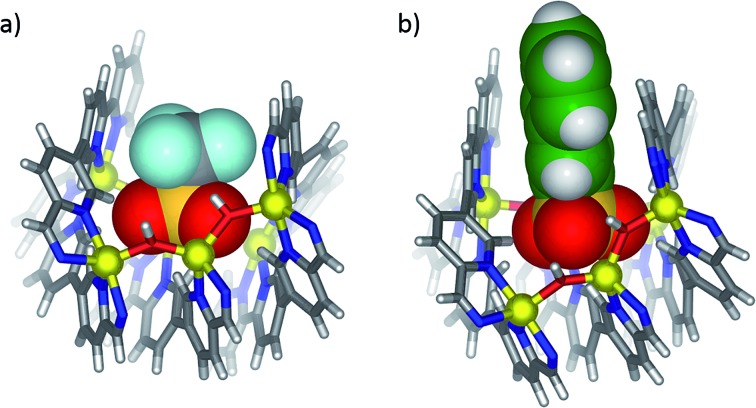
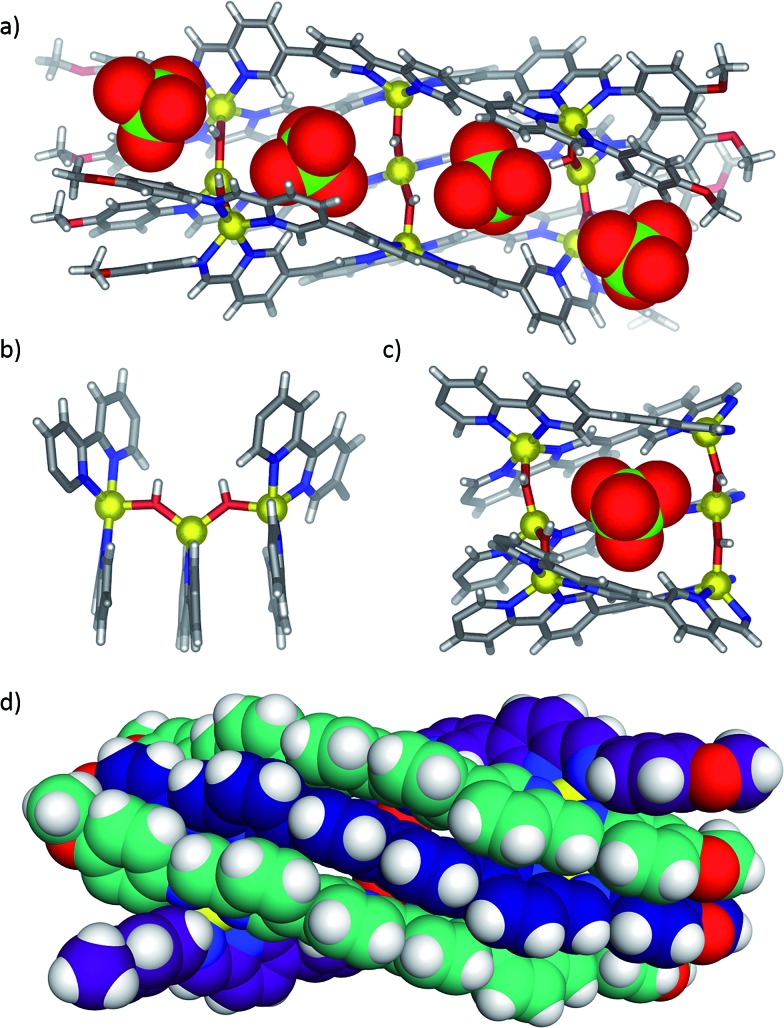
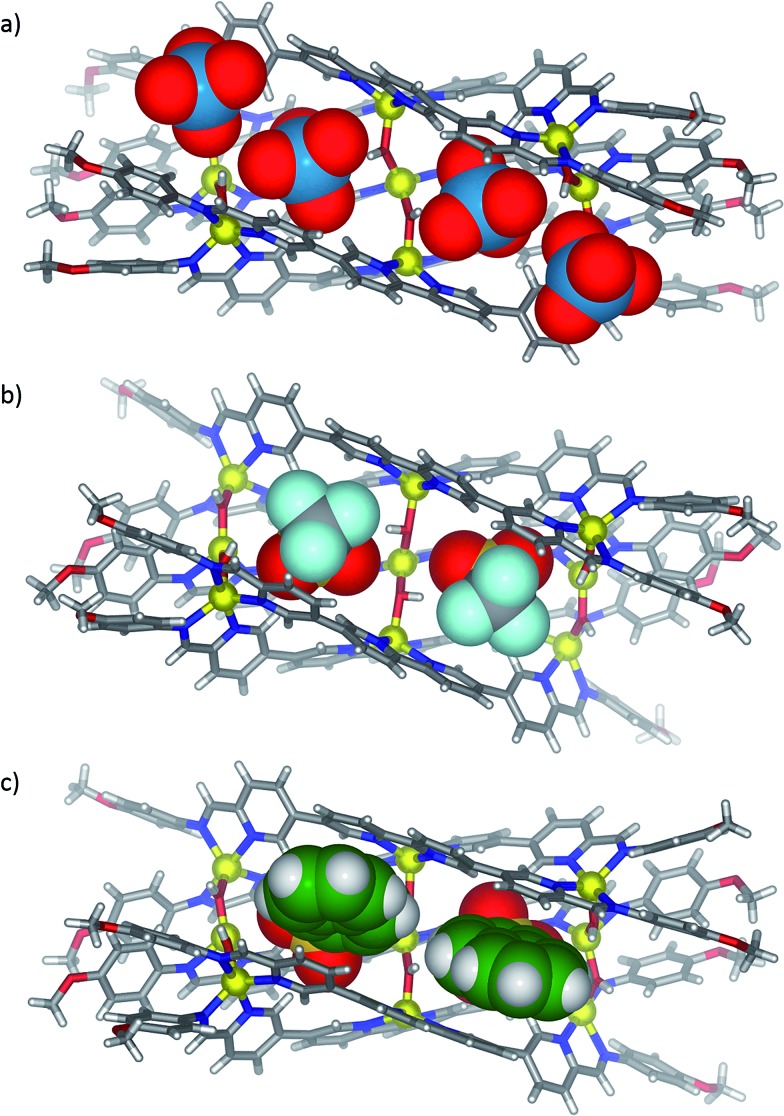
Low-symmetry metal-organic architectures that feature unusual binding motifs are useful for exploring new modes of guest recognition. Such structures remain difficult to create using current rational design principles. One approach to constructing such architectures is to employ ligands with coordination vectors oriented to preclude the formation of simple, low nuclearity molecular assemblies upon complexation to metal ions. Here we report two new supramolecular assemblies generated from such a ligand: a simple metastable [ZnL] assembly, which was observed to convert to a more complex [ZnL(μ-OH)] twisted half-pipe architecture. Two chemically distinct stimuli-an anionic template and a base-must be applied for the conversion to occur. Perchlorate, perrhenate, trifluoromethanesulfonate and 2-naphthalenesulfonate were found to act as competent templates for the [ZnL(μ-OH)] structure.
具有不寻常结合基序的低对称性金属有机结构对于探索客体识别的新模式很有用。利用当前的合理设计原则仍难以创建此类结构。构建此类结构的一种方法是使用配位向量定向的配体,以防止在与金属离子络合时形成简单的低核分子聚集体。在此,我们报告了由这种配体产生的两种新的超分子聚集体:一种简单的亚稳[ZnL]聚集体,观察到它会转化为更复杂的[ZnL(μ-OH)]扭曲半管结构。必须施加两种化学性质不同的刺激——阴离子模板和碱——才能发生转化。发现高氯酸盐、高铼酸盐、三氟甲磺酸盐和2-萘磺酸盐可作为[ZnL(μ-OH)]结构的有效模板。