Corral Jorge A, López María I, Esquivel Dolores, Mora Manuel, Jiménez-Sanchidrián César, Romero-Salguero Francisco J
Department of Organic Chemistry, Nanochemistry and Fine Chemistry Research Institute (IUIQFN), Faculty of Sciences, University of Córdoba, Campus de Rabanales, Marie Curie Building, Ctra. Nnal. IV, km 396, Córdoba 14071, Spain.
Department of Inorganic and Physical Chemistry, Center for Ordered Materials, Organometallics and Catalysis (COMOC), Ghent University, Krijgslaan 281, Building S3, Ghent 9000, Belgium.
Materials (Basel). 2013 Apr 17;6(4):1554-1565. doi: 10.3390/ma6041554.
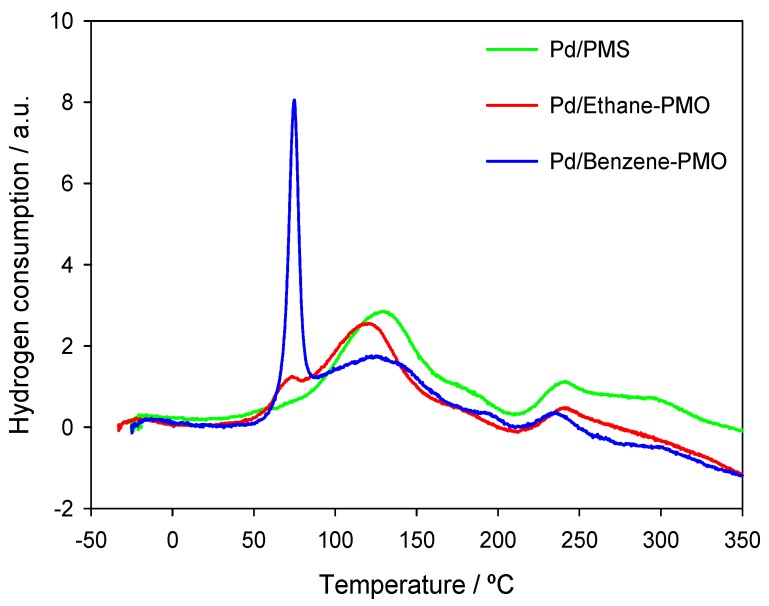
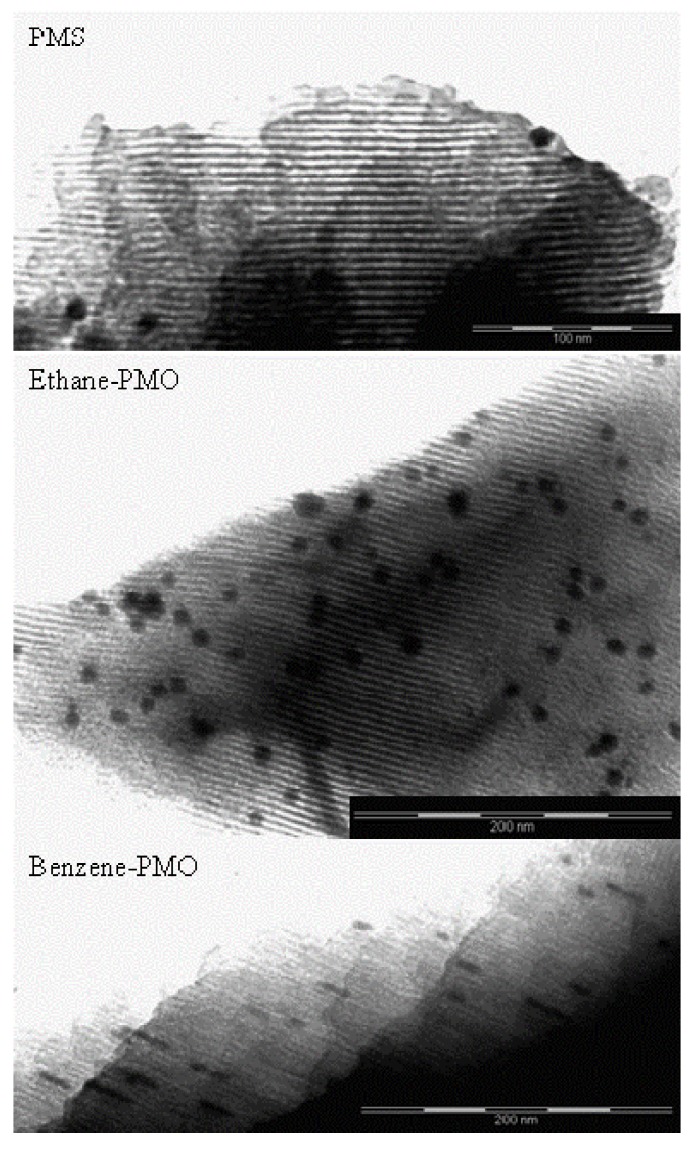
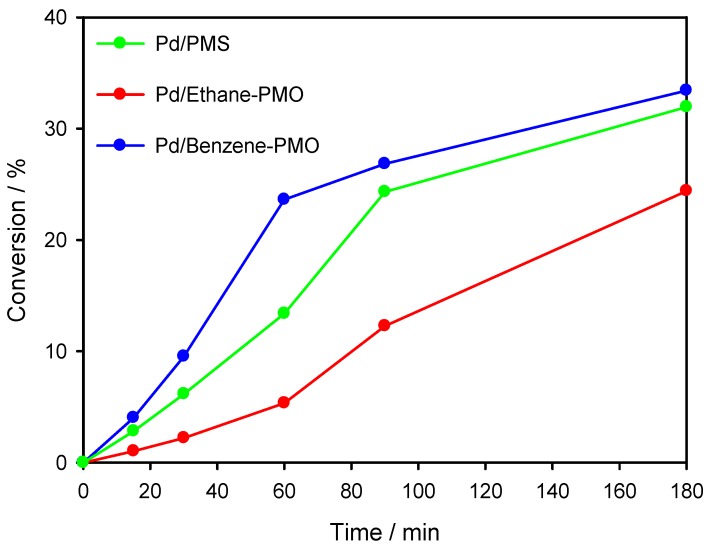
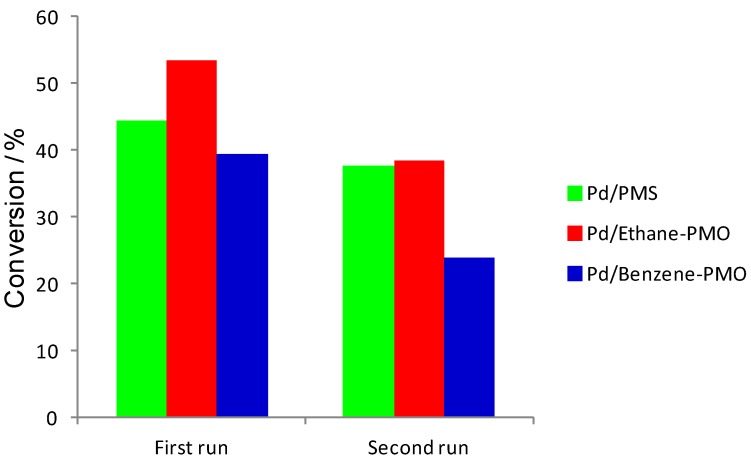
Three periodic mesoporous materials, , two organosilicas with either ethylene or phenylene bridges and one silica, have been used as supports for Pd nanoparticles. All Pd-supported samples (1.0 wt%) were prepared by the incipient wetness method and subsequently reduced in an H₂ stream at 200 °C. Both hydrogen chemisorption and temperature programmed reduction experiments revealed significant differences depending on the support. Pd species were more reducible on the mesoporous organosilicas than on their silica counterpart. Also, remarkable differences on the particle morphology were observed by transmission electron microscopy. All Pd-supported samples were active in the Suzuki cross-coupling reaction between bromobenzene and phenylboronic acid.
三种周期性介孔材料,两种带有乙烯桥或亚苯基桥的有机硅以及一种二氧化硅,已被用作钯纳米颗粒的载体。所有负载钯的样品(1.0 wt%)均采用初湿浸渍法制备,随后在200 °C的氢气气流中还原。氢气化学吸附和程序升温还原实验均表明,根据载体的不同存在显著差异。钯物种在介孔有机硅上比在其二氧化硅对应物上更易还原。此外,通过透射电子显微镜观察到颗粒形态存在显著差异。所有负载钯的样品在溴苯和苯硼酸之间的铃木交叉偶联反应中均具有活性。