• 文献检索
  • 文档翻译
  • 深度研究
  • 学术资讯
  • Suppr Zotero 插件Zotero 插件
  • 邀请有礼
  • 套餐&价格
  • 历史记录
应用&插件
Suppr Zotero 插件Zotero 插件浏览器插件Mac 客户端Windows 客户端微信小程序
定价
高级版会员购买积分包购买API积分包
服务
文献检索文档翻译深度研究API 文档MCP 服务
关于我们
关于 Suppr公司介绍联系我们用户协议隐私条款
关注我们

Suppr 超能文献

核心技术专利:CN118964589B侵权必究
粤ICP备2023148730 号-1Suppr @ 2026

文献检索

告别复杂PubMed语法,用中文像聊天一样搜索,搜遍4000万医学文献。AI智能推荐,让科研检索更轻松。

立即免费搜索

文件翻译

保留排版,准确专业,支持PDF/Word/PPT等文件格式,支持 12+语言互译。

免费翻译文档

深度研究

AI帮你快速写综述,25分钟生成高质量综述,智能提取关键信息,辅助科研写作。

立即免费体验

用于光动力疗法的染料敏化剂

Dye Sensitizers for Photodynamic Therapy.

作者信息

Ormond Alexandra B, Freeman Harold S

机构信息

Fiber and Polymer Science Program, North Carolina State University, Raleigh, NC 27695-8301, USA.

出版信息

Materials (Basel). 2013 Mar 6;6(3):817-840. doi: 10.3390/ma6030817.

DOI:10.3390/ma6030817
PMID:28809342
原文链接:https://pmc.ncbi.nlm.nih.gov/articles/PMC5512801/
Abstract

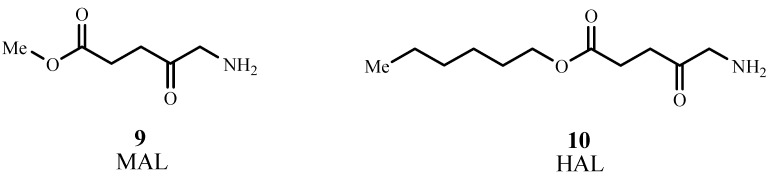
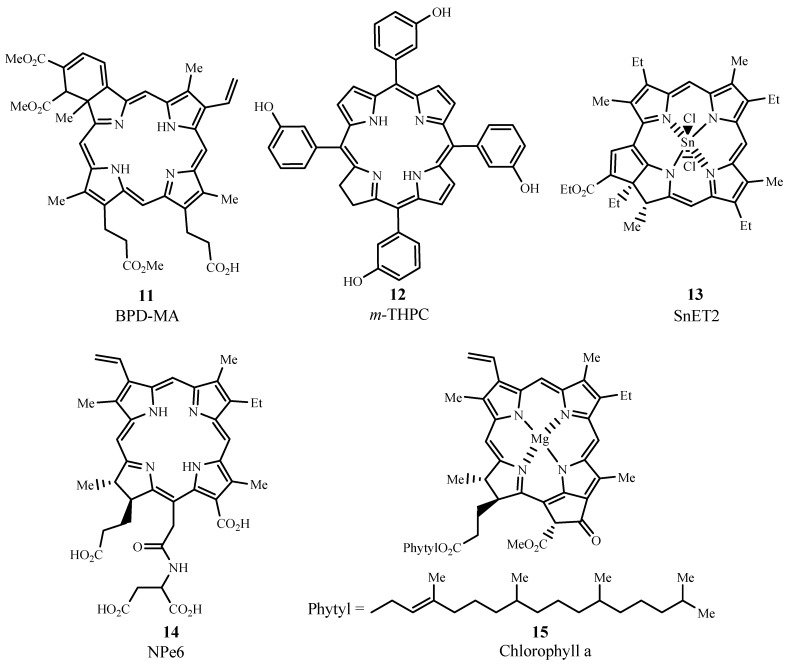
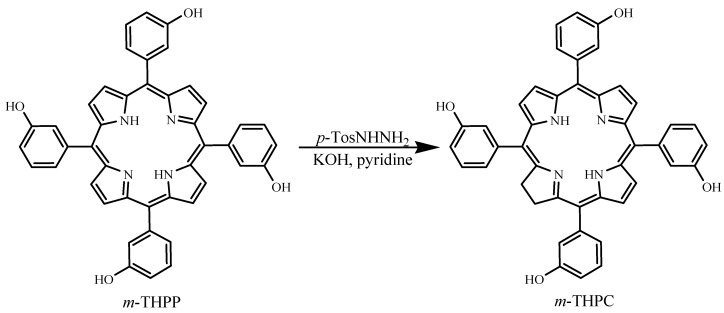
Photofrin was first approved in the 1990s as a sensitizer for use in treating cancer via photodynamic therapy (PDT). Since then a wide variety of dye sensitizers have been developed and a few have been approved for PDT treatment of skin and organ cancers and skin diseases such as . Porphyrinoid derivatives and precursors have been the most successful in producing requisite singlet oxygen, with Photofrin still remaining the most efficient sensitizer (quantum yield = 0.89) and having broad food and drug administration (FDA) approval for treatment of multiple cancer types. Other porphyrinoid compounds that have received approval from US FDA and regulatory authorities in other countries include benzoporphyrin derivative monoacid ring A (BPD-MA), -tetra(hydroxyphenyl)chlorin (-THPC), -aspartyl chlorin e6 (NPe6), and precursors to endogenous protoporphyrin IX (PpIX): 1,5-aminolevulinic acid (ALA), methyl aminolevulinate (MAL), hexaminolevulinate (HAL). Although no non-porphyrin sensitizer has been approved for PDT applications, a small number of anthraquinone, phenothiazine, xanthene, cyanine, and curcuminoid sensitizers are under consideration and some are being evaluated in clinical trials. This review focuses on the nature of PDT, dye sensitizers that have been approved for use in PDT, and compounds that have entered or completed clinical trials as PDT sensitizers.

摘要

光敏剂最初于20世纪90年代被批准用作通过光动力疗法(PDT)治疗癌症的敏化剂。从那时起,已经开发出了各种各样的染料敏化剂,其中一些已被批准用于PDT治疗皮肤癌、器官癌和皮肤病等。卟啉类衍生物和前体在产生所需的单线态氧方面最为成功,光敏剂仍然是最有效的敏化剂(量子产率 = 0.89),并且已获得美国食品药品监督管理局(FDA)对多种癌症类型治疗的广泛批准。其他已获得美国FDA和其他国家监管机构批准的卟啉类化合物包括苯并卟啉衍生物单酸环A(BPD-MA)、-四(羟苯基)氯卟啉(-THPC)、-天冬酰胺基氯卟啉e6(NPe6)以及内源性原卟啉IX(PpIX)的前体:1,5-氨基酮戊酸(ALA)、甲基氨基酮戊酸(MAL)、六氨基酮戊酸(HAL)。尽管尚无非卟啉敏化剂被批准用于PDT应用,但少数蒽醌、吩噻嗪、呫吨、花青和姜黄素类敏化剂正在被考虑,并且一些正在临床试验中进行评估。本综述重点关注PDT 的性质、已被批准用于PDT的染料敏化剂以及已作为PDT敏化剂进入或完成临床试验的化合物。
https://cdn.ncbi.nlm.nih.gov/pmc/blobs/1b18/5512801/d8c6d76e8fc4/materials-06-00817-g020.jpg
https://cdn.ncbi.nlm.nih.gov/pmc/blobs/1b18/5512801/9840f405d7a7/materials-06-00817-g001.jpg
https://cdn.ncbi.nlm.nih.gov/pmc/blobs/1b18/5512801/5d30d4c76190/materials-06-00817-g002.jpg
https://cdn.ncbi.nlm.nih.gov/pmc/blobs/1b18/5512801/826e52fd33a5/materials-06-00817-g003.jpg
https://cdn.ncbi.nlm.nih.gov/pmc/blobs/1b18/5512801/59041a3d8a99/materials-06-00817-g004.jpg
https://cdn.ncbi.nlm.nih.gov/pmc/blobs/1b18/5512801/fd8f8bcd57cd/materials-06-00817-g005.jpg
https://cdn.ncbi.nlm.nih.gov/pmc/blobs/1b18/5512801/f0d4219a9ed9/materials-06-00817-g006.jpg
https://cdn.ncbi.nlm.nih.gov/pmc/blobs/1b18/5512801/c4c8e2d03f32/materials-06-00817-g007.jpg
https://cdn.ncbi.nlm.nih.gov/pmc/blobs/1b18/5512801/77d296fd21b3/materials-06-00817-g008.jpg
https://cdn.ncbi.nlm.nih.gov/pmc/blobs/1b18/5512801/012a46a2b20f/materials-06-00817-g009.jpg
https://cdn.ncbi.nlm.nih.gov/pmc/blobs/1b18/5512801/33c7845c0d4d/materials-06-00817-g010.jpg
https://cdn.ncbi.nlm.nih.gov/pmc/blobs/1b18/5512801/62e35f1c438f/materials-06-00817-g011.jpg
https://cdn.ncbi.nlm.nih.gov/pmc/blobs/1b18/5512801/bd69cebab5e1/materials-06-00817-g012.jpg
https://cdn.ncbi.nlm.nih.gov/pmc/blobs/1b18/5512801/425ee47e22c7/materials-06-00817-g013.jpg
https://cdn.ncbi.nlm.nih.gov/pmc/blobs/1b18/5512801/342eab5c1bbf/materials-06-00817-g014.jpg
https://cdn.ncbi.nlm.nih.gov/pmc/blobs/1b18/5512801/f2c7148be774/materials-06-00817-g015.jpg
https://cdn.ncbi.nlm.nih.gov/pmc/blobs/1b18/5512801/a87b96875a3f/materials-06-00817-g016.jpg
https://cdn.ncbi.nlm.nih.gov/pmc/blobs/1b18/5512801/9ab3244076b6/materials-06-00817-g017.jpg
https://cdn.ncbi.nlm.nih.gov/pmc/blobs/1b18/5512801/ef796d212934/materials-06-00817-g018.jpg
https://cdn.ncbi.nlm.nih.gov/pmc/blobs/1b18/5512801/aff7a85a1e07/materials-06-00817-g019.jpg
https://cdn.ncbi.nlm.nih.gov/pmc/blobs/1b18/5512801/d8c6d76e8fc4/materials-06-00817-g020.jpg
https://cdn.ncbi.nlm.nih.gov/pmc/blobs/1b18/5512801/9840f405d7a7/materials-06-00817-g001.jpg
https://cdn.ncbi.nlm.nih.gov/pmc/blobs/1b18/5512801/5d30d4c76190/materials-06-00817-g002.jpg
https://cdn.ncbi.nlm.nih.gov/pmc/blobs/1b18/5512801/826e52fd33a5/materials-06-00817-g003.jpg
https://cdn.ncbi.nlm.nih.gov/pmc/blobs/1b18/5512801/59041a3d8a99/materials-06-00817-g004.jpg
https://cdn.ncbi.nlm.nih.gov/pmc/blobs/1b18/5512801/fd8f8bcd57cd/materials-06-00817-g005.jpg
https://cdn.ncbi.nlm.nih.gov/pmc/blobs/1b18/5512801/f0d4219a9ed9/materials-06-00817-g006.jpg
https://cdn.ncbi.nlm.nih.gov/pmc/blobs/1b18/5512801/c4c8e2d03f32/materials-06-00817-g007.jpg
https://cdn.ncbi.nlm.nih.gov/pmc/blobs/1b18/5512801/77d296fd21b3/materials-06-00817-g008.jpg
https://cdn.ncbi.nlm.nih.gov/pmc/blobs/1b18/5512801/012a46a2b20f/materials-06-00817-g009.jpg
https://cdn.ncbi.nlm.nih.gov/pmc/blobs/1b18/5512801/33c7845c0d4d/materials-06-00817-g010.jpg
https://cdn.ncbi.nlm.nih.gov/pmc/blobs/1b18/5512801/62e35f1c438f/materials-06-00817-g011.jpg
https://cdn.ncbi.nlm.nih.gov/pmc/blobs/1b18/5512801/bd69cebab5e1/materials-06-00817-g012.jpg
https://cdn.ncbi.nlm.nih.gov/pmc/blobs/1b18/5512801/425ee47e22c7/materials-06-00817-g013.jpg
https://cdn.ncbi.nlm.nih.gov/pmc/blobs/1b18/5512801/342eab5c1bbf/materials-06-00817-g014.jpg
https://cdn.ncbi.nlm.nih.gov/pmc/blobs/1b18/5512801/f2c7148be774/materials-06-00817-g015.jpg
https://cdn.ncbi.nlm.nih.gov/pmc/blobs/1b18/5512801/a87b96875a3f/materials-06-00817-g016.jpg
https://cdn.ncbi.nlm.nih.gov/pmc/blobs/1b18/5512801/9ab3244076b6/materials-06-00817-g017.jpg
https://cdn.ncbi.nlm.nih.gov/pmc/blobs/1b18/5512801/ef796d212934/materials-06-00817-g018.jpg
https://cdn.ncbi.nlm.nih.gov/pmc/blobs/1b18/5512801/aff7a85a1e07/materials-06-00817-g019.jpg
https://cdn.ncbi.nlm.nih.gov/pmc/blobs/1b18/5512801/d8c6d76e8fc4/materials-06-00817-g020.jpg

相似文献

1
Dye Sensitizers for Photodynamic Therapy.用于光动力疗法的染料敏化剂
Materials (Basel). 2013 Mar 6;6(3):817-840. doi: 10.3390/ma6030817.
2
Photobleaching of mono-L-aspartyl chlorin e6 (NPe6): a candidate sensitizer for the photodynamic therapy of tumors.单-L-天冬酰胺基二氢卟吩e6(NPe6)的光漂白:一种肿瘤光动力治疗的候选敏化剂。
Photochem Photobiol. 1993 Sep;58(3):346-50. doi: 10.1111/j.1751-1097.1993.tb09572.x.
3
Photodynamic therapy in the esophagus.食管的光动力疗法。
Photodiagnosis Photodyn Ther. 2004 May;1(1):65-74. doi: 10.1016/S1572-1000(04)00010-9.
4
The effect of light fractionation with a 2-h dark interval on the efficacy of topical hexyl-aminolevulinate photodynamic therapy in normal mouse skin.光照间隔对局部六氨基己酸光动力疗法治疗正常小鼠皮肤疗效的影响。
Photodiagnosis Photodyn Ther. 2013 Dec;10(4):703-9. doi: 10.1016/j.pdpdt.2013.09.002. Epub 2013 Oct 15.
5
[History of photodynamic therapy--past, present and future].[光动力疗法的历史——过去、现在与未来]
Gan To Kagaku Ryoho. 1996 Jan;23(1):8-15.
6
PDT effects of m-THPC and ALA, phototoxicity and apoptosis.间-四羟基苯基氯代卟啉(m-THPC)和氨基乙酰丙酸(ALA)的光动力疗法(PDT)效果、光毒性与细胞凋亡
Apoptosis. 2002 Jun;7(3):221-30. doi: 10.1023/a:1015391415150.
7
A comparative study of tissue distribution and photodynamic therapy selectivity of chlorin e6, Photofrin II and ALA-induced protoporphyrin IX in a colon carcinoma model.在结肠癌模型中对氯e6、癌光啉II和ALA诱导的原卟啉IX的组织分布及光动力疗法选择性的比较研究
Br J Cancer. 1996 Apr;73(8):937-44. doi: 10.1038/bjc.1996.185.
8
Clinical pharmacokinetics of the PDT photosensitizers porfimer sodium (Photofrin), 2-[1-hexyloxyethyl]-2-devinyl pyropheophorbide-a (Photochlor) and 5-ALA-induced protoporphyrin IX.光动力疗法光敏剂卟吩姆钠(Photofrin)、2-[1-己氧基乙基]-2-去乙烯基焦脱镁叶绿酸-a(Photochlor)以及5-氨基酮戊酸诱导产生的原卟啉IX的临床药代动力学。
Lasers Surg Med. 2006 Jun;38(5):439-44. doi: 10.1002/lsm.20340.
9
Microscopic localisation of protoporphyrin IX in normal mouse skin after topical application of 5-aminolevulinic acid or methyl 5-aminolevulinate.局部应用5-氨基乙酰丙酸或5-氨基乙酰丙酸甲酯后,原卟啉IX在正常小鼠皮肤中的微观定位。
J Photochem Photobiol B. 2008 Aug 21;92(2):91-7. doi: 10.1016/j.jphotobiol.2008.05.005. Epub 2008 May 15.
10
Photodynamic therapy as an effective therapeutic approach in MAME models of inflammatory breast cancer.光动力疗法作为炎性乳腺癌MAME模型中的一种有效治疗方法。
Breast Cancer Res Treat. 2015 Nov;154(2):251-62. doi: 10.1007/s10549-015-3618-6. Epub 2015 Oct 26.

引用本文的文献

1
Cationic Bacteriochlorin in the photodynamic inactivation of microorganisms.阳离子细菌叶绿素在微生物的光动力失活中的作用
Braz J Microbiol. 2025 Aug 10. doi: 10.1007/s42770-025-01750-6.
2
Application of photodynamic activation of prodrugs combined with phototherapy in tumor treatment.前体药物的光动力激活联合光疗在肿瘤治疗中的应用。
Mol Cancer. 2025 Jul 21;24(1):200. doi: 10.1186/s12943-025-02404-9.
3
pH-driven butterfly effect for cascade-amplified tumor therapy based on thalidomide coordinated Fe-HMME nanoplatform.基于沙利度胺配位铁-血卟啉单甲醚纳米平台的pH驱动级联放大肿瘤治疗的蝴蝶效应

本文引用的文献

1
Preliminary clinical and pharmacologic investigation of photodynamic therapy with the silicon phthalocyanine photosensitizer pc 4 for primary or metastatic cutaneous cancers.初步临床和药理学研究光动力疗法与硅酞菁光敏剂 pc 4 治疗原发性或转移性皮肤癌。
Front Oncol. 2011 Jun 30;1:14. doi: 10.3389/fonc.2011.00014. eCollection 2011.
2
Effects of tandem shock waves combined with photosan and cytostatics on the growth of tumours.串联冲击波联合光神霉素及细胞抑制剂对肿瘤生长的影响
Folia Biol (Praha). 2011;57(6):255-60.
3
Overall-mouth disinfection by photodynamic therapy using curcumin.
Mater Today Bio. 2025 Mar 20;32:101691. doi: 10.1016/j.mtbio.2025.101691. eCollection 2025 Jun.
4
Phototherapy in cancer treatment: strategies and challenges.癌症治疗中的光疗:策略与挑战。
Signal Transduct Target Ther. 2025 Apr 2;10(1):115. doi: 10.1038/s41392-025-02140-y.
5
Light-Reactive Norharmane Derivatization of Lipid Isomers by Matrix-Assisted Laser Desorption/Ionization Mass Spectrometry.基质辅助激光解吸/电离质谱法对脂质异构体进行光反应性去甲哈尔满衍生化
Anal Chem. 2025 Mar 25;97(11):6001-6008. doi: 10.1021/acs.analchem.4c05629. Epub 2025 Mar 15.
6
Single-Photon DNA Photocleavage up to 905 nm by a Benzylated 4-Quinolinium Carbocyanine Dye.一种苄基化4-喹啉鎓碳菁染料实现高达905纳米的单光子DNA光裂解
ACS Omega. 2025 Feb 11;10(7):6544-6558. doi: 10.1021/acsomega.4c07083. eCollection 2025 Feb 25.
7
Synthesis of Mesoporous Polydopamine-Coated Upconversion Nanoparticles for Dual-Enhanced Photodynamic and Photothermal Cancer Therapy.用于双增强光动力和光热癌症治疗的介孔聚多巴胺包覆上转换纳米粒子的合成
Int J Nanomedicine. 2025 Feb 26;20:2505-2519. doi: 10.2147/IJN.S503977. eCollection 2025.
8
Study of the Influence of Structure-Chemical Properties of Electron Beam-Polymerized PEGDA/Gelatin Hybrid Hydrogels on the Uptake and Release Dynamics of Different Photosensitizer Molecules.电子束聚合的聚乙二醇二丙烯酸酯/明胶混合水凝胶的结构化学性质对不同光敏剂分子摄取和释放动力学的影响研究
Biomacromolecules. 2025 Feb 10;26(2):848-860. doi: 10.1021/acs.biomac.4c00982. Epub 2025 Jan 6.
9
Advancements and challenges in brain cancer therapeutics.脑癌治疗的进展与挑战
Exploration (Beijing). 2024 May 16;4(6):20230177. doi: 10.1002/EXP.20230177. eCollection 2024 Dec.
10
Recent advances in cell membrane-coated porphyrin-based nanoscale MOFs for enhanced photodynamic therapy.用于增强光动力疗法的细胞膜包被的卟啉基纳米级金属有机框架的最新进展
Front Pharmacol. 2024 Dec 4;15:1505212. doi: 10.3389/fphar.2024.1505212. eCollection 2024.
使用姜黄素通过光动力疗法进行全口消毒。
Photomed Laser Surg. 2012 Feb;30(2):96-101. doi: 10.1089/pho.2011.3053. Epub 2012 Jan 6.
4
Optimal photosensitizers for photodynamic therapy of infections should kill bacteria but spare neutrophils.用于感染的光动力疗法的最佳光敏剂应该杀死细菌但不伤害中性粒细胞。
Photochem Photobiol. 2012 Jan-Feb;88(1):227-32. doi: 10.1111/j.1751-1097.2011.01005.x. Epub 2011 Oct 31.
5
Preclinical study of the novel vascular occluding agent, WST11, for photodynamic therapy of the canine prostate.新型血管闭塞剂 WST11 用于犬前列腺光动力疗法的临床前研究。
J Urol. 2011 Jul;186(1):302-9. doi: 10.1016/j.juro.2011.03.039. Epub 2011 May 20.
6
Investigation of the photodynamic effects of curcumin against Candida albicans.姜黄素对白色念珠菌的光动力效应研究。
Photochem Photobiol. 2011 Jul-Aug;87(4):895-903. doi: 10.1111/j.1751-1097.2011.00937.x. Epub 2011 Jun 13.
7
Toxicity of photodynamic therapy with LED associated to Photogem®: an in vivo study.光动力疗法联合 Photogem®LED 光源的毒性:一项体内研究。
Lasers Med Sci. 2012 Mar;27(2):403-11. doi: 10.1007/s10103-011-0909-y. Epub 2011 Apr 6.
8
Time-resolved gene expression profiling of human squamous cell carcinoma cells during the apoptosis process induced by photodynamic treatment with hypericin.金丝桃素光动力治疗诱导人鳞状细胞癌细胞凋亡过程中的时间分辨基因表达谱分析
Int J Oncol. 2009 Oct;35(4):921-39. doi: 10.3892/ijo_00000407.
9
Porphyrin and nonporphyrin photosensitizers in oncology: preclinical and clinical advances in photodynamic therapy.肿瘤学中的卟啉和非卟啉光敏剂:光动力疗法的临床前和临床进展
Photochem Photobiol. 2009 Sep-Oct;85(5):1053-74. doi: 10.1111/j.1751-1097.2009.00585.x. Epub 2009 Aug 3.
10
Direct toxicity of Rose Bengal in MCF-7 cell line: role of apoptosis.孟加拉玫瑰红对MCF-7细胞系的直接毒性:细胞凋亡的作用
Food Chem Toxicol. 2009 Apr;47(4):855-9. doi: 10.1016/j.fct.2009.01.018.