Holtze Susanne, Lukač Maja, Cizelj Ivan, Mutschmann Frank, Szentiks Claudia Anita, Jelić Dušan, Hermes Robert, Göritz Frank, Braude Stanton, Hildebrandt Thomas Bernd
Department of Reproduction Management, Leibniz Institute for Zoo and Wildlife Research, Berlin, Germany.
Department of Poultry Diseases with Clinic, Faculty of Veterinary Medicine, University of Zagreb, Zagreb, Croatia.
PLoS One. 2017 Aug 15;12(8):e0182209. doi: 10.1371/journal.pone.0182209. eCollection 2017.
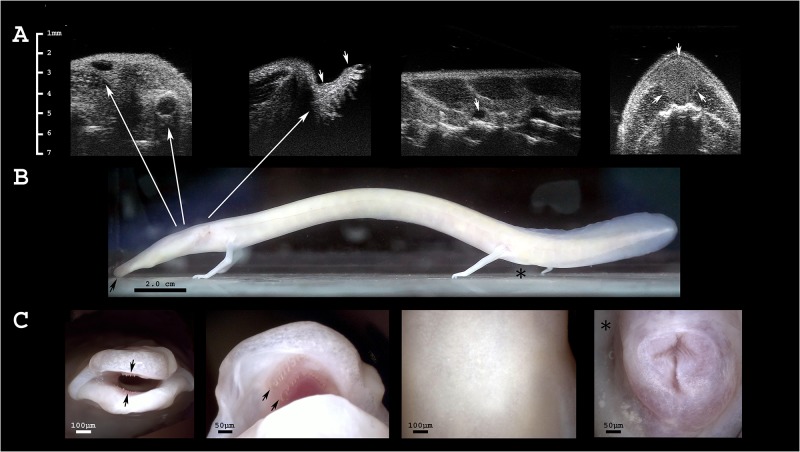
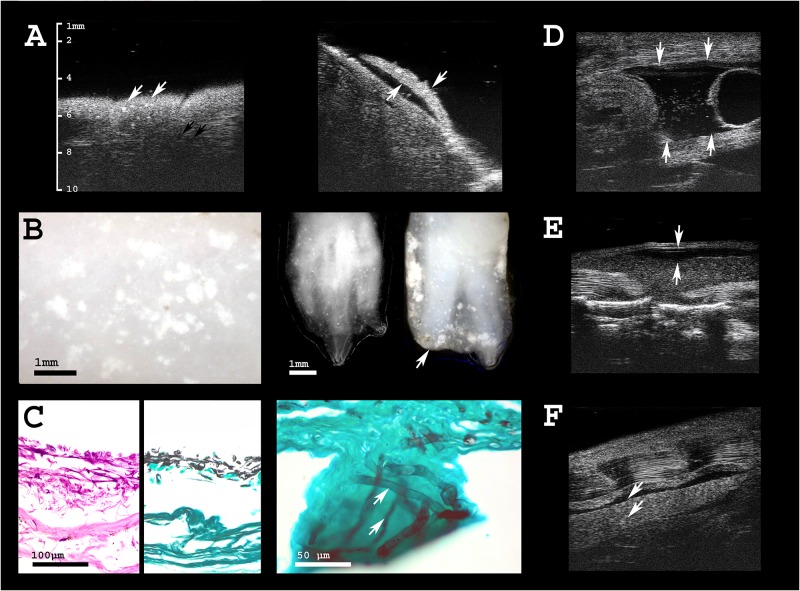
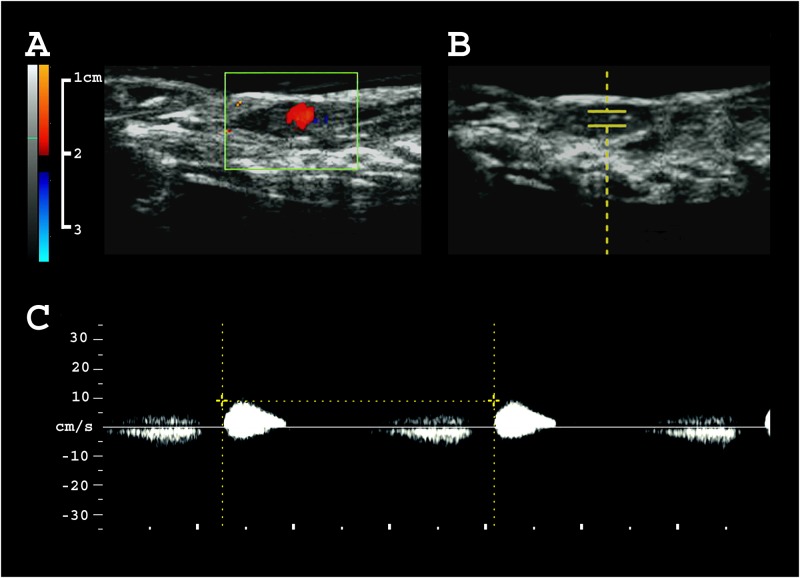
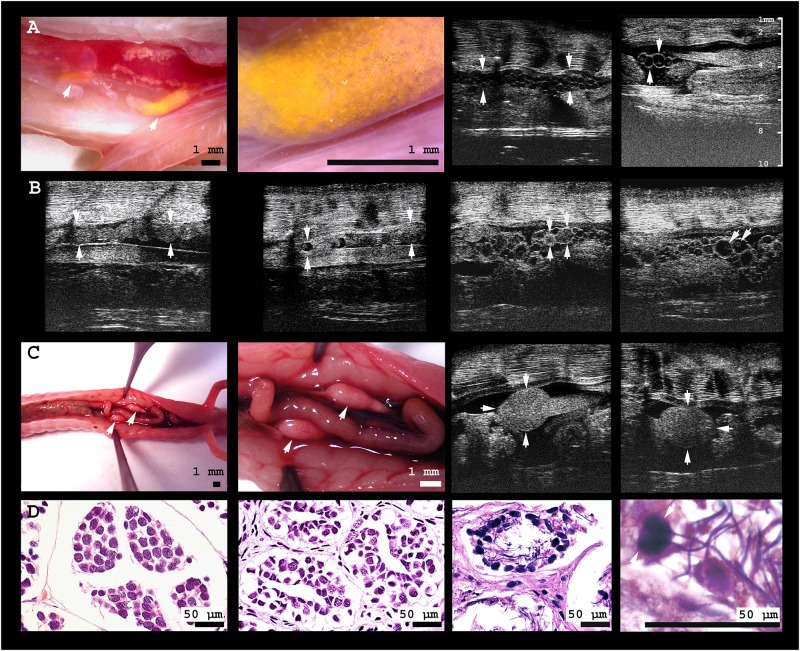
The olm (Proteus anguinus) is a troglomorphic, neotenous amphibian with extraordinary life expectancy and unique adaptations that deserve further investigation. A low reproductive rate and habitat decline render it threatened by extinction. Establishing captive populations for maintenance and artificial breeding may one day become crucial to the species. Longitudinal, in-vivo assessment of inner organs is invaluable to our understanding of reproductive physiology, health, and behavior. Using ultrasound, we measured heart rate and assessed health and reproductive status of 13 captive olms at Zagreb Zoo. Heart rate averaged 42.9 ± 4.6 bpm (32-55 bpm), as determined via pulsed-wave Doppler at 4-12 MHz. By using frequencies of up to 70 MHz (ultrasound biomicroscopy), inner organs were visualized in detail. Assessment of the gastrointestinal tract provided insights into feeding status and digestive processes. Several subclinical pathologies were detected, including biliary sludge, subcutaneous edema, ascites, and skin lesions. Detection of skin lesions by ultrasound was more sensitive than visual adspection. Olms with ultrasonographically detected skin lesions tested positive for Saprolegnia and were treated. Three of the four affected individuals survived and subsequently tested negative for Saprolegnia. Sex was reliably determined; only one individual proved male. The reason for this extreme female-biased sex-ratio remains unknown. However, as most of the individuals were flushed from the caves by strong currents in spring, the sample may not be representative of natural populations. In female olms, different stages of ovarian follicular development were observed with diameters ranging between 0.1 and 1.1 mm. Results were confirmed by comparing ultrasound, necropsy, and histological findings of one dead specimen. In summary, ultrasound proved a valuable tool to support conservation and captive breeding programs by allowing non-invasive assessment of physiological parameters, clinical condition, and reproductive status in olms.
洞螈(普罗透斯钝口螈)是一种穴居形态、幼态延续的两栖动物,具有超长的寿命和独特的适应性,值得进一步研究。其低繁殖率和栖息地减少使其面临灭绝威胁。建立圈养种群以进行养护和人工繁殖,未来某天可能对该物种至关重要。对内部器官进行纵向活体评估,对于我们理解其生殖生理、健康和行为具有重要价值。我们利用超声波测量了萨格勒布动物园13只圈养洞螈的心率,并评估了它们的健康和生殖状况。通过4 - 12兆赫的脉冲波多普勒测量,心率平均为42.9 ± 4.6次/分钟(32 - 55次/分钟)。通过使用高达70兆赫的频率(超声生物显微镜),可详细观察内部器官。对胃肠道的评估有助于了解进食状况和消化过程。检测到了几种亚临床病变,包括胆泥、皮下水肿、腹水和皮肤病变。通过超声波检测皮肤病变比目视检查更敏感。经超声波检测出皮肤病变的洞螈,水霉检测呈阳性并接受了治疗。4只受影响个体中有3只存活下来,随后水霉检测呈阴性。性别得以可靠确定;仅1只为雄性。这种极度偏雌性的性别比例原因不明。然而,由于大多数个体是在春季被强水流从洞穴中冲出的,该样本可能不具有自然种群的代表性。在雌性洞螈中,观察到了不同阶段的卵泡发育,直径在0.1至1.1毫米之间。通过比较一只死亡标本的超声、尸检和组织学结果,证实了上述结果。总之,超声波被证明是一种有价值的工具,通过对洞螈的生理参数、临床状况和生殖状态进行非侵入性评估,来支持保护和圈养繁殖计划。