Veruska Cintia Alexandrino de Souza, Andréia Ferreira de Barros, Camila Lima Carvalho, Virgínia Maria Barros de Lorena, Regina Celia Bressan Queiroz Figueiredo, Sheilla Andrade de Oliveira, Centro de Pesquisas Aggeu Magalhães, Fundação Oswaldo Cruz, Recife, Pernambuco 50740-465, Brazil.
World J Gastroenterol. 2017 Jul 28;23(28):5146-5157. doi: 10.3748/wjg.v23.i28.5146.
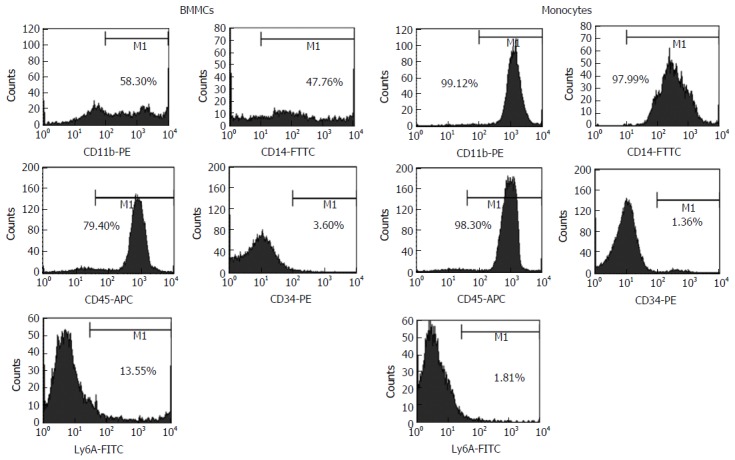
To evaluate the therapeutic effects of bone marrow-derived CD11bCD14 monocytes in a murine model of chronic liver damage.
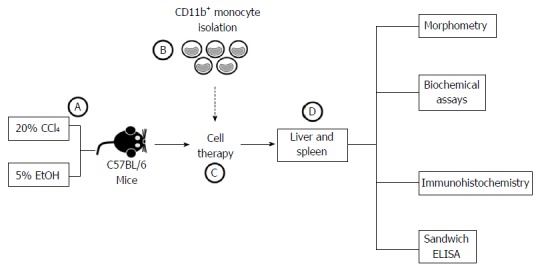
Chronic liver damage was induced in C57BL/6 mice by administration of carbon tetrachloride and ethanol for 6 mo. Bone marrow-derived monocytes isolated by immunomagnetic separation were used for therapy. The cell transplantation effects were evaluated by morphometry, biochemical assessment, immunohistochemistry and enzyme-linked immunosorbent assay.
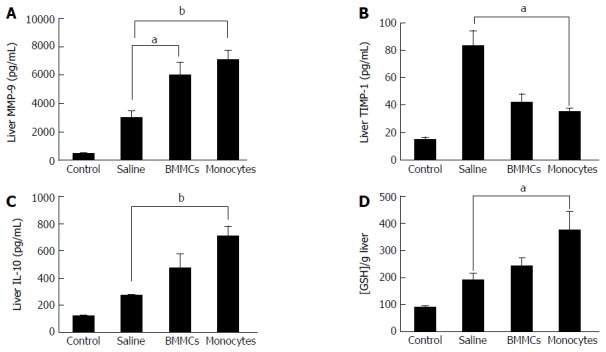
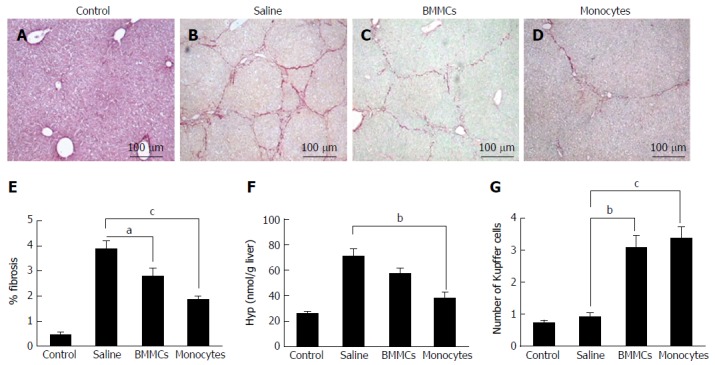
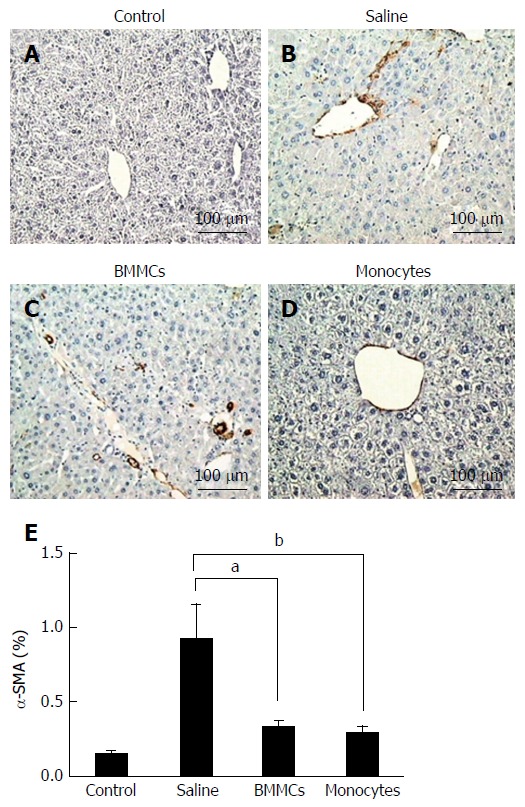
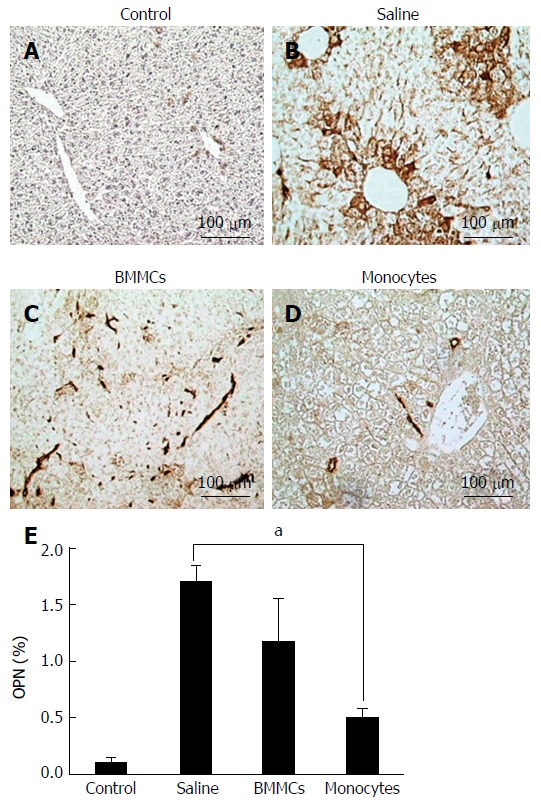
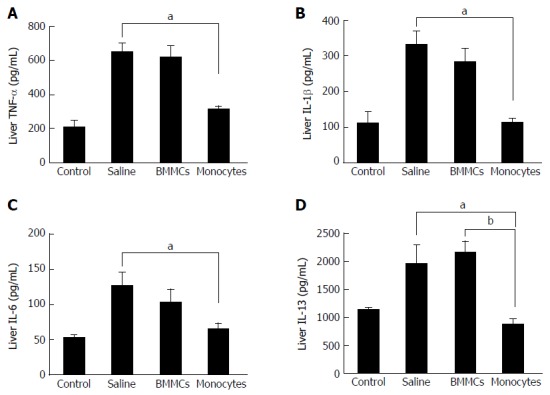
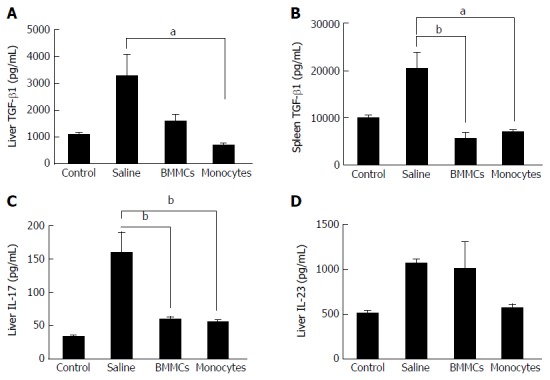
CD11bCD14 monocyte therapy significantly reduced liver fibrosis and increased hepatic glutathione levels. Levels of pro-inflammatory cytokines, including tumor necrosis factor-α, interleukin (IL)-6 and IL-1β, in addition to pro-fibrotic factors, such as IL-13, transforming growth factor-β1 and tissue inhibitor of metalloproteinase-1 also decreased, while IL-10 and matrix metalloproteinase-9 increased in the monocyte-treated group. CD11bCD14 monocyte transplantation caused significant changes in the hepatic expression of α-smooth muscle actin and osteopontin.
Monocyte therapy is capable of bringing about improvement of liver fibrosis by reducing oxidative stress and inflammation, as well as increasing anti-fibrogenic factors.
评估骨髓源 CD11bCD14 单核细胞在慢性肝损伤小鼠模型中的治疗效果。
通过给予四氯化碳和乙醇 6 个月来诱导 C57BL/6 小鼠的慢性肝损伤。通过免疫磁分离分离骨髓源单核细胞用于治疗。通过形态计量学、生化评估、免疫组织化学和酶联免疫吸附试验评估细胞移植效果。
CD11bCD14 单核细胞治疗显著减少了肝纤维化并增加了肝内谷胱甘肽水平。炎性细胞因子(包括肿瘤坏死因子-α、白细胞介素-6 和白细胞介素-1β)和促纤维化因子(如白细胞介素-13、转化生长因子-β1 和金属蛋白酶组织抑制剂-1)的水平降低,而单核细胞治疗组的白细胞介素-10 和基质金属蛋白酶-9 增加。CD11bCD14 单核细胞移植导致α-平滑肌肌动蛋白和骨桥蛋白在肝脏中的表达发生显著变化。
单核细胞治疗通过减少氧化应激和炎症以及增加抗纤维化因子,能够改善肝纤维化。