Alkhayat Nawaf, Elborai Yasser, Al Sharif Omer, Al Shahrani Mohammad, Alsuhaibani Omar, Awad Mohammed, Elghezal Hatem, Ben-Abdallah Bouhajar Inesse, Alfaraj Mona, Al Mussaed Eman, Alabbas Fahad, Elyamany Ghaleb
Department of Pediatric Hematology/Oncology, Prince Sultan Military Medical City, Riyadh, Saudi Arabia.
National Cancer Institute, Cairo University, Giza, Egypt.
Clin Med Insights Oncol. 2017 Jul 24;11:1179554917721710. doi: 10.1177/1179554917721710. eCollection 2017.
Childhood acute lymphoblastic leukemia (ALL) is characterized by recurrent genetic aberrations. The identification of those abnormalities is clinically important because they are considered significant risk-stratifying markers.
There are insufficient data of cytogenetic profiles in Saudi Arabian patients with childhood ALL leukemia. We have examined a cohort of 110 cases of ALL to determine the cytogenetic profiles and prevalence of FLT3 mutations and analysis of the more frequently observed abnormalities and its correlations to other biologic factors and patient outcomes and to compare our results with previously published results.
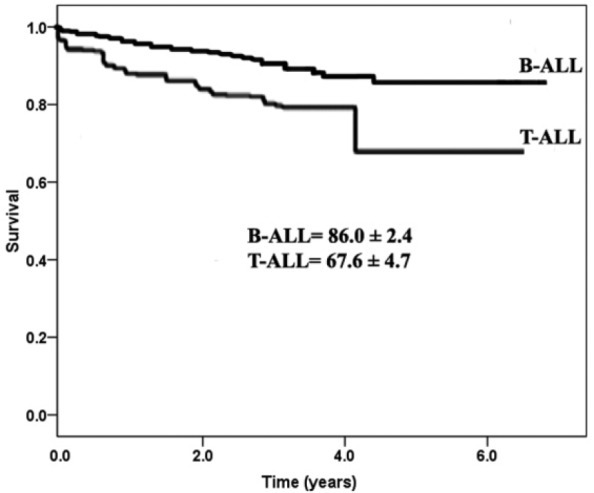
-We reviewed all cases from 2007 to 2016 with an established diagnosis of childhood ALL. Of the 110 patients, 98 were B-lineage ALL and 12 T-cell ALL. All the patients were treated by UKALL 2003 protocol and risk stratified according previously published criteria. -Chromosome banding analysis and fluorescence in situ hybridization were used to detect genetic aberrations. -Bone marrow or blood samples were screened for mutations (internal tandem duplications, and point mutations, D835) using polymerase chain reaction methods.
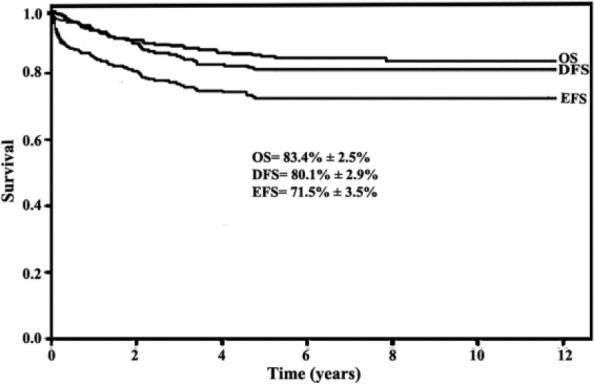
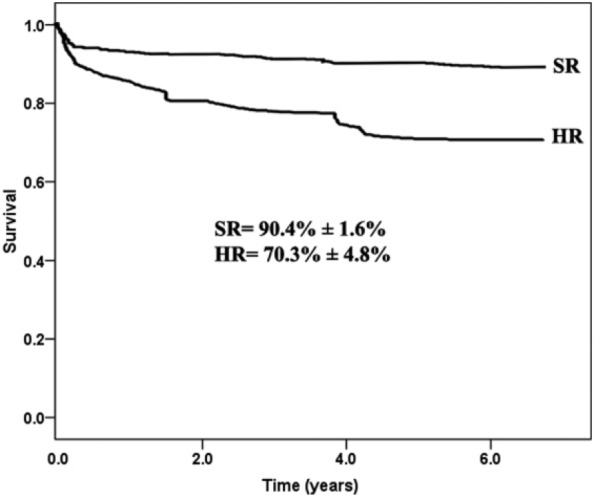
Cytogenetic analysis showed chromosomal anomalies in 68 out of 102 cases with an overall incidence 66.7%. The most frequent chromosomal anomalies in ALL were hyperdiploidy, t(9;22), t(12;21), and MLL gene rearrangements. Our data are in accordance with those published previously and showed that FLT3 mutations are not common in patients with ALL (4.7%) and have no prognostic relevance in pediatric patients with ALL. On the contrary, t(9;22), MLL gene rearrangements and hypodiploidy were signs of a bad prognosis in childhood ALL with high rate of relapse and shorter overall survival compared with the standard-risk group ( = .031).The event-free survival was also found to be worse ( = .040).
Our data are in accordance with those published previously, confirming the overall frequency of cytogenetic abnormalities and their prognostic relevance.
儿童急性淋巴细胞白血病(ALL)的特征是存在反复出现的基因畸变。识别这些异常在临床上很重要,因为它们被视为重要的风险分层标志物。
关于沙特阿拉伯儿童ALL白血病患者的细胞遗传学特征的数据不足。我们检查了110例ALL病例的队列,以确定细胞遗传学特征、FLT3突变的患病率,并分析更常见的异常情况及其与其他生物学因素和患者预后的相关性,并将我们的结果与先前发表的结果进行比较。
我们回顾了2007年至2016年所有确诊为儿童ALL的病例。在110例患者中,98例为B系ALL,12例为T细胞ALL。所有患者均按照UKALL 2003方案进行治疗,并根据先前发表的标准进行风险分层。使用染色体显带分析和荧光原位杂交检测基因畸变。使用聚合酶链反应方法对骨髓或血液样本进行FLT3突变(内部串联重复和点突变,D835)筛查。
细胞遗传学分析显示,102例中有68例存在染色体异常,总发生率为66.7%。ALL中最常见的染色体异常是超二倍体、t(9;22)、t(12;21)和MLL基因重排。我们的数据与先前发表的数据一致,表明FLT3突变在ALL患者中并不常见(4.7%),并且在儿童ALL患者中没有预后相关性。相反,与标准风险组相比,t(9;22)、MLL基因重排和亚二倍体是儿童ALL预后不良的标志,复发率高,总生存期短(P = 0.031)。无事件生存期也较差(P = 0.040)。
我们的数据与先前发表的数据一致,证实了细胞遗传学异常的总体频率及其预后相关性。