Department of International Health, Johns Hopkins Bloomberg School of Public Health, Baltimore, MD, USA.
School of Public Health, University of the Western Cape, Cape Town, South Africa.
Int J Health Policy Manag. 2017 Jul 1;6(7):403-412. doi: 10.15171/ijhpm.2016.150.
Routine immunization coverage in Nigeria has remained low, and studies have identified a lack of accountability as a barrier to high performance in the immunization system. Accountability lies at the heart of various health systems strengthening efforts recently launched in Nigeria, including those related to immunization. Our aim was to understand the views of health officials on the accountability challenges hindering immunization service delivery at various levels of government.
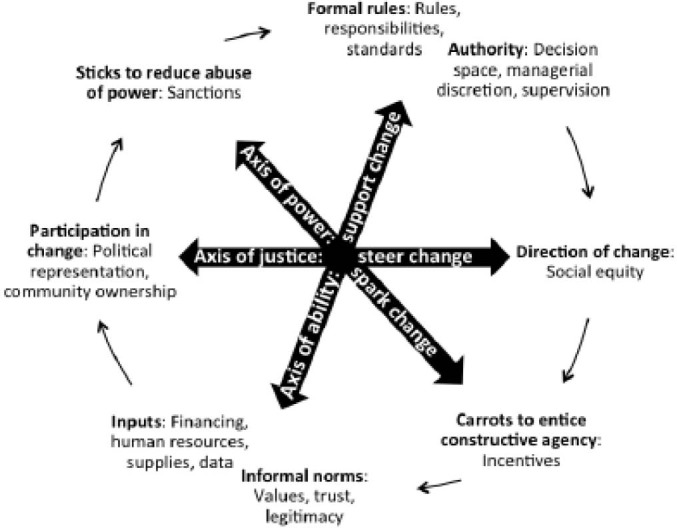
A semi-structured questionnaire was used to interview immunization and primary healthcare (PHC) officials from national, state, local, and health facility levels in Niger State in north central Nigeria. Individuals were selected to represent a range of roles and responsibilities in the immunization system. The questionnaire explored concepts related to internal accountability using a framework that organizes accountability into three axes based upon how they drive change in the health system.
Respondents highlighted accountability challenges across multiple components of the immunization system, including vaccine availability, financing, logistics, human resources, and data management. A major focus was the lack of clear roles and responsibilities both within institutions and between levels of government. Delays in funding, especially at lower levels of government, disrupted service delivery. Supervision occurred less frequently than necessary, and the limited decision space of managers prevented problems from being resolved. Motivation was affected by the inability of officials to fulfill their responsibilities. Officials posited numerous suggestions to improve accountability, including clarifying roles and responsibilities, ensuring timely release of funding, and formalizing processes for supervision, problem solving, and data reporting.
Weak accountability presents a significant barrier to performance of the routine immunization system and high immunization coverage in Nigeria. As one stakeholder in ensuring the performance of health systems, routine immunization officials reveal critical areas that need to be prioritized if emerging interventions to improve accountability in routine immunization are to have an effect.
尼日利亚的常规免疫接种覆盖率一直较低,研究发现,缺乏问责制是免疫接种系统绩效不佳的一个障碍。问责制是尼日利亚最近启动的各项卫生系统强化工作的核心,其中包括与免疫接种有关的工作。我们的目的是了解卫生官员对在各级政府阻碍免疫服务提供的问责制挑战的看法。
我们使用半结构式问卷采访了尼日利亚中北部尼日尔州的国家、州、地方和卫生机构各级的免疫和初级卫生保健官员。选择这些人员代表免疫系统中的各种角色和责任。该问卷使用一个框架,从三个轴来探讨与内部问责制有关的概念,这些轴基于它们如何推动卫生系统的变革。
受访者强调了免疫系统多个组成部分的问责制挑战,包括疫苗的供应、资金、后勤、人力资源和数据管理。重点是机构内部以及各级政府之间缺乏明确的角色和责任。资金延迟,尤其是在较低级别的政府,扰乱了服务的提供。监督的频率低于必要的水平,管理人员的决策空间有限,阻碍了问题的解决。官员们认为,官员们无法履行职责,这影响了他们的积极性。官员们提出了许多改进问责制的建议,包括明确角色和责任、确保及时发放资金、以及正式确定监督、解决问题和数据报告的程序。
薄弱的问责制是尼日利亚常规免疫接种系统绩效和高免疫覆盖率的一个重大障碍。作为确保卫生系统绩效的利益相关者之一,常规免疫接种官员揭示了需要优先考虑的关键领域,如果要改善常规免疫接种中的问责制的新干预措施产生效果的话。